

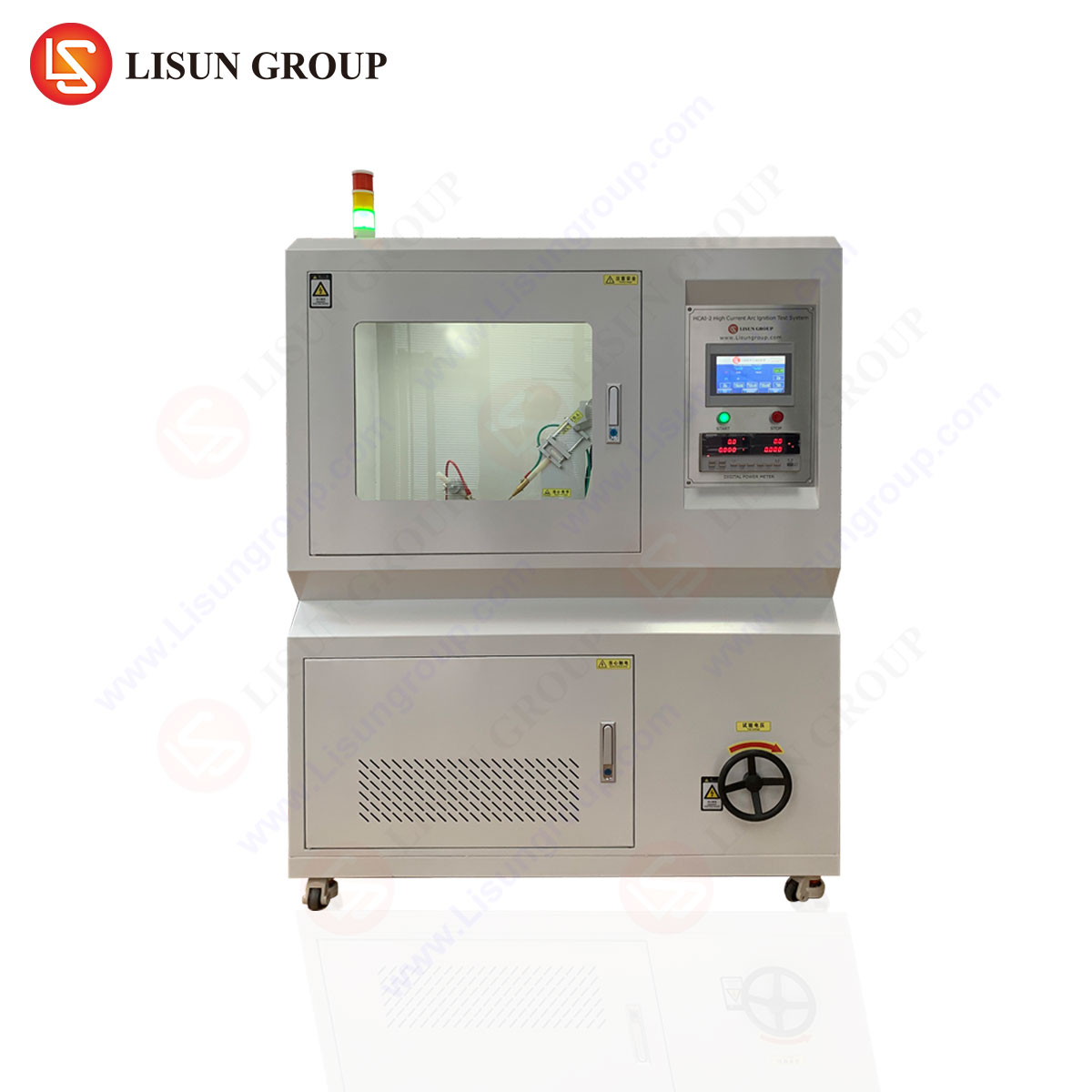



A Technical Analysis of Impact Protection: Understanding IK Ratings in Product Durability
Introduction to Mechanical Impact Testing in Product Design
The long-term operational integrity of electrical and electronic equipment is contingent upon its resilience to environmental stresses, among which mechanical impacts represent a significant and recurrent threat. While ingress protection (IP) ratings codify defense against solids and liquids, a parallel and equally critical standardization exists for quantifying a product’s resistance to physical blows. The IK rating system, derived from the International Electrotechnical Commission’s IEC 62262 and IEC 60068-2-75 standards, provides a calibrated, repeatable methodology for assessing the degree of protection provided by enclosures against external mechanical impacts. This classification is indispensable for engineers, specifiers, and quality assurance professionals across industries where equipment may be subjected to accidental knocks, deliberate vandalism, or operational stresses during its service life. A precise understanding of IK ratings informs material selection, structural design, and ultimately, product reliability and user safety.
Deciphering the IK Code: From Energy (Joules) to Numerical Classification
The IK code is expressed as “IK” followed by a two-digit number ranging from 00 to 10. This numerical designation corresponds directly to a specified impact energy, measured in joules (J). It is crucial to note that the relationship is not linear; each IK level defines a precise testing parameter. The rating signifies that an enclosure has withstood a series of impacts from a standardized pendulum hammer or spring hammer at the defined energy level without sustaining damage that would compromise its safety or core functionality, such as the creation of hazardous live part access or impairment of essential mechanisms.
The foundational elements of the test involve a calibrated impacting device striking the enclosure’s most vulnerable surfaces. The test apparatus, sample mounting, ambient conditions, and number of impacts (typically five per test point) are rigorously prescribed. The IK scale is segmented, with IK00 indicating no specific impact protection, and ratings from IK01 to IK10 defining increasing levels of robustness. For instance, IK08 corresponds to a 5J impact, akin to a 1.7kg mass dropped from 0.3 meters, while IK10 represents a formidable 20J impact, equivalent to a 5kg mass dropped from 0.4 meters. This graduated scale allows for precise matching of product durability to its intended operational environment.
The Critical Role of IK Testing in Diverse Industrial Sectors
The application of IK ratings transcends a single industry, forming a cornerstone of durability specifications in numerous fields. In accesorios de iluminación, particularly those deployed in public spaces, sports arenas, industrial facilities, or roadways, IK ratings are paramount. A high IK-rated luminaire resists damage from vandalism, accidental tool strikes during maintenance, or airborne debris, ensuring continued public illumination and safety while reducing maintenance costs. For sistemas de control industrial y electrical components like switches, sockets, and circuit breaker enclosures installed on factory floors, resistance to impacts from handling, trolleys, or falling objects is essential for preventing downtime and electrical hazards.
Within electrónica del automóvil y aerospace and aviation components, IK testing simulates shocks and vibrations encountered during vehicle operation, assembly, or servicing. Connectors, control units, and in-cabin devices must withstand incidental impacts. Telecommunications equipment, including outdoor routers, junction boxes, and base station hardware, requires protection against environmental and human-induced mechanical stress. Medical devices, especially portable monitors or handheld diagnostic tools used in clinical or emergency settings, must endure occasional drops or bumps without functional degradation. Similarly, consumer electronics, office equipment, y electrodomésticos benefit from IK-rated enclosures that enhance product longevity and customer satisfaction by surviving the rigors of daily use and transportation.
Methodological Precision: Principles of Pendulum and Spring Hammer Testing
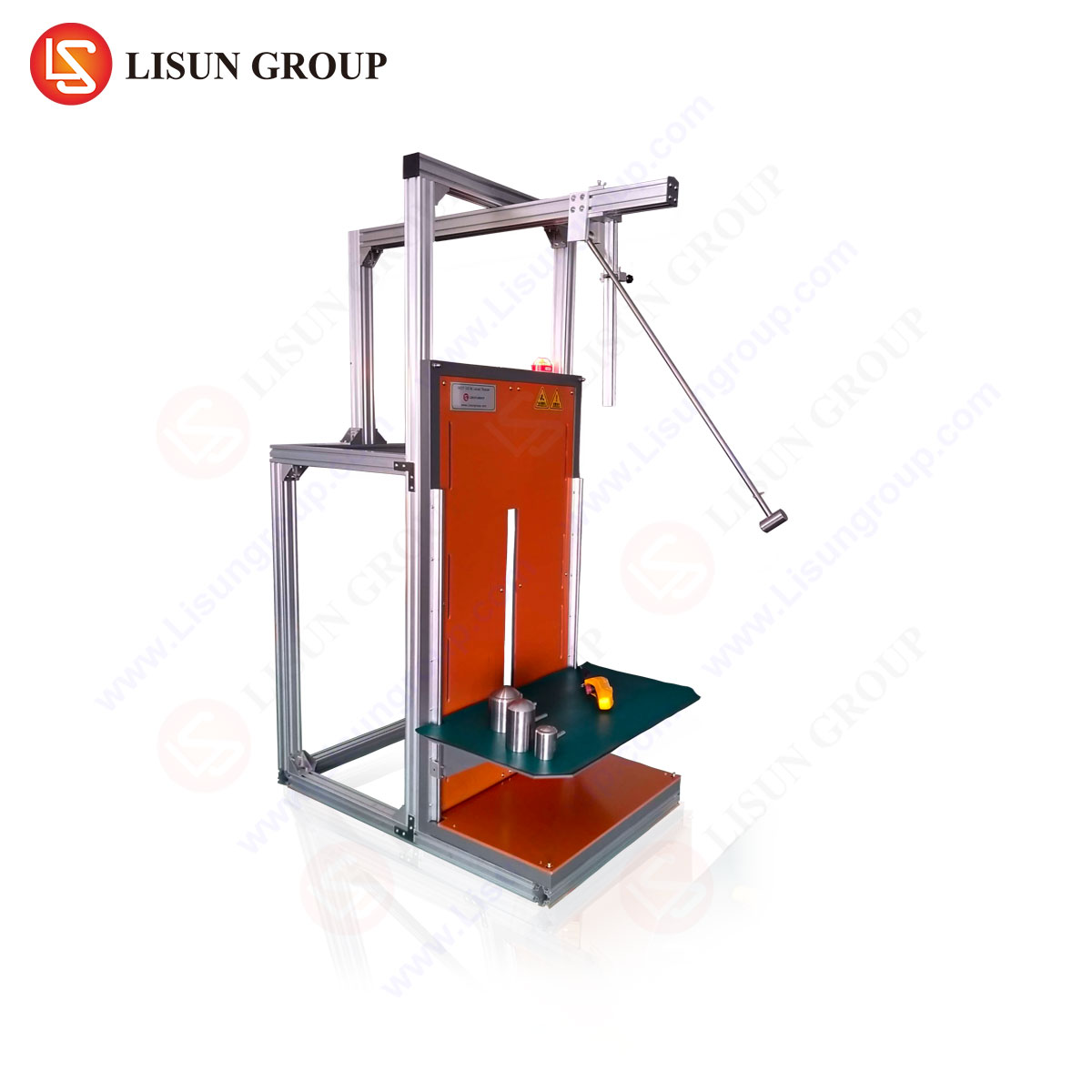
The integrity of the IK rating system hinges on the reproducibility and accuracy of the test methodology. Two primary devices are employed: the pendulum hammer for impact energies from 0.14J (IK03) to 50J (beyond IK10), and the spring hammer for lower energies (IK01, IK02). The pendulum hammer operates on a consistent principle: a hammer head of specified mass and radius (typically made of polyamide or steel) is released from a calculated height on a pendulum arm to strike the test sample with a predetermined kinetic energy. The sample is rigidly mounted to a base capable of withstanding the impact without significant deflection, ensuring the energy is absorbed solely by the enclosure under test.
The spring hammer, used for lower-energy certifications, utilizes a compressed spring to propel the hammer head. The calibration of spring tension is critical to ensure accurate impact energy delivery. The test standard mandates strikes on the enclosure’s most exposed and vulnerable surfaces, including corners and seams. Post-test evaluation is not merely cosmetic; assessors verify that the enclosure has not fractured to expose live parts, that insulating components retain their properties, and that any indicators or moving parts (like doors or latches) remain operational. This functional assessment distinguishes a true IK rating from a simple claim of material toughness.
Introducing the LISÚN IK07-10VT IK Test System: A Benchmark in Testing Versatility
To meet the rigorous demands of standardized impact testing across the IK07 to IK10 range, specialized instrumentation is required. The LISUN IK07-10VT IK Test system represents a sophisticated solution engineered for precision and compliance. This apparatus is designed to conduct fully compliant impact tests according to IEC 60068-2-75, IEC 62262, and related standards such as GB/T 2423.55 and GB/T 20138.
The system’s core specification includes an adjustable impact energy range spanning 2J (IK07) to 20J (IK10). It incorporates both pendulum and vertical test modes (the “VT” designation), the latter being crucial for simulating impacts from falling objects directly onto the top surfaces of a test specimen. The vertical test component typically features an electromagnet release mechanism for a free-fall impactor, ensuring consistent, gravity-driven energy application. The pendulum arm is constructed from rigid, low-deflection materials, with a calibrated release mechanism to guarantee the hammer strikes the sample at the prescribed velocity. The sample mounting table is robust and vertically adjustable to align the test point with the hammer’s swing axis.
Operational Workflow and Competitive Advantages of the IK07-10VT System
The operational workflow of the LISUN IK07-10VT system emphasizes repeatability and user safety. The test sample is securely fastened to the mounting platform. The operator selects the desired IK level, and the system is configured accordingly—adjusting the pendulum release angle for the correct energy or setting the drop height for the vertical test. Safety interlocks prevent operation while the test chamber is accessible. Following the series of impacts, the sample is removed for detailed inspection.
The competitive advantages of this system are multi-faceted. Its integrated dual-mode capability (pendulum and vertical) within a single platform eliminates the need for multiple devices, saving laboratory space and capital expenditure. The precise calibration and construction minimize energy losses due to friction or deflection, ensuring test results are accurate and directly comparable to those from any certified laboratory globally. Furthermore, the robust design and safety features reduce operational risk and enhance equipment longevity, while its comprehensive compliance with international and national standards makes it a viable tool for both R&D validation and third-party certification preparation. For manufacturers of cable and wiring systems (outdoor connectors), electrical components, or accesorios de iluminación targeting high-durability markets, such a system provides indispensable in-house validation capability, accelerating design cycles and strengthening quality assurance protocols.
Interpreting Results and Specifying IK Ratings for Product Compliance
Achieving a specific IK rating is a binary outcome: the sample either passes or fails the functional criteria after the test sequence. However, intelligent specification involves more than selecting the highest rating available. Engineers must perform a risk assessment of the product’s end-use environment. A lighting fixture in a controlled office setting may suffice with IK04, while a roadside bollard light demands IK08 or higher. For electrodomésticos like robotic vacuums, IK06 might simulate collisions with furniture, whereas control panels for industrial machinery may require IK09 to withstand tool drops.
Material science plays a direct role; polycarbonate blends, reinforced composites, and metal alloys offer different impact absorption characteristics. Design elements like ribbing, corner reinforcement, and the use of impact-absorbing gaskets are critical. Specifying an inappropriate IK rating can lead to either unnecessary cost (over-engineering) or premature field failure (under-engineering). Therefore, the IK rating should be a deliberate choice, documented in product specifications, and verified using reliable equipment like the LISUN IK07-10VT to ensure claims are substantiated.
Conclusion: Integrating IK Durability into the Product Lifecycle
The IK rating system provides an objective, standardized language for mechanical impact durability, bridging the gap between design intent and real-world performance. Its integration into the product development lifecycle—from initial design and material selection to prototype validation and final quality control—is a hallmark of robust engineering practice. As products across electrical and electronic equipment sectors evolve and face increasingly demanding environments, the role of precise, verifiable impact testing grows ever more critical. Instrumentation that delivers accurate, repeatable, and standards-compliant results, such as the featured test system, is not merely a quality control tool but a fundamental enabler of product reliability, safety, and market competitiveness. By grounding durability claims in the empirical evidence provided by proper IK testing, manufacturers uphold their commitment to quality and build enduring trust with specifiers and end-users alike.
Sección FAQ
Q1: What is the primary difference between the pendulum test and the vertical test in the IK07-10VT system?
The pendulum test simulates a swinging or side-impact force, typical of an object striking the vertical faces of an enclosure. The vertical test (VT) simulates an impact from a falling object directly onto the top surface of the product. Both are required for a comprehensive assessment, as real-world impacts can originate from different vectors.
Q2: Can the LISUN IK07-10VT system be used to test for IK ratings below IK07?
While the system is optimized and calibrated for the IK07-10 high-impact range, its design may accommodate lower energies with specific configuration or accessory changes. However, for dedicated, frequent testing at lower IK levels (IK01-06), a system specifically designed for that lower energy range would typically offer more precise control and be more operationally efficient.
Q3: How often does the test equipment itself require calibration, and against what standard?
The impacting components, especially the hammer heads and release mechanisms, are subject to wear and must be calibrated at regular intervals to maintain accuracy. Calibration frequency is typically annual or per a set number of impacts, as per the laboratory’s quality procedures. Calibration is performed against the requirements of IEC 60068-2-75 and often traceable to national metrology institutes to ensure global recognition of test results.
Q4: For a product with a curved or irregular surface, how is the impact point determined?
The standards dictate that impacts shall be applied to the most vulnerable points. This includes, but is not limited to, seams, joints, viewing windows, operator controls, and the geometric center of large surfaces. For curved surfaces, the test should be conducted such that the hammer strikes tangentially, as per the fixture’s mounting orientation. The assessment includes corners and edges, which are often the weakest points.
Q5: Does achieving a high IK rating imply equivalently high IP (water and dust) protection?
No, IK and IP ratings are independent classifications. An enclosure can have a high IK rating (impact resistant) but a low IP rating (minimal dust/water protection), and vice-versa. They address different environmental stressors. However, it is common for robust outdoor products, like high-bay industrial lights or telecommunications enclosures, to specify both a high IK rating (e.g., IK09) and a high IP rating (e.g., IP66) to ensure comprehensive protection.

 ES
ES  EN
EN  RU
RU  PT
PT  TR
TR  AR
AR  DE
DE  PL
PL  IT
IT  FR
FR  KO
KO  JA
JA  ID
ID