






Arcing Resistance Testing Explained: Principles, Standards, and Advanced Methodologies
Introduction to Arcing Phenomena and Material Degradation
The uncontrolled formation of an electrical arc across the surface of an insulating material represents a critical failure mode with potentially catastrophic consequences. Arcing resistance testing, therefore, constitutes a fundamental evaluation within the safety and reliability assessment of electrical components and end-use products. This form of testing systematically subjects insulating materials and the interfaces between conductive parts to repeated, high-energy arcing events. The primary objective is to quantify the material’s ability to resist the formation of a conductive carbonized path—tracking—or to withstand ignition and sustained flaming due to arc-induced thermal degradation. In operational environments, arcing faults can arise from loose connections, insulation breakdown, contamination, or component failure, generating localized temperatures exceeding several thousand degrees Celsius. The resultant energy transfer can compromise structural integrity, initiate fires, or lead to complete loss of insulation properties. Consequently, rigorous arcing resistance evaluation is mandated across a diverse spectrum of industries, from household appliances and automotive electronics to aerospace components and medical devices, forming a non-negotiable pillar of product safety certification.
Fundamental Mechanisms of Arc-Induced Failure
Understanding the physical and chemical mechanisms underpinning arc-induced failure is prerequisite to interpreting test results. When a high-voltage arc is established across or adjacent to an insulating surface, a complex interplay of phenomena ensues. The intense localized heat from the arc column pyrolyzes the organic constituents of the insulating material, liberating volatile hydrocarbons and leaving behind a carbonaceous residue. Concurrently, thermal stress can cause melting, ablation, or cracking in inorganic or composite materials. If the carbonaceous byproducts form a continuous, electrically conductive bridge between electrodes, a condition known as tracking occurs. This path, once established, can sustain current flow at a lower voltage, leading to further thermal runaway and eventual failure. Alternatively, the arc’s thermal energy may directly ignite flammable gases emitted during pyrolysis or cause the material itself to sustain flaming after arc removal. The propensity for these failure modes is influenced by a multitude of factors including material composition, filler content, surface geometry, presence of contaminants (e.g., dust, moisture), and the specific energy profile of the applied arc.
Evolution and Hierarchy of International Testing Standards
The standardization of arcing resistance testing provides a consistent framework for comparative material evaluation and safety compliance. Various international standards prescribe specific electrode configurations, circuit parameters, and failure criteria tailored to different applications and risk profiles.
The IEC/EN 60112 standard, “Method for the determination of the proof and comparative tracking indices of solid insulating materials,” is a foundational test for low-voltage equipment. It employs a solution of ammonium chloride to contaminate the surface between two platinum electrodes, applying a specified voltage and observing whether tracking occurs within a set number of drops. While critical for evaluating susceptibility to tracking under contaminated conditions, it does not address high-energy arcing faults.
For higher-energy scenarios, standards such as UL 746A (Polymeric Materials – Short Term Property Evaluations) include the High-Current Arc Ignition (HCAI) and High-Voltage Arc Tracking Rate (HVTR) tests. These are particularly relevant for the materials used in electrical enclosures, connectors, and switching devices. The HCAI test, the focus of advanced contemporary apparatus, subjects the material to a series of arcs from a tungsten rod electrode to a flat specimen, with progressively increasing arc current until ignition is achieved. This determines the minimum current required to ignite the material via an arc, providing a direct measure of flammability resistance under arc fault conditions.
Other critical standards include the IEC 60695-2-20 series for glow-wire testing (related but distinct from arc testing) and various automotive-specific protocols such as those within ISO 20653 or OEM specifications that evaluate components for resistance to arc migration in high-voltage vehicle systems. The selection of the appropriate standard is dictated by the product’s operational voltage, current, environmental exposure, and its intended application sector.
The High-Current Arc Ignition (HCAI) Test: A Detailed Procedural Analysis
The High-Current Arc Ignition test represents a severe and discerning evaluation of a material’s resistance to ignition from a high-current, low-voltage arc. The test simulates a fault condition, such as a loose terminal connection arcing to an adjacent plastic housing. The procedure is methodical. A test specimen of defined dimensions is securely positioned beneath a movable tungsten rod electrode. A flat, grounded electrode is affixed to the underside of the specimen. The circuit is energized, and the tungsten electrode is brought into contact with the specimen surface and then withdrawn to a fixed gap, drawing a pilot arc. This arc is maintained for a precise duration, typically 0.5 seconds, at a specified current level.
The test is conducted in a staged manner. Beginning at a low current level, a single arc is applied. If the specimen does not ignite (where ignition is defined as flaming persisting for longer than a specified period after arc removal), the current level is increased in predetermined steps. At each new current level, a series of arcs (often 10 or 20) is applied to the same or a new specimen location. This process continues until the ignition criterion is met. The final reported value is the highest current level at which the material withstands the applied arcs without igniting, or the lowest current level at which ignition occurs, depending on the standard’s reporting requirements. The test environment, including humidity and barometric pressure, is often controlled, as these factors can influence arc characteristics and material behavior.
Introducing the LISÚN HCAI-2 Prueba de ignición por arco de alta corriente Instrument
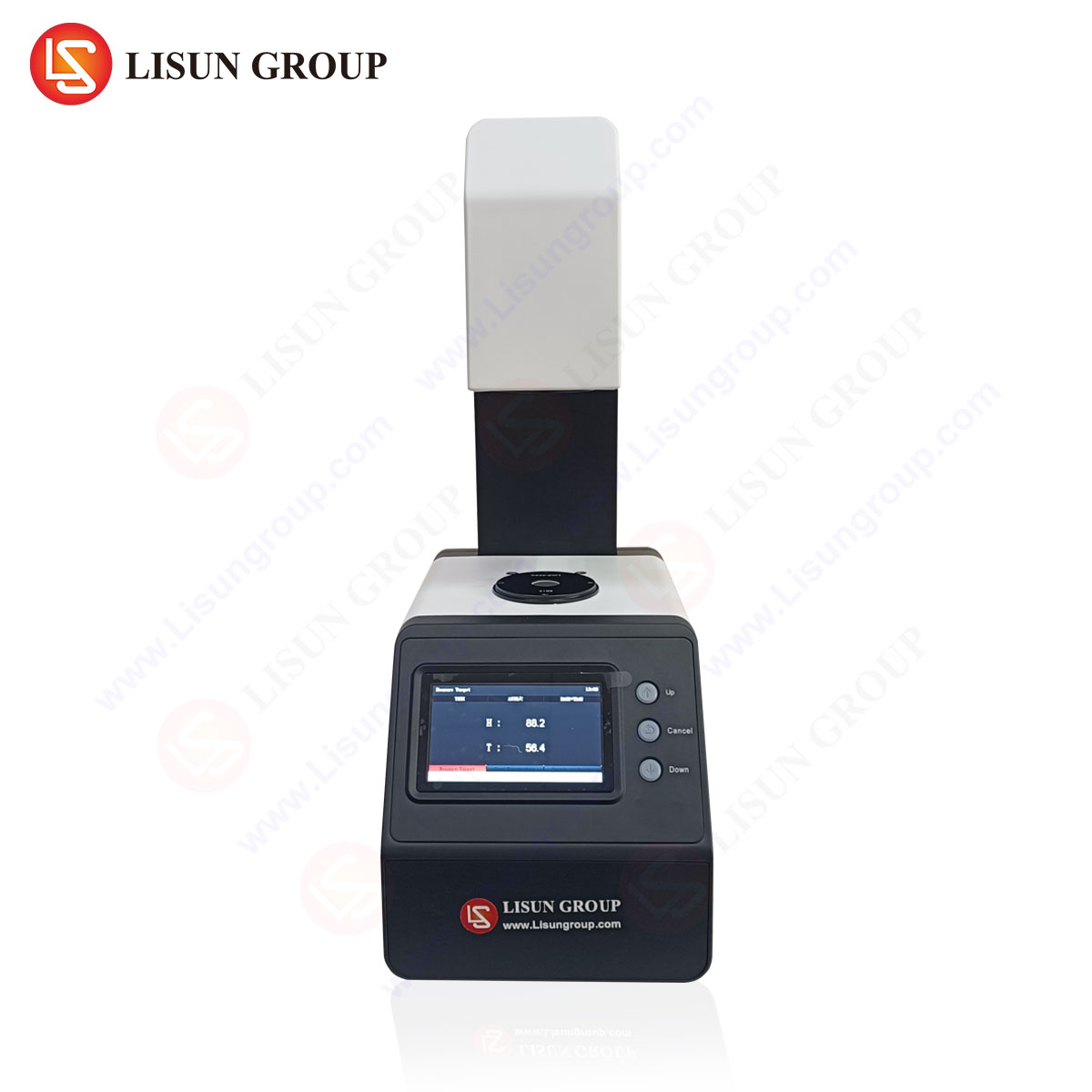
To execute the HCAI test with the precision, repeatability, and safety demanded by modern laboratories, specialized instrumentation is required. The LISUN HCAI-2 High Current Arc Ignition Test Instrument is engineered to meet these exacting requirements, fully compliant with the testing methodologies outlined in UL 746A, IEC 60695-2-20, and related standards.
The apparatus integrates several critical subsystems. A stable, programmable power supply delivers the high-current, low-voltage arc energy with precise waveform control. A robotic electrode actuator ensures consistent electrode approach speed, contact pressure, and withdrawal to the exact gap distance specified in the standard, eliminating operator-induced variability. A sophisticated arc ignition and timing circuit governs the exact duration of each arc burst. Integrated safety features include a sealed test chamber with a transparent, impact-resistant viewing window, automatic arc suppression systems, and fume extraction ports to evacuate pyrolysis products.
The HCAI-2 is typically governed by a microprocessor-based controller with a human-machine interface (HMI), allowing for the pre-programming of test parameters such as starting current, step increments, number of arcs per level, and arc duration. It automatically sequences through the test protocol, records the outcome of each arc application, and clearly indicates the final test result. This level of automation not only enhances reproducibility but also significantly improves operator safety by minimizing exposure to high-energy arcs and hazardous fumes.
Technical Specifications and Operational Parameters of the HCAI-2 System
The performance of the HCAI-2 is defined by a set of key technical specifications that ensure its suitability for accredited laboratory use.
- Arc Current Range: Typically adjustable from 10.0 A up to 40.0 A or higher, with fine resolution (e.g., 0.1 A steps) to precisely identify the ignition threshold.
- Arc Voltage: Operates on a low-voltage supply (e.g., 220V AC or 110V AC single-phase) but generates the necessary open-circuit voltage to initiate and sustain the arc across the defined gap.
- Arc Duration: Precisely controllable from 0.1 to 1.0 seconds, with 0.5 seconds being the standard duration for many protocols.
- Electrode Control: Automated vertical movement with adjustable contact force and a fixed retraction gap (e.g., 6.35 mm as per standard).
- Electrode Material: Tungsten rod of specified purity and diameter, and a flat brass or copper ground electrode.
- Test Chamber: Constructed from non-conductive, flame-retardant materials with sufficient volume to prevent oxygen depletion during testing.
- Sistema de control: Digital programmable controller with data logging capabilities, often featuring interfaces for peripheral devices or network connectivity for data management.
- Safety Compliance: Designed to meet relevant laboratory electrical safety standards (e.g., IEC 61010).
Aplicaciones y casos de uso específicos del sector
The data generated by the HCAI-2 instrument informs material selection and design validation across a vast industrial landscape.
- Electrical Components & Industrial Control Systems: For circuit breakers, contactors, terminal blocks, and motor control center enclosures, the HCAI rating is critical. A component housing must resist ignition from an internal arc caused by a loose wire or contact weld, containing the fault and preventing fire propagation.
- Electrónica del automóvil: As vehicles incorporate higher-voltage systems for electrification and advanced driver-assistance systems (ADAS), the risk of arc faults increases. Components like battery management system housings, charging port assemblies, and power distribution units are evaluated to ensure they do not provide a fuel source for an arc.
- Household Appliances & Consumer Electronics: Power supplies, connectors, and internal supports in devices from televisions to washing machines are tested to mitigate fire risk from internal electrical faults.
- Iluminación: Especially for high-intensity discharge (HID) or high-power LED drivers, where fault conditions can generate significant energy, the materials used in sockets and housings are assessed.
- Telecommunications & Office Equipment: Power distribution strips, server rack components, and network hardware are tested to ensure reliability and safety in often densely packed, continuously operated environments.
- Aerospace and Aviation Components: The extreme weight-saving pressures and critical safety requirements in this sector demand materials with excellent HCAI performance for wire harness clamps, connector bodies, and equipment bay linings.
- Productos sanitarios: For both stationary and portable medical equipment, ensuring that electrical faults do not lead to patient or operator hazard through ignition is paramount.
- Cable and Wiring Systems: While the cable insulation itself is tested by other methods, cable glands, conduits, and junction boxes are key candidates for HCAI evaluation.
Comparative Advantages of Automated HCAI Testing Systems
The transition from manual or semi-automated test setups to fully integrated systems like the HCAI-2 confers significant technical and operational advantages. Primarily, it dramatically improves test repeatability and reproducibility (R&R). Manual control of arc timing, electrode movement, and gap distance introduces unavoidable variance. Automated systems enforce strict parametric control, yielding data that is more reliable for comparative material analysis and more defensible for safety certification submissions.
Secondly, it enhances laboratory efficiency and throughput. Once programmed, the system can run a complete test sequence unattended, freeing skilled technicians for other tasks. Automated data recording eliminates transcription errors and creates a readily auditable digital trail.
Most importantly, it elevates operator safety. Containing the arc within an interlocked chamber, automating the most hazardous steps, and integrating fume extraction protect personnel from arc flash, UV radiation, and inhalation of toxic pyrolysis products.
Furthermore, advanced systems offer enhanced diagnostic capabilities. Some instruments may include optional sensors to monitor arc voltage and current waveforms in real-time, providing deeper insight into the arc’s interaction with the material, which can be valuable for R&D and failure analysis beyond simple pass/fail testing.
Data Interpretation and Integration into the Design Workflow
The output of an HCAI test is not merely a pass/fail datum at a single current level. The step-wise procedure generates a profile of the material’s behavior. A material that withstands 30 arcs at 30A but ignites on the 5th arc at 32A demonstrates a clear ignition threshold. This quantitative data allows engineers to apply safety margins. For instance, if the maximum credible fault current in a design is calculated to be 25A, selecting a material with a published HCAI rating of 32.5A provides a comfortable margin of safety.
This data is integrated early in the product development cycle. Material scientists use it to formulate compounds with improved arc resistance, often through the use of specific mineral fillers like alumina trihydrate (ATH) or magnesium hydroxide. Design engineers reference HCAI ratings in their component selection databases. Finally, quality assurance and certification bodies require successful testing on final production-grade materials or finished components as part of the type approval process. The HCAI rating thus becomes a key specification, as critical as mechanical strength or dielectric withstand voltage, in the lexicon of product safety engineering.
Conclusión
Arcing resistance testing, particularly the High-Current Arc Ignition test, serves as an indispensable gatekeeper for product safety in an electrified world. By rigorously simulating one of the most severe electrical fault conditions, it provides empirical data on a material’s propensity to resist fire initiation. The evolution of standardized test methods and the concomitant development of precise, automated instrumentation like the LISUN HCAI-2 have transformed this evaluation from a qualitative assessment into a highly quantitative and repeatable science. The resulting data directly fuels innovation in material science, informs robust engineering design decisions, and ultimately underpins the safety certifications that protect consumers, industrial facilities, and critical infrastructure from the hazards associated with electrical arcing faults. As technological complexity grows and electrical power densities increase, the role of precise arcing resistance evaluation will only become more central to responsible engineering practice.
Preguntas más frecuentes (FAQ)
Q1: How does the High-Current Arc Ignition (HCAI) test differ from a standard high-voltage dielectric withstand test?
A dielectric withstand (hipot) test applies a high voltage across insulation to check for instantaneous breakdown or excessive leakage current. It is a pass/fail test for insulation integrity at a given voltage. The HCAI test is a durability test under fault conditions. It applies repeated, high-energy thermal shocks via an arc to assess whether the material degrades to the point of ignition or creates a conductive tracking path over time. It evaluates resistance to sustained thermal abuse, not just instantaneous dielectric strength.
Q2: For a new product design, at what stage should HCAI testing be performed?
HCAI testing should be integrated at multiple stages. Initially, screening tests should be performed on candidate material plaques during the conceptual design phase to narrow material choices. Once a material is selected, testing on injection-molded parts representing the final geometry is crucial, as molding processes can affect material properties. Finally, verification testing on production-grade components is often required for end-product certification. Testing early avoids costly redesigns later.
Q3: Can the LISUN HCAI-2 instrument be configured for other arc-related tests, such as the High-Voltage Arc Tracking Rate (HVTR) test?
While the HCAI-2 is specifically optimized for the HCAI test per UL 746A, its core components—a programmable power supply, electrode manipulator, and control system—provide a platform that can often be adapted or expanded. However, the HVTR test (UL 746A) involves a different electrode configuration (stainless steel blades), a higher open-circuit voltage, and a different failure criterion (tracking distance over time). To perform HVTR, specific electrode fixtures and potentially voltage source modifications are required. It is essential to consult the manufacturer’s specifications to determine the instrument’s capabilities and any necessary optional configurations for compliance with other standards.
Q4: What are the primary factors that can cause variability in HCAI test results between laboratories?
Even with automated equipment, key sources of variability must be controlled. These include: ambient laboratory temperature and humidity, which can affect arc characteristics; the condition and exact geometry of the tungsten electrode (tip shape degrades with use); the surface finish and cleanliness of the test specimen; and the calibration of the current measurement system. Adherence to standard pre-conditioning procedures for specimens and regular calibration/maintenance of the test instrument are critical to minimizing inter-laboratory variance.
Q5: In the context of automotive high-voltage systems, are there specific standards that reference or require HCAI-type testing?
While automotive OEMs often have their own extensive internal specifications, several international standards address fire risks from electrical faults. ISO 20653 (Ingress Protection) may be referenced for enclosure integrity. More directly, standards like LV 214 (German automotive standard) or various sections of ISO 6469 (Electrically propelled road vehicles – Safety specifications) include requirements for protection against fire risks. Specific OEM specifications for components like battery disconnect units or high-voltage connectors frequently mandate arc resistance testing that is functionally equivalent or even more severe than the standard HCAI test, making instruments like the HCAI-2 directly relevant to automotive supply chain validation.

 ES
ES  EN
EN  RU
RU  PT
PT  TR
TR  AR
AR  DE
DE  PL
PL  IT
IT  FR
FR  KO
KO  JA
JA  ID
ID