

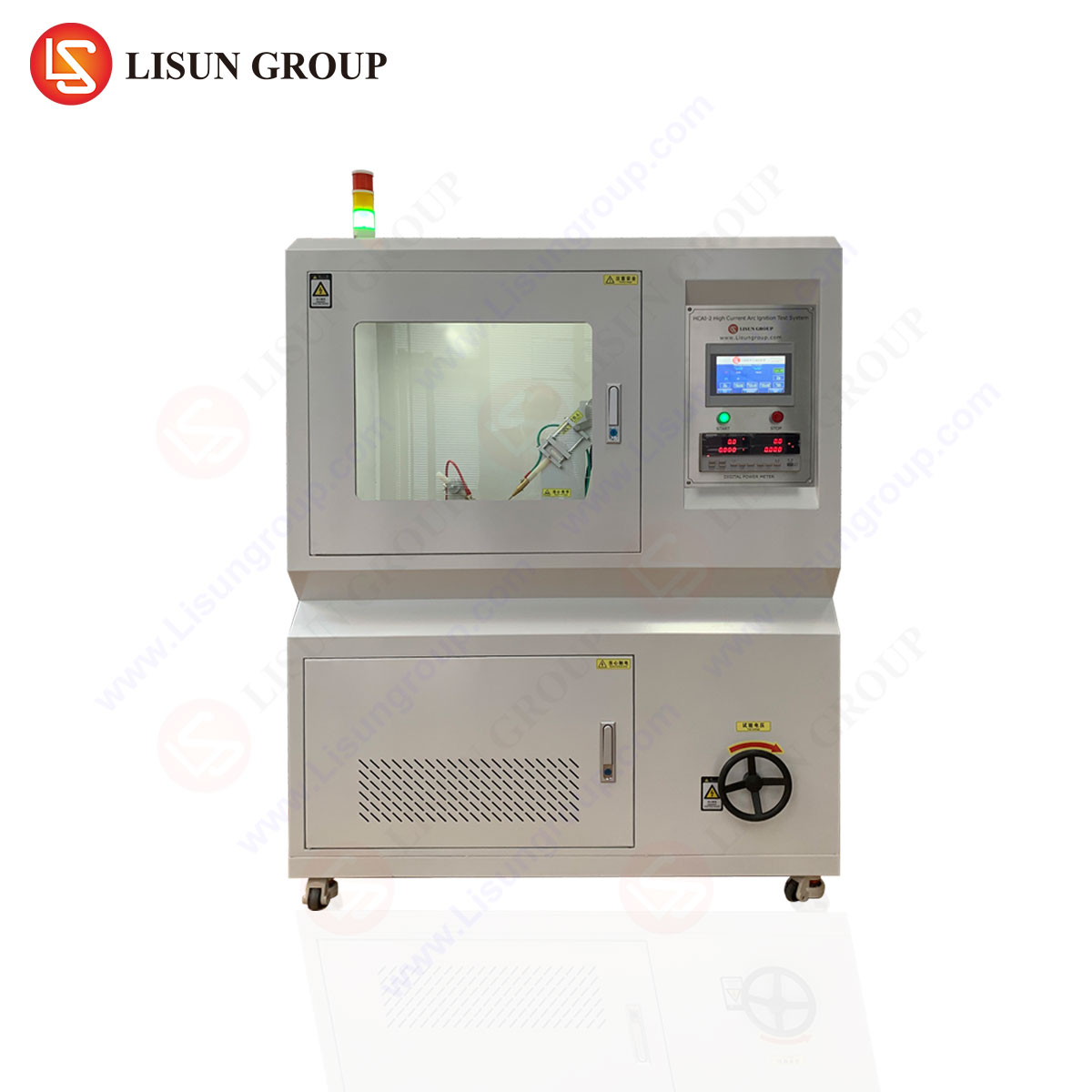



Evaluating Ignition Resistance in Materials and Components: The Role of High-Current Arc Hot Wire Testing
Introduction to Ignition Hazard Assessment in Modern Electronics
The proliferation of electrical and electronic equipment across diverse sectors—from consumer electronics to aerospace systems—has intensified the focus on fire safety and reliability. A critical, though often underappreciated, hazard stems from the potential for components or materials to ignite under abnormal electrical conditions. These conditions may include overloaded circuits, poor connections generating localized heating, or fault currents arcing across contaminated or degraded surfaces. Traditional flammability tests assess a material’s response to an open flame, but they frequently fail to replicate the specific thermal stress imposed by an electrical fault. Consequently, specialized apparatuses designed to simulate these electro-thermal fault conditions are indispensable for predictive safety engineering. The High-Current Arc Probador de encendido por hilo caliente represents a category of such apparatuses, providing a controlled, reproducible method to evaluate the ignition resistance of insulating materials, components, and sub-assemblies when subjected to high-current arcs or glowing wire simulations.
Fundamental Principles of the High-Current Arc and Glowing Wire Techniques
The testing methodology underpinning this equipment synthesizes two related but distinct principles: the high-current arc and the hot wire (or glowing wire) test. The high-current arc test simulates a breakdown event where an electrical discharge occurs across an air gap or along a surface, generating intense, localized plasma with temperatures exceeding several thousand degrees Celsius. This arc can impinge on nearby materials, potentially causing carbonization and ignition. The hot wire test, conversely, simulates a different failure mode: the heating of a resistive element, such as a frayed wire, a faulty connection, or an overloaded component, to its incandescent temperature. A test wire, typically composed of a nickel-chromium alloy, is heated by a precisely regulated electrical current until it glows, typically between 550°C to 960°C depending on the standard applied. This glowing element is then held in contact with, or in close proximity to, the test specimen.
The core objective is to observe whether the specimen ignites, and if so, to measure the time to ignition or to observe whether flames persist after the removal of the stressor. The test severity is modulated by controlling key parameters: the electrical current (often ranging from 10A to over 50A for high-current arcs), the voltage, the duration of application, the temperature of the hot wire, and the mechanical pressure applied to the specimen. This dual-capability approach allows engineers to assess material and component behavior under a spectrum of realistic fault scenarios, from slow overheating to sudden arcing events.
Technical Architecture of a Modern Hot Wire Ignition Tester
A contemporary tester, such as the LISÚN Probador de encendido por hilo caliente RSY-LT, embodies a sophisticated integration of electrical, mechanical, and safety subsystems. The apparatus is fundamentally constructed around a robust test chamber, often fabricated from stainless steel and fitted with heat-resistant viewing windows. This chamber contains the critical test fixtures: the hot wire assembly and the electrode system for arc generation.
The hot wire assembly features a precisely formed test wire loop, mounted on a movable carriage. A programmable power supply delivers a stabilized direct current through this wire, with closed-loop feedback control to maintain the target temperature or current level as defined by the relevant standard (e.g., IEC 60695-2-10 through 2-13, GB/T 5169.10-13, UL 746A). The current regulation must be exceptionally stable, as minor fluctuations can significantly alter the wire temperature and thus the test severity. The specimen holder is designed to present the test sample to the hot wire under a defined contact force, typically applied via calibrated weights, ensuring consistent thermal coupling.
For high-current arc testing, the system incorporates a separate high-current power source and a pair of movable electrodes. A dedicated arc initiation circuit, sometimes involving a retractable fuse wire or a breakdown gap, triggers the arc. The current magnitude and duration are precisely timed and logged by the instrument’s control system.
An integral element of the architecture is the safety and fume extraction system. Tests frequently generate smoke, flames, and molten debris. A high-volume exhaust fan, interlocked with the test initiation, ensures the rapid removal of toxic combustion products, protecting the operator and preventing chamber obscuration. Flame detection sensors and automatic cut-off circuits are standard safety features, terminating power upon ignition to prevent uncontrolled damage.
Specifications and Operational Parameters of the LISUN RSY-LT Model
The LISUN RSY-LT Hot Wire Ignition Tester serves as a representative example of a fully compliant, laboratory-grade instrument. Its specifications are engineered to meet the exacting requirements of international and national standards.
- Test Current Range: 0-60A, continuously adjustable with high stability (±0.5%).
- Hot Wire Temperature Range: Capable of achieving and maintaining the standard-specified temperatures (e.g., 550°C, 650°C, 750°C, 850°C, 960°C) with high accuracy. The temperature is often calibrated using a thermocouple or optical pyrometer.
- Timer Range: 0-999.9 seconds, with a resolution of 0.1 seconds, for controlling the application duration.
- Specimen Pressure: Applied via a system of calibrated weights, typically covering a range from 0.8N to 1.2N as per standard requirements.
- Electrode Configuration: Tungsten or stainless steel electrodes with adjustable gap distance (e.g., 0.5mm to 5mm) for arc testing.
- Arc Current: Adjustable for high-current fault simulations, often up to 40A or more.
- Sistema de control: Microprocessor-based with a digital interface (touchscreen or keypad) for parameter entry, test sequencing, and data display. It includes pre-programmed test routines for common standards.
- Safety Enclosure: Constructed from steel with a transparent, reinforced viewing door. Integrated exhaust port for connection to laboratory fume extraction.
- Cumplimiento: Designed to conform to IEC 60695-2-10/11/12/13, GB/T 5169.10-13, and other correlated standards.
Industry Applications and Material Evaluation Protocols
The application of this testing methodology spans virtually all industries where electrical energy is utilized. The test specimen can be a raw material sample, a finished component, or a sub-assembly.
- Electrical Components & Household Appliances: Terminal blocks, switch housings, socket faces, connector bodies, and internal supports in devices like kettles, hair dryers, and washing machines are tested to ensure that overheating connections or internal arcs do not cause enclosure ignition.
- Automotive Electronics & Aerospace Components: Under-hood connectors, battery management system housings, sensor bodies, and wiring harness clips are evaluated for resistance to faults in the harsh, vibration-prone environments of vehicles and aircraft, where consequences of fire are severe.
- Lighting Fixtures & Telecommunications Equipment: Plastic diffusers, LED housing materials, and internal components of routers or base stations are assessed for their response to driver failures or wiring faults that could lead to glowing or arcing.
- Industrial Control Systems & Medical Devices: Enclosures for programmable logic controllers, relay housings, and casings for patient monitoring equipment must demonstrate high ignition resistance to ensure operational safety in critical environments.
- Cable & Wiring Systems: Insulation and jacketing materials are subjected to hot wire tests to classify their resistance to ignition from a simulated overloaded conductor or adjacent hot component.
- Office Equipment & Consumer Electronics: Housings for printers, laptops, power adapters, and gaming consoles are tested to mitigate risks associated with internal power supply failures.
The test protocol typically involves conditioning specimens at standard atmospheric conditions (e.g., 23°C ± 2°C, 50% ± 5% RH) for 24 hours. The specimen is then mounted, the test parameters (current, temperature, duration, pressure) are set according to the material classification or end-product standard, and the test is initiated. Observations recorded include: whether ignition occurs, the time to ignition (t_i), whether flames persist after removal of the hot wire, and whether the specimen burns up to a holding clamp. The results are used for comparative material selection, quality control, and certification to safety standards.
Standards Compliance and Regulatory Framework
Adherence to recognized international standards is not optional but a mandatory pathway to market access. The High-Current Arc Hot Wire Ignition Tester is the physical implementation of these normative documents. Key standards include:
- IEC 60695-2-10: Glowing/hot-wire based test methods – General.
- IEC 60695-2-11: Glow-wire flammability test method for end-products (GWEPT).
- IEC 60695-2-12: Glow-wire flammability index (GWFI) test method for materials.
- IEC 60695-2-13: Glow-wire ignition temperature (GWIT) test method for materials.
- UL 746A: Standard for Polymeric Materials – Short Term Property Evaluations (includes hot wire ignition testing).
- GB/T 5169.10-13: The Chinese national standards technically aligned with the IEC 60695-2 series.
These standards define the “failure criteria.” For instance, in a GWIT test, the material’s ignition temperature is determined as 25°C above the maximum test temperature at which the specimen does not ignite. In a GWFI test, the material is classified based on the highest temperature at which it does not ignite or self-extinguishes within 30 seconds after removal of the glow-wire, without burning up to a specified marker. Compliance testing provides a quantifiable, repeatable metric for material safety data sheets and regulatory submissions.
Comparative Advantages in Precision and Operational Safety
When evaluating test equipment, several factors distinguish high-performance instruments from basic compliance tools. Precision in current and temperature control is paramount; sub-standard regulation introduces unacceptable variance, rendering comparative data unreliable. The LISUN RSY-LT addresses this through its feedback-controlled power supply, ensuring the thermal stress applied is exactly as prescribed by the standard.
Operational safety is another critical differentiator. A fully interlocked chamber that prevents test initiation unless the door is sealed and the exhaust is active is essential. Automated test sequencing reduces operator error and exposure to hazards. Furthermore, the robustness of construction—resistance to heat distortion, corrosion from combustion acids, and mechanical wear—ensures long-term calibration stability and reduces downtime.
Data integrity features, such as automatic result logging, timestamping, and the ability to export data for traceability, are increasingly required in quality management systems (ISO 9001, IATF 16949). An instrument that facilitates this documentation provides added value beyond mere testing capability.
Interpretation of Test Data and Integration into Design Philosophy
The data derived from hot wire and arc tests are not merely pass/fail checkmarks. Quantitative results, such as time to ignition, offer insights into material behavior. A longer ignition time may indicate a higher thermal inertia or more effective char formation that insulates the underlying material. Observing the mode of failure—flaming droplets, sustained flaming, or merely glowing combustion—informs design decisions regarding placement, shielding, and the use of secondary containment.
Integrating these results into a product’s design philosophy involves a hazard-based analysis. For a component located near a high-energy circuit, a material with a high GWIT and GWFI would be specified. For a low-voltage, current-limited circuit, a less stringent requirement may be acceptable. This risk-assessment approach, supported by empirical test data, allows for optimized material selection that balances safety, performance, and cost.
Conclusion: The Critical Role in a Comprehensive Safety Strategy
The High-Current Arc Hot Wire Ignition Tester is a specialized but essential instrument in the arsenal of product safety engineering. By accurately simulating two prevalent electrical fault modes—glowing connections and high-current arcs—it provides irreplaceable data on the ignition resistance of materials and components. In an era of increasing device density and power delivery, the insights gained from this testing directly contribute to the prevention of fire incidents, protecting both property and life. As standards evolve and materials science advances, the precision, reliability, and sophistication of test equipment, as exemplified by instruments like the LISUN RSY-LT, will remain foundational to certifying the safety and reliability of the electronic ecosystem.
Sección FAQ
Q1: What is the fundamental difference between the Glow-Wire Ignition Temperature (GWIT) and the Glow-Wire Flammability Index (GWFI) tests?
A1: Both tests use the same glowing wire apparatus but have different objectives and failure criteria. The GWIT test determines the temperature at which a material ignites. It is reported as the temperature 25°C above the maximum test temperature at which the specimen does not ignite. The GWFI test classifies a material’s ability to resist ignition and limit flame spread. A material passes at a given temperature if it does not ignite, or if flames and glowing extinguish within 30 seconds after removal of the glow-wire y the specimen has not burned up to a specified marker on its surface.
Q2: Can the tester evaluate finished products, or is it only for raw material samples?
A2: Modern testers like the RSY-LT are designed for both. Standards such as IEC 60695-2-11 (Glow-wire Flammability Test for End-Products, GWEPT) are specifically written for testing complete end-products or sub-assemblies in their actual use configuration. This is crucial for assessing real-world interactions, such as the effect of mounting, internal air gaps, or adjacent metallic parts on ignition behavior.
Q3: How often should the critical consumable parts, like the test wire and electrodes, be calibrated or replaced?
A3: The nickel-chromium test wire is a consumable and must be replaced for every test or series of tests to ensure consistent geometry and oxidation state, as per standard requirements. Electrodes should be inspected and cleaned regularly to prevent pitting and arc instability. A formal calibration of the entire system’s temperature and current measurement circuits should be performed annually, or as dictated by the laboratory’s quality procedures and accreditation requirements (e.g., ISO/IEC 17025).
Q4: For high-current arc testing, what determines the severity of the test condition?
A4: Severity is primarily governed by the arc current magnitude, the duration of the arc, the electrode material and geometry, and the gap distance. Different standards prescribe specific combinations. For instance, testing for tracking resistance may use lower currents (e.g., 0.5A) over longer periods, while a test simulating a direct short-circuit fault would employ much higher currents (e.g., 40A) for a shorter, defined period. The voltage circuit characteristics also influence how the arc is initiated and sustained.
Q5: How are the results from this test correlated with other flammability tests, such as the UL94 Vertical Burning test?
A5: These tests evaluate different properties and are complementary. The UL94 test primarily assesses a material’s burning behavior after ignition by a small open flame, including drip propensity. The hot wire test assesses resistance to ignition from a solid heat source simulating an electrical fault. A material may perform well in one test and poorly in the other. Therefore, a comprehensive safety evaluation for electrical applications typically requires a battery of tests, including both flame (UL94) and glow-wire/hot wire (IEC 60695-2-xx) assessments, to cover the spectrum of potential fire ignition scenarios.

 ES
ES  EN
EN  RU
RU  PT
PT  TR
TR  AR
AR  DE
DE  PL
PL  IT
IT  FR
FR  KO
KO  JA
JA  ID
ID