






A Comprehensive Methodology for Quantifying Haze and Turbidity in Material Clarity and Liquid Quality Assurance
Introducción
The optical properties of materials and liquids serve as critical quality indicators across a vast spectrum of manufacturing and research disciplines. Two principal metrics, haze and turbidity, provide quantifiable data on light scattering phenomena that directly correlate to product performance, safety, and consumer perception. Haze, formally defined as the percentage of transmitted light that deviates from the incident beam by more than 2.5 degrees, is the paramount measure for the transparency and diffuse clarity of solid materials like polymers, glasses, and coatings. Turbidity, conversely, quantifies the cloudiness or opalescence of a fluid, expressed in Nephelometric Turbidity Units (NTU), Formazin Nephelometric Units (FNU), or other standardized scales, indicating the presence of suspended particulates. Precise measurement of these parameters is not merely a qualitative check but a fundamental requirement for compliance with international standards, ensuring component reliability, process control, and end-user satisfaction. This article delineates the scientific principles, standardized methodologies, and practical applications for accurate haze and turbidity measurement, with particular emphasis on integrated instrumentation solutions.
Optical Principles Underlying Scattering-Based Measurements
The fundamental physics governing haze and turbidity measurements centers on the interaction of light with matter. When a collimated light beam encounters a sample, several phenomena occur: specular transmission, diffuse transmission, absorption, and reflection. For clarity assessment, the critical interactions are the forward scattering of light. In solid materials, haze arises from microscopic inhomogeneities—such as density fluctuations, filler particles, surface imperfections, or internal crystallites—that scatter light, creating a milky or cloudy appearance despite high total transmittance. The formal calculation of haze (%) is derived from the ratio of the diffusely transmitted light flux to the total transmitted light flux.
For liquids, turbidity is caused by the scattering of light by suspended colloidal particles, including silt, microorganisms, precipitates, or emulsified droplets. The intensity of scattered light is proportional to the particle concentration, size distribution, and refractive index difference relative to the suspending medium. Nephelometric methods, which measure light scattered at a 90-degree angle to the incident beam, are most sensitive to lower turbidity ranges, while turbidimetric (transmission) methods are employed for higher concentrations. Adherence to defined geometric conditions—specific illumination angles and detector positions—is paramount for obtaining reproducible, standardized results that are comparable across laboratories and industries.
Standardized Test Methods and Regulatory Compliance
Global standardization bodies, including ASTM International and the International Organization for Standardization (ISO), have established rigorous test methods to ensure consistency. ASTM D1003 is the seminal standard for haze measurement of transparent plastics, specifying CIE Standard Illuminant C and a photopic detector response. Its equivalents, such as ISO 14782, provide the foundational protocol for many material specifications. For turbidity, ASTM D1889 and ISO 7027 define the nephelometric methodology, with ISO 7027 mandating an infrared light source (typically 860 nm) to minimize color interference in samples.
Compliance with these standards is not optional for manufacturers in regulated sectors. In medical device manufacturing, for instance, the clarity of polymer fluidic channels or diagnostic cuvettes must be certified to prevent erroneous optical readings. For aerospace canopy transparency or automotive instrument panel covers, haze specifications are integral to optical distortion requirements and pilot/driver safety. Telecommunications equipment often utilizes clear housings for visual status indicator inspection, where excessive haze can obscure LEDs. Consequently, measurement instrumentation must be designed to inherently comply with these geometric and photometric conditions, providing traceable calibration directly linked to national standards through reference materials like haze standards traceable to NIST and formazin or AMCO-AEPA styrene divinylbenzene polymer standards for turbidity.
Integrated Instrumentation: The HM-100 Haze and Medidor de turbidez
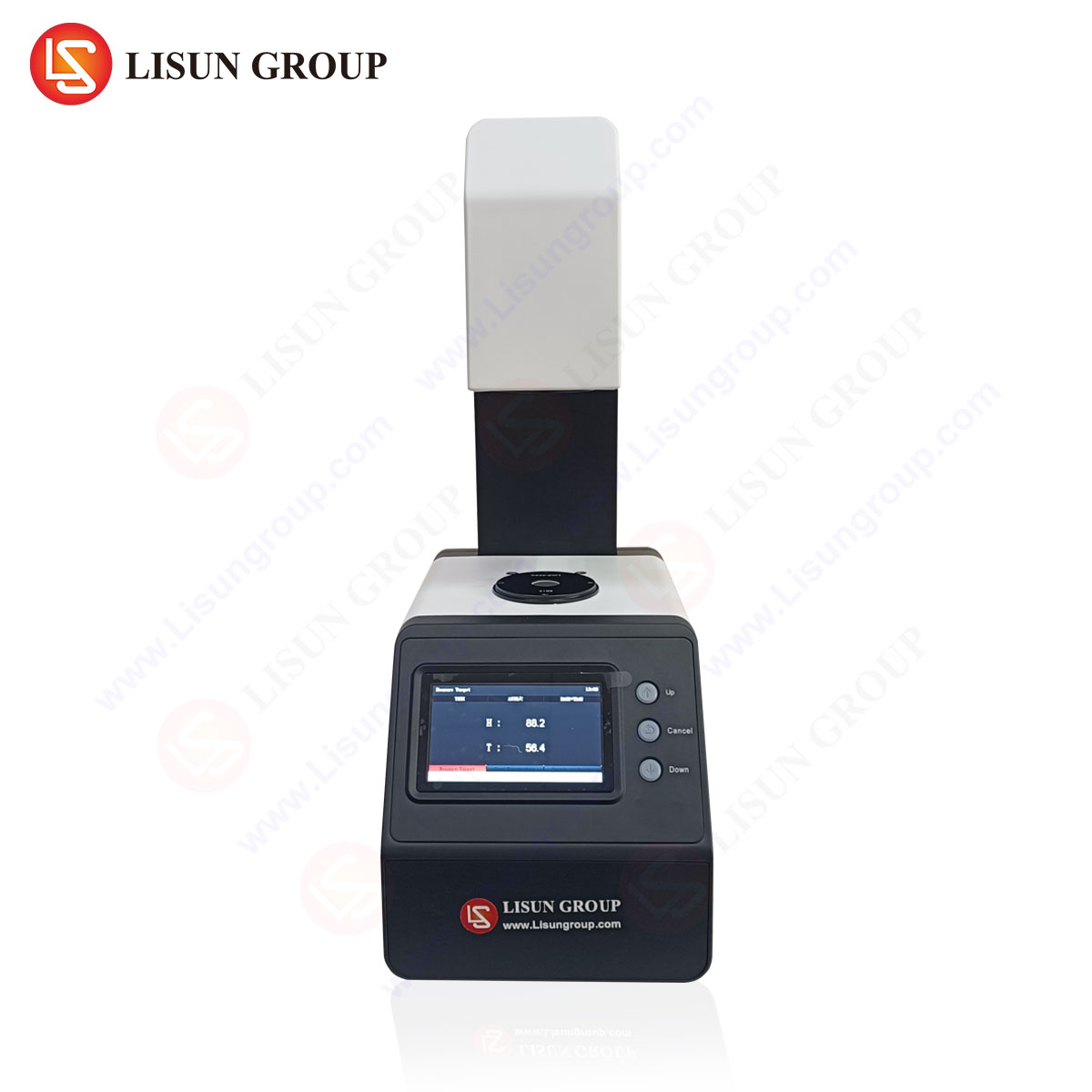
The requirement for dual capability in both material and fluid testing within quality control laboratories has driven the development of integrated instruments. The LISÚN HM-100 Medidor de neblina/Turbidity Meter exemplifies this convergence, engineered to perform ASTM D1003, ISO 14782, and ISO 7027-compliant measurements within a single platform. This dual functionality eliminates the need for separate, dedicated devices, streamlining workflow and reducing calibration overhead in multi-industry labs.
The HM-100 operates on the core principles previously described. For haze measurement, it employs a precision integrating sphere with separate detectors for total transmitted light and diffusely scattered light. A highly stable CIE Standard Illuminant A light source and a silicon photoelectric cell ensure photopic response accuracy. For turbidity, the instrument switches to a nephelometric optical path, utilizing an infrared LED source (860 nm) as per ISO 7027 to negate sample color effects, with a sensitive detector positioned at 90 degrees. The instrument automatically calculates and displays results in the appropriate units: percentage haze or NTU/FNU.
Key specifications of the HM-100 include a haze measurement range of 0-100% with a resolution of 0.01%, a turbidity range of 0-1000 NTU (extendable with dilution), and high repeatability of less than 0.5% for haze and ±2% for turbidity. Its calibration is maintained using master haze standards and a set of formazin-based turbidity standard solutions. The user interface, featuring a large color touchscreen, allows for straightforward configuration of test parameters, storage of calibration data, and export of results for statistical process control (SPC).
Aplicaciones y casos de uso específicos del sector
The application of haze and turbidity measurement spans the entire lifecycle of components, from raw material inspection to final product qualification.
En Material eléctrico y electrónico y Electrónica de consumo, the clarity of polymer housings for smartphones, tablets, and wearables is critical for aesthetic quality. High haze can diffuse backlighting, reducing display contrast and legibility. For Iluminación, haze in diffuser panels directly affects light distribution uniformity and efficiency; excessive scattering leads to hot spots and glare, violating photometric design specifications.
El Electrónica del automóvil y Componentes aeroespaciales y de aviación sectors impose stringent optical requirements. A polycarbonate cover for an in-dashboard touchscreen or a heads-up display combiner must exhibit minimal haze to prevent ghosting and maintain image sharpness under varying ambient light conditions. Similarly, cockpit window transparencies and interior lighting covers are subject to rigorous haze testing per MIL-PRF and SAE standards.
Para Productos sanitarios, clarity is both functional and safety-critical. Intravenous fluid bags, syringe barrels, and microfluidic chips must be free of visual defects and cloudiness that could hinder particulate inspection or affect optical sensor readings in analytical equipment. Turbidity measurement is equally vital for in-vitro diagnostic reagents and purified water used in device cleaning.
Industrial Control Systems y Equipos de telecomunicaciones often utilize transparent status windows or light pipes. Haze in these Componentes eléctricos, such as indicator light caps or connector housings, can attenuate signal strength from an LED, leading to misinterpretation of system status. In Cable and Wiring Systems, the clarity of the insulating jacket can be an indicator of material degradation or contamination during extrusion.
Office Equipment like projectors, scanners, and printers rely on precise optical paths. Haze in lens elements or document platen glass can scatter light, reducing resolution and color fidelity. Turbidity monitoring of inks and toner carrier fluids is also essential for printhead reliability and output quality.
Methodological Best Practices and Data Interpretation
Accurate measurement transcends instrument capability and hinges on meticulous sample preparation and handling. For solid materials, samples must be clean, free of fingerprints, scratches, and static dust. Sample thickness must be uniform and recorded, as haze can exhibit a thickness-dependent relationship. Samples should be conditioned to standard temperature and humidity (e.g., 23°C, 50% RH per ASTM D618) prior to testing to account for hygroscopic effects in some polymers.
For liquid turbidity measurement, sample vials must be impeccably clean, using dedicated, non-abrasive cleaning procedures to avoid introducing scratches that themselves scatter light. Homogenization of the sample without inducing air bubbles is crucial, as bubbles are potent scatterers. Immediate testing after sampling prevents settling or agglomeration of particulates. Calibration verification using secondary standards should be performed at frequencies dictated by the laboratory’s quality manual and usage intensity.
Data interpretation requires contextual understanding. A low haze value (e.g., <1%) indicates high optical clarity, typical of optical-grade polycarbonate or acrylic. Values between 1% and 10% may be acceptable for general-purpose transparent covers, while higher values signify diffusing materials. In turbidity, drinking water standards typically mandate levels below 1 NTU. Process water in semiconductor or pharmaceutical manufacturing may require ultralow turbidity (<0.1 NTU), while wastewater streams are monitored at much higher ranges. Trend analysis is often more valuable than a single data point; a gradual increase in haze of a batch of polymer resin or a spike in the turbidity of a coolant fluid can signal process deviations, material degradation, or contamination events, triggering corrective actions.
Advantages of Converged Measurement Systems
The implementation of a dual-function instrument like the HM-100 confers several operational advantages. It reduces laboratory bench space and capital expenditure. It simplifies training, as operators master a single interface for two critical tests. Perhaps most significantly, it enhances data integrity by centralizing calibration management and reducing the risk of sample mix-up or transcription errors associated with transferring samples between different instruments. For organizations serving multiple verticals—such as a contract testing lab or a diversified manufacturer—this flexibility is particularly valuable, enabling rapid switching between testing regimes for polymer films, molded components, and process liquids with traceable, audit-ready results.
Conclusión
The quantitative assessment of haze and turbidity represents a cornerstone of modern quality assurance programs. These metrics provide objective, repeatable data that correlate directly to material performance, process stability, and product efficacy. As industries from medical devices to aerospace continue to demand higher precision and reliability, the role of compliant, accurate, and efficient measurement technology becomes increasingly central. The integration of haze and turbidity measurement into unified platforms offers a pragmatic and technically robust solution for quality control laboratories tasked with ensuring that materials and fluids meet the exacting clarity specifications demanded by today’s engineered applications and regulatory frameworks.
Sección FAQ
Q1: Can the HM-100 measure the haze of very thin films or coatings?
A1: Yes, provided the sample is structurally stable and can be properly mounted in the sample holder. The instrument is sensitive to low haze levels. However, for extremely thin films (<0.1mm), care must be taken to ensure the sample is flat and free of wrinkles, as surface texture can influence the result. Using a holder designed for films or laminating the sample between two clear, low-haze glass plates (accounting for the haze of the plates) are common techniques.
Q2: How does the instrument compensate for the color of a liquid sample during turbidity testing?
A2: The HM-100 adheres to the ISO 7027 standard, which specifies the use of an infrared light source with a peak wavelength of 860 nm. At this near-infrared wavelength, the absorption of light by most colorants in water or common fluids is minimized. This design effectively decouples the turbidity measurement from sample color, ensuring that the reading reflects particulate scattering rather than light absorption due to dissolved dyes or organic matter.
Q3: What is the recommended calibration interval for the HM-100 in a high-use industrial QC environment?
A3: While the instrument features high stability, calibration frequency should be determined by a risk-based approach aligned with ISO/IEC 17025 guidelines. For daily use, a weekly verification using a secondary standard is advisable. A full two-point calibration (e.g., using 0% and a known haze standard; 0 NTU and a formazin standard) should be performed monthly or whenever the verification check falls outside predetermined control limits. The frequency should be documented and adjusted based on historical performance data.
Q4: Is the instrument suitable for measuring the turbidity of viscous fluids, such as oils or gels?
A4: The nephelometric method assumes a fluid of relatively low viscosity that allows for the elimination of air bubbles and uniform presentation. For viscous samples, the measurement is possible but methodologically challenging. It is critical to ensure the sample cell is filled without entrapped air bubbles, which may require degassing under vacuum. Results may be less reproducible due to potential for particle settling being impeded. For such non-standard applications, developing and validating a specific internal test procedure, including defined sample preparation and homogenization steps, is essential.

 ES
ES  EN
EN  RU
RU  PT
PT  TR
TR  AR
AR  DE
DE  PL
PL  IT
IT  FR
FR  KO
KO  JA
JA  ID
ID