




A Technical Analysis of Sulphur Dioxide Corrosion Testing: Principles, Standards, and System Implementation
Sulphur dioxide (SO₂) stands as a potent atmospheric contaminant whose corrosive effects present a significant challenge to the long-term reliability of materials and components across a vast spectrum of industries. Originating from both natural phenomena and industrial processes such as fossil fuel combustion, SO₂, in the presence of moisture, forms sulphurous and sulphuric acids. This acidic deposition accelerates the corrosion of metals, degrades polymeric materials, and compromises the electrical and mechanical integrity of electronic assemblies. To quantify material resilience and predict service life within such environments, standardized accelerated testing methodologies are indispensable. ISO 3231:1993, “Paints and varnishes — Determination of resistance to humid atmospheres containing sulfur dioxide,” provides a foundational framework for this type of evaluation, though its application has been judiciously extended beyond coatings to encompass a wide array of finished products and sub-assemblies. This article delineates the technical principles underlying SO₂ corrosion testing, examines the requirements of a conformant test system, and explores the critical role of such testing in ensuring product durability, with specific reference to the implementation offered by the LISÚN SQ-010 sulphur dioxide test chamber.
Chemical Mechanisms of Sulphur Dioxide-Induced Degradation
The corrosive potency of sulphur dioxide is not inherent to the gas alone but is a consequence of its dissolution and subsequent oxidation in a humid environment. Upon introduction into a sealed test chamber with controlled relative humidity, SO₂ hydrates to form sulphurous acid (H₂SO₃), a reaction represented as SO₂(g) + H₂O(l) ⇌ H₂SO₃(aq). This weak acid can further oxidize, catalyzed by atmospheric oxygen or metallic surfaces, to yield sulphuric acid (H₂SO₄), a strong mineral acid with profoundly aggressive corrosive properties. The resultant acidic condensate attacks metallic surfaces through electrochemical reactions, leading to the formation of non-protective sulphates and oxides. For instance, copper and its alloys undergo rapid tarnishing and pitting, while silver experiences severe sulphide tarnishing, which dramatically increases contact resistance—a critical failure mode in electrical connectors and relays.
For non-metallic materials, including the polymer housings of consumer electronics, insulation on cable and wiring systems, and conformal coatings on printed circuit boards (PCBs), the acidic environment can induce hydrolytic degradation. This process breaks polymer chains, leading to embrittlement, loss of tensile strength, cracking, and changes in dielectric properties. The synergistic effect of humidity, temperature, and SO₂ concentration accelerates these failure mechanisms, providing a compressed timeline for assessing material performance that would otherwise require years of field exposure.
Deconstructing the ISO 3231 Test Methodology
ISO 3231 specifies a procedure for evaluating the resistance of paint films and related coatings to a humid atmosphere containing a defined concentration of sulphur dioxide. The core of the method involves cyclic exposure, where test specimens are subjected to periods within a humid, SO₂-laden environment followed by periods in ambient laboratory conditions. A standard test cycle might stipulate 8 hours of exposure at 40°C ± 3°C with a relative humidity maintained at 100%, with an SO₂ concentration of 0.2 ± 0.05% by volume, followed by 16 hours at ambient temperature and humidity. This cycle is typically repeated for a predetermined number of times (e.g., 1, 3, or 5 cycles) as agreed upon by relevant parties.
The endpoint of the test is a visual assessment of defects such as blistering, cracking, peeling, or discoloration, rated according to ISO 4628 standards. However, for functional components, the assessment criteria are far more extensive. Electrical continuity, insulation resistance, mechanical actuation force, and optical clarity become the critical metrics. The standard thus provides a controlled, reproducible, and severely aggressive environment designed to precipitate and compare failure modes.
Architectural Imperatives for a Conformant Test System
A test chamber engineered for ISO 3231 compliance must address several stringent technical requirements to ensure repeatable and reproducible results. The system must maintain precise control over three primary variables: gas concentration, temperature, and humidity, all within a highly corrosive atmosphere.
The chamber interior and all fixtures must be constructed from materials inherently resistant to sulphuric acid attack, such as high-grade PTFE (Teflon), CPVC, or specially coated stainless steels. Any metallic components within the test volume would themselves corrode, contaminating the test and introducing variables. Gas introduction requires a precise and safe dosing system, often involving pre-mixed SO₂/N₂ cylinders or a calibrated volumetric injection system to achieve the 0.2% concentration. Humidity generation must not utilize steam injection with metallic boilers, as the acidic gas would corrode them; instead, atomization systems with corrosion-resistant nozzles or water jacket humidification are employed.
Temperature uniformity is paramount, as localized cold spots can lead to excessive condensation, creating unrealistically severe conditions. Therefore, a homogenous air circulation design, coupled with precise PID temperature control, is essential. Finally, the system must incorporate robust gas scrubbing or neutralization protocols for safe exhaust management, ensuring operator safety and environmental compliance.
The LISUN SQ-010: A System for Expanded Material Evaluation
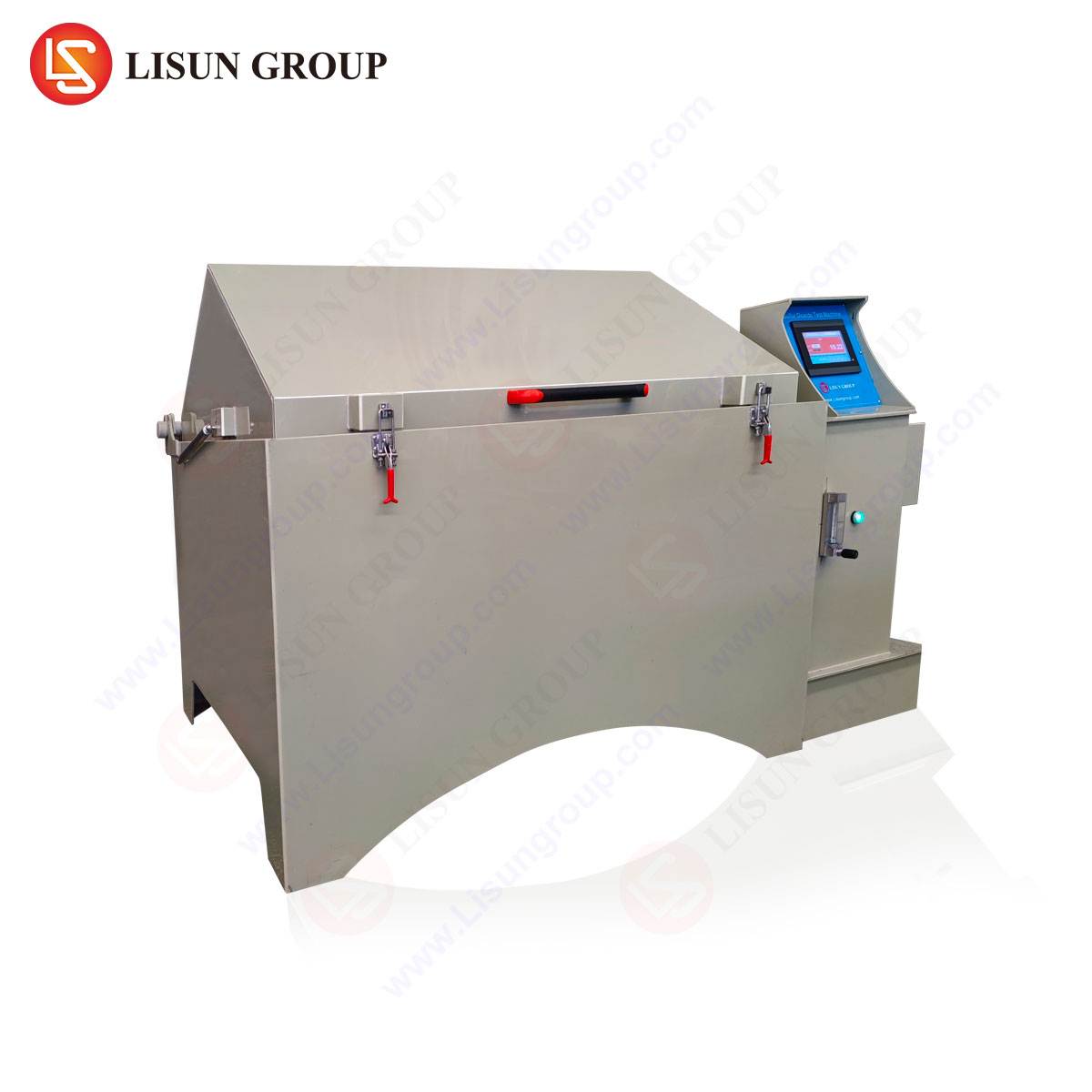
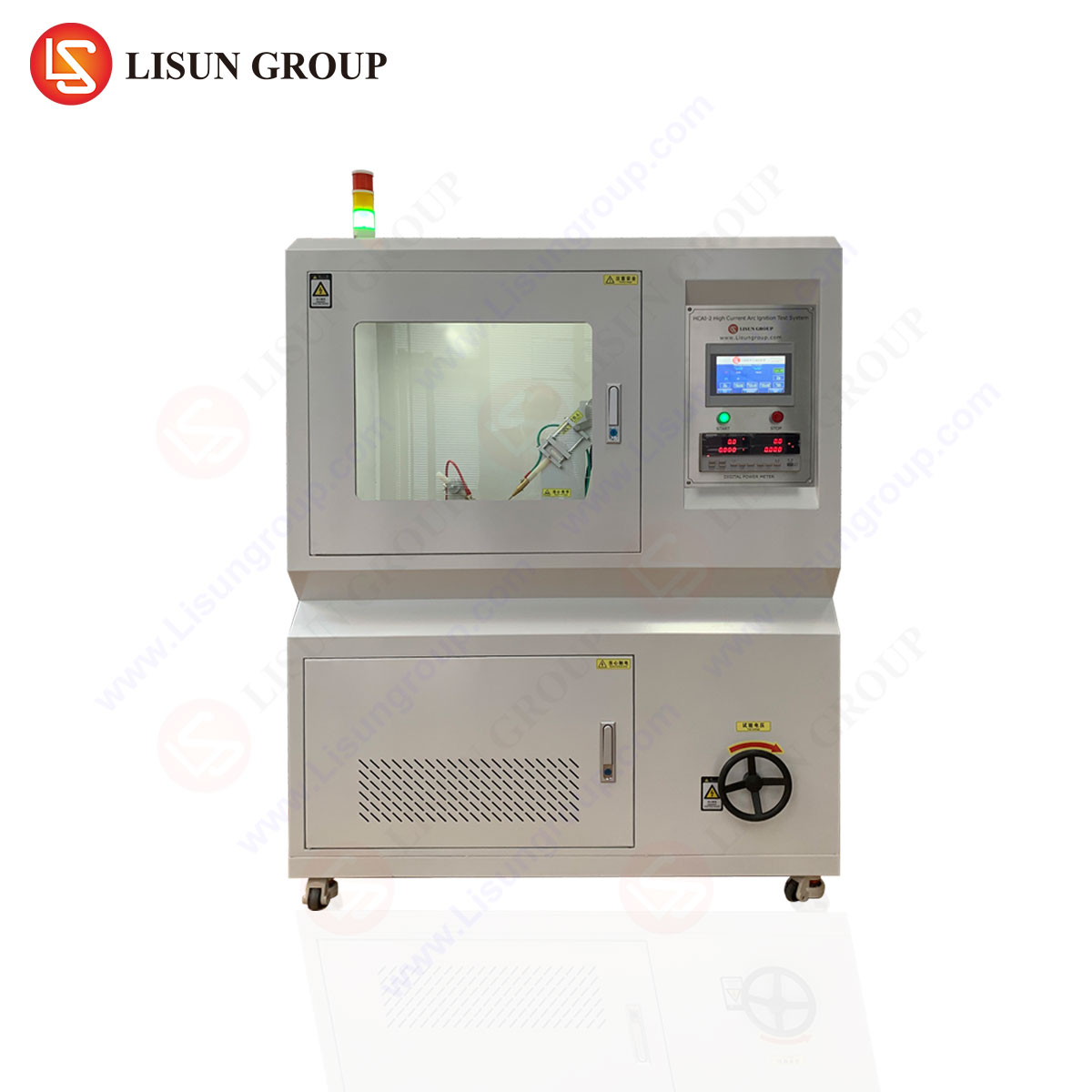
The LISUN SQ-010 sulphur dioxide test chamber is engineered as a turnkey solution that meets the core requirements of ISO 3231 while facilitating its application to a broader range of industrial components. Its design philosophy emphasizes precise environmental control, operational safety, and durability to withstand the corrosive test medium.
The chamber utilizes a PTFE-lined workspace and PTFE-coated wire shelves, ensuring no metallic contamination of the test specimens or the chamber atmosphere. Temperature control is achieved via an air-heating system with a forced circulation fan, maintaining uniformity within ±0.5°C. Humidity is generated by a dedicated water heating system that produces vapor without introducing particulates, with RH maintained near saturation (100%). Gas concentration is managed through a programmable logic controller (PLC) that automates the injection and purging cycles, enhancing repeatability. A built-in gas washing bottle filled with sodium hydroxide (NaOH) solution neutralizes exhaust SO₂ before release.
Key Specifications of the LISUN SQ-010:
- Internal Volume: 300 Liters (Standard)
- Gama de temperaturas: Ambient +10°C to +50°C
- Humidity Range: 95% to 100% RH
- SO₂ Concentration: 0.1% to 1.0% (vol.) adjustable, with 0.2% as standard setpoint
- Chamber Material: PP Plate with PTFE Lining
- Heating System: Air Heating
- Humidification: Independent Water Heating System
- Controller: Programmable Touch-Screen PLC
Cross-Industry Applications for Functional Reliability Assessment
The utility of SO₂ testing transcends paint evaluation, serving as a critical validation tool for functional reliability in numerous sectors.
Electrical & Electronic Components: Connectors, switches, sockets, and relay contacts are tested for increased contact resistance and mechanical seizure due to corrosion. For Electrónica del automóvil, such as engine control units (ECUs) and sensors located near exhaust systems or in industrial-use vehicles, SO₂ resistance is vital for longevity.
Telecommunications & Industrial Control Systems: Backplane connectors, server components, and PLC modules in industrial settings, where atmospheric pollutants are common, are validated for signal integrity and uninterrupted operation.
Iluminación: Both indoor (in polluted urban interiors) and outdoor luminaires, particularly their metallic heat sinks and electrical contacts, are assessed for corrosion-induced failure.
Aerospace & Aviation: While high-altitude environments are different, components used in ground-support equipment and within airport facilities are exposed to significant SO₂ from jet exhaust and ground vehicle operations.
Medical Devices & Office Equipment: Devices intended for global deployment, including diagnostic equipment and high-value printers/copiers, are tested to ensure functionality in diverse atmospheric conditions, preventing failures linked to atmospheric corrosion of internal metallic parts.
Cable & Wiring Systems: Insulation materials and shielding are evaluated for hydrolytic degradation and the corrosion of braided shields, which can affect signal transmission and safety grounding.
In each case, the LISUN SQ-010 provides a controlled environment to perform comparative testing between material lots, supplier components, or design iterations, identifying vulnerabilities before product launch.
Analytical Advantages in Comparative Material Testing
The primary advantage of a dedicated system like the SQ-010 lies in its generation of highly accelerated, yet standardized and comparable, corrosion data. By subjecting products from different suppliers or alternative material formulations to identical, severe conditions, engineers can make data-driven selection decisions. For example, comparing the post-test insulation resistance of two different batches of cable, or the contact resistance of gold-flashed versus palladium-silver alloy connectors, yields clear performance differentials.
The automation of cycle control removes operator variance, ensuring that the only variable is the specimen under test. The chamber’s corrosion-resistant construction guarantees that the test severity remains consistent over time and is not diminished by the degradation of the chamber itself. This allows for the establishment of internal corporate standards that are more stringent than international norms, fostering a higher benchmark for product quality and reliability.
Integrating SO₂ Testing into a Broader Reliability Strategy
It is crucial to recognize that sulphur dioxide testing is not a standalone predictor of field performance but one instrument in a broader reliability orchestra. Its true value is realized when correlated with other environmental tests. Sequential or combined testing—for instance, thermal cycling followed by SO₂ exposure, or vibration testing prior to corrosive atmosphere evaluation—can uncover synergistic failure modes that single-factor tests miss. A component may survive a standard SO₂ test but fail catastrophically if the corrosive attack occurs on a surface already micro-cracked from thermal stress.
Therefore, the data from ISO 3231-compliant testing should be analyzed in conjunction with results from humidity (e.g., IEC 60068-2-78), salt fog (e.g., ISO 9227), and thermal cycling tests. This holistic approach enables the construction of a more accurate reliability model, informing design-for-reliability (DfR) practices and warranty period estimations.
Sección FAQ
Q1: Can the LISUN SQ-010 chamber be used for testing standards other than ISO 3231?
A1: Yes, while optimized for ISO 3231 parameters, the chamber’s adjustable concentration (0.1-1.0% SO₂), temperature, and humidity controls allow it to be configured for other corporate or legacy standards that specify different SO₂ concentrations or cycle durations, providing flexible testing capability.
Q2: How is the safety of laboratory personnel ensured during and after the test?
A2: The SQ-010 incorporates multiple safety features. The exhaust gas is actively neutralized by bubbling through an integrated NaOH scrubber, converting SO₂ to non-hazardous sodium sulphate before atmospheric release. The chamber door is typically interlocked, and the system includes over-pressure relief. Proper installation with adequate laboratory ventilation is, however, a prerequisite.
Q3: What types of results or data can be generated from a test cycle?
A3: Beyond the pass/fail visual inspection per ISO, functional testing pre- and post-exposure generates quantitative data. This includes measurement of contact resistance (in milliohms), insulation resistance (in Gigaohms), dielectric withstand voltage (HIPOT), mechanical actuation force, and digital imaging for documenting surface morphology changes. This quantitative data is essential for comparative analysis.
Q4: For how many cycles should a new automotive electronic component be tested?
A4: There is no universal answer; the cycle count is a correlation between accelerated testing and expected field life. It is typically defined by the OEM’s internal standards. A common approach is to test for 5, 10, and 15 cycles, with functional checks after each set, to establish a degradation curve and determine a suitable qualification endpoint.
Q5: How does SO₂ testing differ from traditional salt spray (fog) testing?
A5: Salt spray (e.g., ASTM B117, ISO 9227) primarily assesses corrosion from chloride ions, which is highly relevant for coastal or de-icing salt environments. SO₂ testing creates an acidic, sulphating environment more representative of industrial or urban pollution. The corrosion products and failure mechanisms differ; many specifications require both tests to cover the full spectrum of potential corrosive exposures.

 ES
ES  EN
EN  RU
RU  PT
PT  TR
TR  AR
AR  DE
DE  PL
PL  IT
IT  FR
FR  KO
KO  JA
JA  ID
ID