





Quantifying Clarity: A Technical Analysis of Haze and Turbidity Measurement in Advanced Manufacturing
Abstracto
The precise quantification of optical clarity and particulate contamination is a critical quality parameter across a diverse spectrum of high-technology industries. This article provides a comprehensive examination of the key industrial applications for haze meters and turbidity meters, focusing on their role in ensuring product performance, reliability, and compliance. The discussion integrates the scientific principles of light scattering measurement with specific use cases in sectors including automotive electronics, medical devices, aerospace components, and consumer electronics. A detailed analysis of the LISÚN HM-100 Medidor de neblina/Medidor de turbidez is presented to illustrate the integration of advanced metrology into modern quality assurance protocols.
Introduction to Optical Clarity Metrology
Haze and turbidity, while often discussed in tandem, represent distinct yet related optical phenomena. Haze is formally defined as the percentage of transmitted light that deviates from the incident beam by more than 2.5 degrees through forward scattering, primarily affecting the transparency and visual appearance of solid materials like plastics and glass. Turbidity, conversely, quantifies the cloudiness or opacity of a fluid caused by suspended particles, measured in Nephelometric Turbidity Units (NTU) or Formazin Nephelometric Units (FNU). The accurate measurement of these parameters transcends aesthetic assessment; it serves as a non-destructive, quantitative proxy for material homogeneity, surface integrity, fluid purity, and manufacturing process control. In industries where miniaturization, reliability, and optical performance are paramount, the data derived from these instruments inform critical decisions from incoming material inspection to final product validation.
Fundamental Principles of Integrated Haze and Turbidity Measurement
Modern instruments, such as the LISUN HM-100, employ a dual-configuration optical system to measure both parameters with high repeatability. The core principle is based on the integration of scattered light intensity. For haze measurement per standards like ASTM D1003 and ISO 14782, a CIE-standard illuminant and photodetector are used. The total transmitted light (Tt) and the diffuse transmitted light (Td) – the component scattered beyond the 2.5-degree threshold – are measured. Haze is then calculated as (Td / Tt) * 100%. For turbidity, the nephelometric method is employed, where a light source illuminates a fluid sample and a photodetector positioned at 90 degrees to the incident beam measures the intensity of light scattered by suspended particles. This 90-degree scatter measurement is most sensitive to fine particulates and correlates strongly with visual cloudiness. The HM-100 integrates these two measurement modes into a single platform, utilizing precision collimated light sources, high-sensitivity silicon photodiodes, and microprocessor-controlled signal processing to ensure accuracy across a wide dynamic range.
Ensuring Component Integrity in Electrical and Electronic Systems
The performance and longevity of electrical components are profoundly influenced by the properties of their constituent materials. For transparent or translucent polymer components used as covers, lenses, or insulating barriers, haze is a direct indicator of polymer degradation, improper molding parameters, or filler dispersion issues. Excessive haze in a polycarbonate switch cover or an indicator lens can diffuse light, reducing signal clarity and potentially masking fault indicators. The HM-100 provides quantitative data to verify that injection molding temperatures, cooling rates, and material drying processes are within specification. Furthermore, in cable and wiring systems, the clarity of insulating materials can be monitored; crystallinity changes in polymers that affect optical clarity may also correlate with changes in dielectric properties. Turbidity measurement finds a crucial role in the quality control of dielectric coolants and insulating oils used in high-voltage transformers and industrial control systems. Particulate contamination in these fluids can lead to tracking, reduced breakdown voltage, and accelerated aging. Regular monitoring with a turbidity meter serves as an early-warning system for filtration system failure or internal component wear.
Automotive Electronics and Aerospace: Reliability in Extreme Environments
The automotive and aerospace sectors impose the most stringent reliability demands. Within automotive electronics, translucent components for interior ambient lighting, heads-up display (HUD) waveguides, and sensor covers must maintain precise optical characteristics despite exposure to wide thermal cycling, UV radiation, and chemical agents. A haze measurement protocol ensures that these materials do not craze, yellow, or become cloudy over time, which would degrade system performance. For instance, a lidar sensor cover with increasing haze could attenuate and scatter the laser signal, compromising the accuracy of advanced driver-assistance systems (ADAS). In aerospace and aviation components, similar requirements exist for cockpit display panels and exterior light covers. Turbidity measurement is equally critical for hydraulic fluids and lubricants within these systems. In aerospace, the presence of microscopic wear metals or seal degradation products in hydraulic fluid, detected as an increase in NTU, can predict impending system failure long before traditional particle counters might trigger an alert. This enables predictive maintenance, which is economically and operationally vital in aviation.
Medical Device Manufacturing and Pharmaceutical Fluid Monitoring
In medical device manufacturing, clarity is synonymous with safety and function. Intravenous (IV) drip chambers, fluid bags, syringe barrels, and diagnostic cuvettes must exhibit exceptionally low haze to allow for clear visual inspection of fluid levels, bubbles, and particulates. Regulatory frameworks, such as those from the FDA and ISO 13485, often require validated measurement methods for critical quality attributes. The HM-100’s ability to conform to international test standards provides the traceable data necessary for regulatory submissions. Turbidity is a fundamental test for water-for-injection (WFI) and purified water systems used in pharmaceutical production and device cleaning. It is a direct, real-time indicator of system integrity and filter performance. A spike in turbidity in a clean-in-place (CIP) system could indicate a biofilm release or filter breach, necessitating immediate corrective action to prevent batch contamination.
Quality Assurance in Lighting, Telecommunications, and Consumer Optics
The efficacy of lighting fixtures, especially those based on Light Emitting Diodes (LEDs), is heavily dependent on the optical quality of secondary optics, diffusers, and covers. A diffuser panel with inconsistent haze will produce non-uniform illumination, creating hot spots or dark zones. Precise haze measurement allows manufacturers to grade materials and optimize diffuser design for specific applications, from soft ambient lighting to high-bay industrial fixtures. In telecommunications equipment, the end-faces of optical fiber connectors are inspected for microscopic scratches and contamination that scatter light, increasing insertion loss. While specialized interferometers are used for detailed inspection, turbidity-meter principles underpin simpler, inline monitoring of cleaning solution purity used in connector maintenance. For consumer electronics, the quality of transparent touchscreen overlays, camera lens covers, and display layers is paramount. Consumers perceive low haze as a marker of high quality. Automated haze testing with instruments like the HM-100 can be integrated into production lines to perform 100% inspection of high-value display components, rejecting units that do not meet stringent clarity thresholds.
The LISUN HM-100: A Unified Platform for Precision Metrology
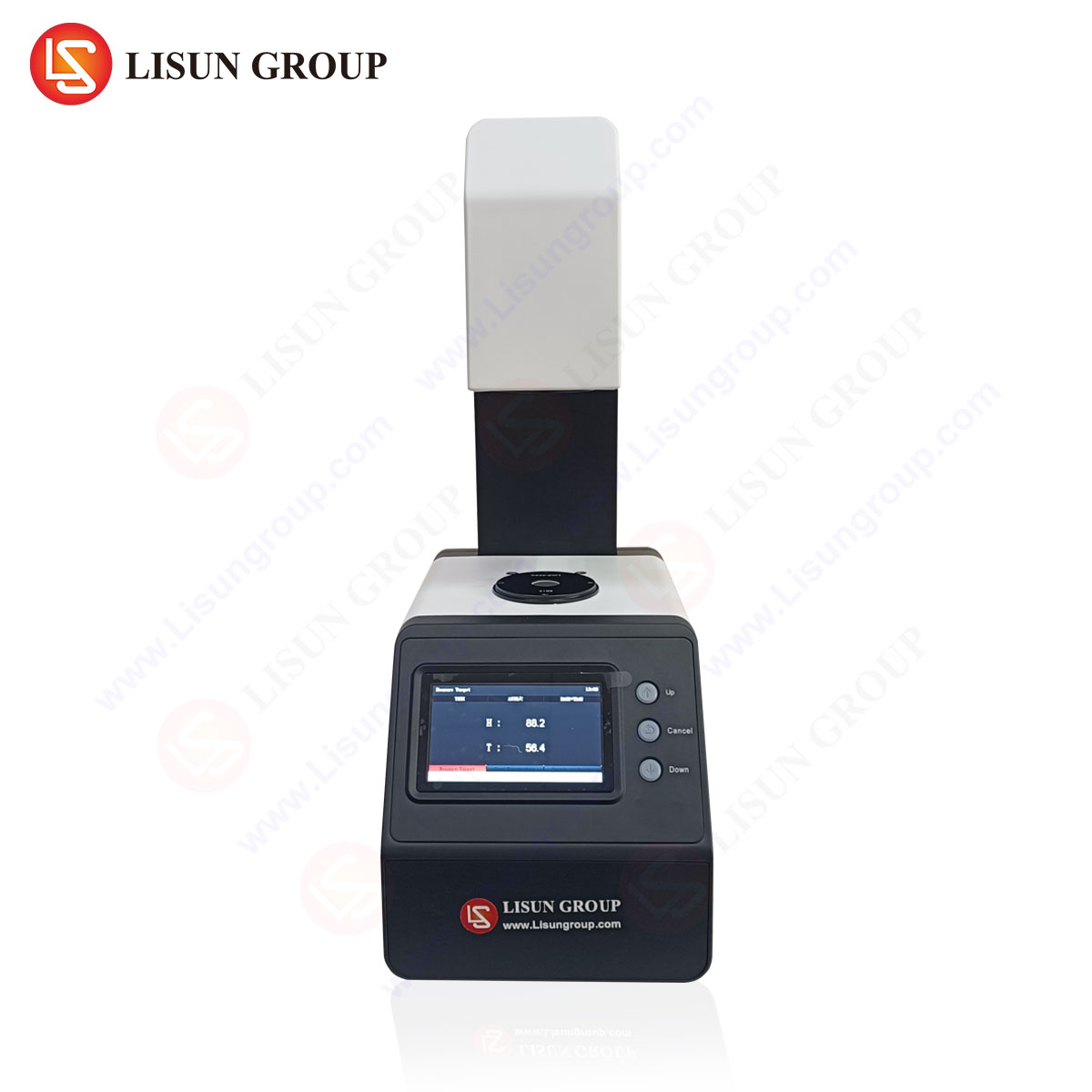
The LISUN HM-100 Haze Meter/Turbidity Meter exemplifies the integration of these application requirements into a single, robust instrument. It features a dual-light source and detector system, automatically switching between haze and turbidity measurement modes. For haze, it complies with ASTM D1003 using CIE Illuminant C and a photopic detector, with a measurement range of 0-100% and a resolution of 0.01%. For turbidity, it utilizes an infrared LED source and a 90-degree nephelometric detector, covering a range of 0-1000 NTU with a resolution of 0.01 NTU in the lower ranges critical for high-purity fluids.
Its competitive advantages are particularly relevant to the industries discussed:
- Material Versatility: The sample compartment accommodates both solid plaques up to several millimeters thick and standard round turbidity vials, allowing a single instrument to service both polymer lab and fluid quality control stations.
- Stability and Repeatability: Temperature-stabilized optical components and advanced signal averaging algorithms minimize drift, providing the measurement consistency required for statistical process control (SPC) in high-volume manufacturing of electrical components and household appliances.
- Cumplimiento de la normativa: Built-in calibration routines and traceability to NIST-standard reference materials support compliance with ISO, ASTM, and industry-specific quality management systems, essential for medical device and automotive electronics suppliers.
- Integridad de los datos: Integrated data logging and direct output to laboratory information management systems (LIMS) enable complete audit trails, a necessity in aerospace and medical manufacturing.
Implementation in Industrial Control and Process Validation
Beyond laboratory quality control, haze and turbidity data feed directly into industrial control systems for process validation. In the extrusion or injection molding of transparent polymers for office equipment housings or consumer electronics, inline or at-line haze measurement can provide real-time feedback to adjust process parameters. A trending increase in haze from a production line molding USB connector transparent bodies could signal moisture in the resin feedstock or a degrading screw barrel, triggering preventive maintenance before non-conforming product is manufactured. Similarly, in a closed-loop cooling system for high-power telecommunications server racks, continuous turbidity monitoring of the coolant can protect sensitive electronics from fouling and correlate particulate levels with pump wear rates.
Conclusión
The measurement of haze and turbidity has evolved from a basic quality check to a sophisticated process analytical technology. As industries continue to advance toward smarter, more reliable, and miniaturized products, the demand for precise, reliable, and integrated metrology tools grows. Instruments like the LISUN HM-100, which consolidate multiple standardized test methods into a unified platform, provide the essential data needed to control material properties, ensure fluid purity, validate manufacturing processes, and ultimately guarantee the performance and safety of finished goods across the technological landscape. The quantitative data derived from these measurements forms an indispensable component of modern quality assurance, risk mitigation, and continuous improvement programs.
Preguntas más frecuentes (FAQ)
Q1: What is the primary difference between haze and turbidity measurement in a practical industrial context?
A1: The primary distinction lies in the sample matrix and the property being assessed. Haze is a material property measured on solid, transparent or translucent specimens (e.g., plastic films, molded lenses, glass panels) to quantify light scattering within the bulk or at the surface. Turbidity is a suspension property measured on fluids (e.g., water, oils, chemicals) to quantify the concentration of light-scattering suspended particles. While both rely on light scattering phenomenology, they address different phases and have separate standardized test methods.
Q2: For a manufacturer of automotive indicator lenses, which standard should be referenced for haze testing, and what typical specification limit might be expected?
A2: The most widely recognized standard for haze testing of plastic materials is ASTM D1003, “Standard Test Method for Haze and Luminous Transmittance of Transparent Plastics.” ISO 14782 is the functionally equivalent international standard. Typical specification limits for high-quality automotive lenses are stringent, often requiring haze values of less than 1.0% and sometimes as low as 0.5% to ensure maximum signal clarity and aesthetic appeal. The exact limit is defined by the OEM’s engineering specification.
Q3: Can the HM-100 be used to monitor the cleanliness of ultrasonic cleaning baths used for electronic component assembly?
A3: Yes, the turbidity measurement mode of the HM-100 is well-suited for this application. As a cleaning bath becomes contaminated with oils, fluxes, and microscopic debris from printed circuit boards (PCBs) or electrical components, its turbidity will increase. Regular monitoring of the NTU value provides an objective indicator of bath degradation, signaling the need for bath replacement or filtration before cleaning efficacy is compromised, which could lead to downstream reliability issues such as poor solder joint formation or conformal coating adhesion.
Q4: How does temperature affect turbidity readings, and how is this compensated for in precision instruments?
A4: Temperature directly affects fluid viscosity and the Brownian motion of suspended particles, which can influence light scatter intensity. A significant temperature change between calibration and sample measurement can introduce error. High-precision turbidity meters like the HM-100 often incorporate temperature sensors and software algorithms to apply compensation factors. For the most critical applications, such as pharmaceutical WFI testing, it is standard practice to allow samples and standards to equilibrate to a controlled temperature (e.g., 25°C) before measurement to minimize this variable.
Q5: In the context of quality control for transparent polycarbonate used in household appliance windows, what might a sudden upward trend in haze values indicate about the production process?
A5: A statistically significant upward trend in haze typically points to a deviation in the polymer processing parameters. Probable root causes include: excessive moisture in the resin feedstock prior to molding, leading to micro-voids (splay); incorrect melt temperature or injection speed, causing shear-induced crystallization; mold temperature that is too low, preventing proper surface replication; or the beginning of thermal degradation of the polymer due to excessive barrel temperatures or residence time. The haze meter acts as a sensitive diagnostic tool to trigger investigation into these specific process variables.

 ES
ES  EN
EN  RU
RU  PT
PT  TR
TR  AR
AR  DE
DE  PL
PL  IT
IT  FR
FR  KO
KO  JA
JA  ID
ID