




An Analytical Examination of Salt Spray Testing: Principles, Standards, and Advanced Methodologies for Corrosion Assessment
Introduction to Accelerated Corrosion Evaluation
Corrosion represents a pervasive and economically detrimental phenomenon affecting metallic components across virtually every industrial sector. The degradation of material integrity due to electrochemical reactions with environmental constituents leads to premature failure, safety compromises, and significant lifecycle costs. Consequently, the ability to predict and evaluate corrosion resistance is a critical facet of product design, quality assurance, and material selection. Among the suite of accelerated environmental tests, salt spray (fog) testing stands as one of the most established and widely implemented methodologies. This procedure subjects specimens to a controlled, corrosive atmosphere to rapidly assess the relative corrosion resistance of materials and protective coatings. The test does not precisely replicate natural environmental conditions but provides a standardized, reproducible, and severely aggressive environment that facilitates comparative analysis and quality control screening.
Fundamental Electrochemical Mechanisms in Salt Fog Exposure
The underlying principle of salt spray testing is the acceleration of electrochemical corrosion processes. A saline solution, typically a 5% sodium chloride (NaCl) solution per ASTM B117 and ISO 9227, is atomized to create a dense fog within a sealed chamber. This fog settles continuously onto test specimens, forming a thin, conductive electrolyte film. The presence of chloride ions (Cl⁻) is particularly aggressive, as they penetrate passive oxide layers on metals like steel and aluminum, initiating and propagating pitting corrosion. The electrochemical anodic and cathodic reactions—metal oxidation and oxygen reduction, respectively—are facilitated by the continuous, conductive salt layer and the constant supply of oxygen from the atomized solution. The test environment maintains elevated humidity and constant temperature, usually 35°C ± 2°C for neutral salt spray (NSS) tests, ensuring consistent reaction kinetics. This controlled severity allows for the condensation of corrosion products within days or weeks that might otherwise take years to manifest in milder field environments, enabling rapid comparative evaluations.
International Standards Governing Salt Spray Test Protocols
The execution and validity of salt spray testing are contingent upon strict adherence to internationally recognized standards. These documents prescribe precise parameters for solution chemistry, chamber conditions, specimen preparation, placement, and evaluation criteria. The most prevalent standard is ASTM B117 – Standard Practice for Operating Salt Spray (Fog) Apparatus, which defines the foundational methodology for neutral salt spray testing. Its international counterpart, ISO 9227 – Corrosion tests in artificial atmospheres – Salt spray tests, outlines similar procedures, including Neutral Salt Spray (NSS), Acetic Acid Salt Spray (AASS), and Copper-Accelerated Acetic Acid Salt Spray (CASS) tests, each with increasing aggressiveness for specific alloy types. Additional industry-specific standards frequently reference these core methods, tailoring them for particular applications. For instance, IEC 60068-2-11 details salt spray testing for electrical and electronic items, while automotive specifications such as SAE J2334 y GM 9540P define cyclic corrosion test protocols that incorporate salt spray phases alongside humidity and drying cycles to better simulate service environments. Compliance with these standards is non-negotiable for generating credible, comparable, and legally defensible data.
Limitations and Methodological Evolutions in Corrosion Testing
While traditional continuous salt spray testing remains a valuable quality control tool, its limitations are well-documented within materials science. The constant wetness and absence of drying phases can produce corrosion modes that differ from those observed in cyclic field environments, where wet-dry cycles often drive more severe degradation. Furthermore, it primarily assesses cosmetic or early-stage corrosion of coatings rather than long-term substrate protection. This recognition has driven the development of more sophisticated cyclic corrosion tests (CCT). These multi-phase regimens alternate between salt spray, humidity condensation, controlled drying, and sometimes freezing stages. CCT methods aim to better replicate the kinetics of natural atmospheric corrosion, including the concentration of electrolytes during drying phases, which accelerates the corrosion rate. For industries where reliability is paramount—such as automotive electronics and aerospace components—CCT protocols are increasingly supplanting or supplementing traditional continuous salt spray for more accurate performance forecasting.
The Role of Specialized Sulfur Dioxide Testing for Accelerated Atmospheric Simulation
In industrial and urban atmospheres polluted with combustion byproducts, corrosion is often accelerated by the presence of sulfur compounds. Sulfur dioxide (SO₂) gas, when combined with moisture, forms sulfurous and sulfuric acid, creating a highly corrosive environment that rapidly attacks metals, particularly those coated with decorative finishes like nickel-chromium. To simulate this specific condition, sulfur dioxide (SO₂) corrosion testing is employed as a complementary method to standard salt spray. Tests such as IEC 60068-2-42 y ISO 6988 define procedures for exposing specimens to a controlled atmosphere containing a specified concentration of SO₂ gas at elevated temperature and humidity. This test is exceptionally severe and is used to rapidly evaluate the resistance of metallic coatings, electronic contacts, and protective treatments to acidified atmospheres, providing critical data for components destined for harsh industrial or polluted urban settings.
Introducing the LISÚN Cámara de prueba de dióxido de azufre SQ-010
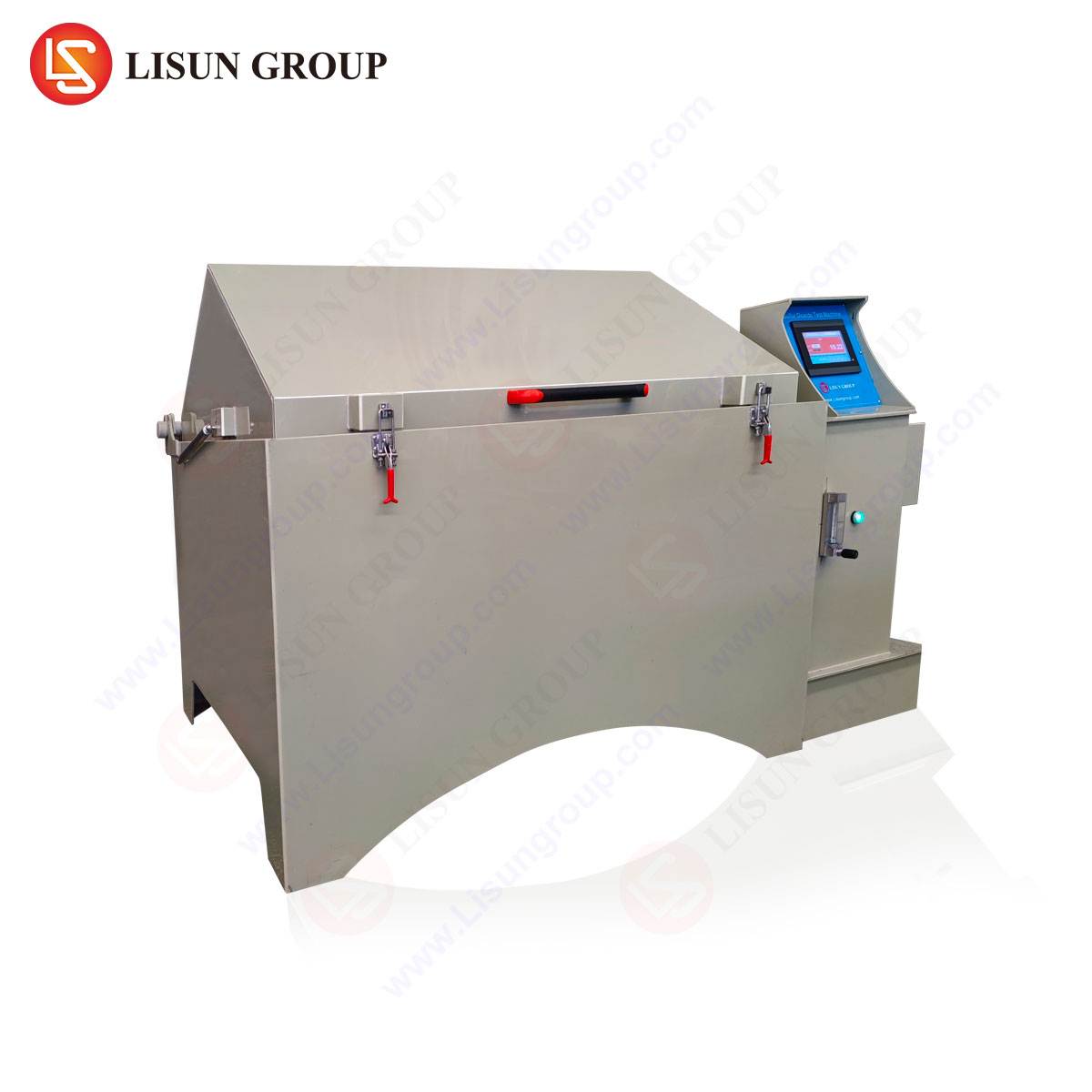
To meet the rigorous demands of SO₂ corrosion testing, specialized apparatus is required. The LISUN SQ-010 Sulfur Dioxide Test Chamber is engineered to provide precise and compliant testing per relevant international standards. This chamber facilitates the accurate introduction, circulation, and maintenance of a specified concentration of SO₂ within a controlled environment of temperature and relative humidity.
Testing Principles and Chamber Specifications
The SQ-010 operates on the principle of creating a sealed, corrosive atmosphere. A known volume of sulfur dioxide gas is introduced into the chamber, which is maintained at a constant temperature, typically 40°C ± 3°C, and high relative humidity (near 100% RH). The chamber’s interior is constructed from advanced PVC plastic or similar corrosion-resistant materials to withstand the aggressive environment. A built-in air circulation system ensures uniform distribution of the gas and consistent conditions across all test specimens. Precise concentration control is achieved through integrated gas injection and monitoring systems. Key specifications of the SQ-010 include:
- Gama de temperaturas: Ambient +10°C to 60°C.
- Relative Humidity Range: 85% to 98% RH.
- SO₂ Concentration: Adjustable per standard requirements (e.g., 0.1% to 1.0% by volume, commonly 0.33% or 0.067% for different tests).
- Volumen de la cámara: Designed to accommodate standard test racks and specimen loads.
- Sistema de control: Digital microcomputer controller for precise management of time, temperature, humidity, and gas concentration.
- Características de seguridad: Leak detection, over-temperature protection, and gas exhaust neutralization system.
Aplicaciones industriales y casos de uso
The LISUN SQ-010 chamber serves critical validation functions across multiple industries where resistance to industrial atmospheres is essential:
- Electrical and Electronic Equipment / Automotive Electronics: Testing of PCB finishes, connectors, terminals, and housing components to ensure functionality is not compromised by corrosive gas exposure.
- Iluminación: Evaluating the durability of metallic reflectors, housings, and sockets for street lighting or industrial fixtures exposed to polluted air.
- Household Appliances & Consumer Electronics: Assessing decorative chrome plating on faucets, appliance handles, and trim elements against tarnishing and corrosion.
- Telecommunications Equipment: Validating the corrosion resistance of outdoor cabinet hardware, antenna components, and grounding connections.
- Electrical Components: Testing the surface integrity of switches, sockets, and circuit breakers that may be installed in industrial facilities.
Competitive Advantages of the SQ-010 Design
The LISUN SQ-010 incorporates several design features that enhance its reliability, user safety, and compliance. Its advanced gas circulation system ensures exceptional uniformity of test conditions, a critical factor for reproducible results. The integrated gas washing (neutralization) exhaust system mitigates environmental and safety hazards by treating expelled SO₂ gas. Construction from premium anti-corrosive materials extends the chamber’s operational lifespan despite constant exposure to the test environment. Furthermore, its programmable controller allows for complex multi-cycle testing regimens, accommodating not only steady-state SO₂ tests but also cyclic tests involving gas introduction, humidity, and dwell periods, aligning with evolving industry testing protocols.
Specimen Preparation, Placement, and Post-Test Evaluation
The integrity of any corrosion test hinges on meticulous specimen preparation and standardized evaluation. Specimens must be cleaned to remove oils, fingerprints, or other contaminants that could influence results. Critical surfaces are often protected with inert wax or tape to isolate test areas. Within the chamber, specimens are placed on non-conductive racks at a specified angle (typically 15° to 30° from vertical) to ensure consistent fog or gas condensation and prevent pooling. Post-test evaluation is qualitative and comparative. Specimens are carefully rinsed to remove salt deposits, dried, and then assessed against defined criteria. This may involve visual inspection for corrosion products (e.g., white or red rust), blistering of paint, or tarnishing. More quantitative measures can include time to first corrosion, percentage of surface area affected, or corrosion depth measurements via cross-sectioning. The evaluation standard used (e.g., ASTM D1654 for painted specimens) must be explicitly defined in the test report.
Correlation Between Accelerated Testing and Real-World Service Life
A perennial challenge in accelerated testing is establishing a quantitative correlation between test hours and years of field service. A direct mathematical multiplier is rarely accurate due to the vast variability of natural environments—coastal, industrial, rural, urban—and their unique combinations of temperature, humidity, pollutant concentration, and wet-dry cycles. Salt spray and SO₂ tests are therefore most effectively used as comparative and qualitative tools. They excel at ranking materials or coating systems, identifying processing flaws (e.g., poor pretreatment, coating thinness), and verifying conformance to a predetermined acceptance criterion. For example, a component passing 96 hours of CASS testing may be deemed suitable for certain automotive exterior applications based on historical correlation data developed by the manufacturer. The true value lies in the test’s reproducibility and its ability to consistently identify inferior materials or processes.
Integrating Salt Spray Data into a Comprehensive Reliability Strategy
Sophisticated engineering organizations treat accelerated corrosion testing not as a standalone gate but as one integral component of a holistic reliability assessment strategy. Data from salt spray and SO₂ tests should be analyzed in conjunction with results from other environmental stress tests—such as temperature cycling, humidity freeze, and UV exposure—and, where possible, alongside field performance data from similar products. This multi-faceted approach allows for the development of more robust correlation models and a deeper understanding of failure mechanisms. For a new automotive control unit, the validation suite might include sequential testing: thermal cycling to induce mechanical stress, followed by vibrational stress, and concluding with a cyclic corrosion test to evaluate the integrity of seals, connectors, and PCB coatings under combined stresses. This integrated methodology provides a far more realistic assessment of product durability than any single test in isolation.
Future Trajectories in Corrosion Testing Technology
The field of accelerated corrosion testing continues to evolve, driven by demands for greater accuracy and efficiency. Trends include the increased automation of test chambers, with sophisticated software for remote monitoring, data logging, and control of complex multi-chamber sequences. There is a growing emphasis on in-situ monitoring techniques, such as electrochemical noise (EN) or electrical resistance (ER) probes, which can be placed within the chamber to gather real-time corrosion rate data without interrupting the test. Furthermore, the integration of sensor data with machine learning algorithms holds promise for developing predictive models that can more accurately extrapolate accelerated test results to field performance under diverse climatic conditions. Chambers like the LISUN SQ-010, with their programmable digital controls, are positioned to integrate into these more advanced, data-rich testing ecosystems.
Conclusión
Salt spray testing, including its variant utilizing sulfur dioxide, remains a cornerstone of material and product qualification. Its enduring relevance is rooted in its standardized severity, reproducibility, and effectiveness as a comparative screening tool. While acknowledging its limitations regarding absolute service life prediction, its value in detecting material and process vulnerabilities is undeniable. The utilization of precise, compliant equipment, such as the LISUN SQ-010 chamber for SO₂ testing, coupled with strict adherence to standardized methodologies and informed post-test analysis, enables engineers across the electrical, automotive, aerospace, and consumer goods industries to make confident decisions regarding material selection and design integrity, ultimately enhancing product reliability and longevity in corrosive environments.
Sección FAQ
Q1: What is the primary difference between a standard salt spray (NSS) test and a sulfur dioxide (SO₂) test?
A1: The primary difference lies in the corrosive agent. NSS tests utilize a sodium chloride fog to simulate chloride-induced corrosion, typical of marine or de-icing salt environments. SO₂ tests introduce a controlled concentration of sulfur dioxide gas in a humid environment to simulate acidic industrial or heavily polluted urban atmospheres. The attack mechanism differs, with SO₂ often causing rapid tarnishing and corrosion of decorative coatings and certain base metals.
Q2: For a telecommunications cabinet intended for an urban industrial area, which test would be more appropriate: standard ASTM B117 or a test using the SQ-010 chamber?
A2: For an urban industrial environment with likely airborne sulfur pollutants, a sulfur dioxide test using a chamber like the SQ-010, conducted per a standard such as IEC 60068-2-42, would provide more relevant data. It directly assesses resistance to the specific corrosive gases present. A comprehensive validation plan might include both a standard salt spray test (for general corrosion resistance) and an SO₂ test (for pollutant-specific resistance).
Q3: How is the concentration of SO₂ gas controlled and maintained in the LISUN SQ-010 chamber during a test?
A3: The SQ-010 chamber typically employs a pre-mixed gas supply or a precise gas dosing system. The digital controller manages the injection of SO₂ gas into the sealed chamber volume based on pre-set parameters. Continuous circulation fans ensure homogeneous distribution. The chamber’s design prioritizes sealing integrity to maintain concentration, and some systems may include monitoring sensors to verify levels throughout the test duration.
Q4: What safety precautions are necessary when operating an SO₂ corrosion test chamber?
A4: Sulfur dioxide is a toxic and irritating gas. Essential safety precautions include operating the chamber in a well-ventilated laboratory or with dedicated exhaust ventilation. The SQ-010’s integrated gas washing exhaust system is critical, as it neutralizes the gas before release. Operators should have access to gas leak detectors, personal protective equipment (PPE) like respirators for emergency use, and be trained in Material Safety Data Sheet (MSDS) protocols for SO₂. The chamber should also feature automatic shut-off safety interlocks.
Q5: Can the SQ-010 chamber perform cyclic tests involving both SO₂ and humidity phases?
A5: Yes, advanced models like the SQ-010 are equipped with programmable controllers capable of creating complex test profiles. This allows for cyclic testing where phases of SO₂ gas introduction, high humidity soak, and possibly ambient drying are sequenced automatically. This capability is valuable for developing more realistic test regimens that better simulate the cyclic nature of real-world environmental exposure.

 ES
ES  EN
EN  RU
RU  PT
PT  TR
TR  AR
AR  DE
DE  PL
PL  IT
IT  FR
FR  KO
KO  JA
JA  ID
ID