




The Corrosive Impact of Sulfur Dioxide (SO2) on Materials: Mechanisms, Industry Implications, and Accelerated Testing Methodologies
Introduction: The Ubiquitous Threat of a Common Pollutant
Sulfur dioxide (SO2), a colorless gas with a pungent, irritating odor, represents a pervasive environmental contaminant with profound implications for material longevity and functional reliability. Primarily generated through the combustion of fossil fuels containing sulfur, such as coal and oil, as well as from industrial processes like metal smelting, SO2 is a principal component of acid rain. Its presence, even at low concentrations measured in parts per million (ppm) or parts per billion (ppb), initiates complex electrochemical and chemical reactions that degrade a wide array of engineering materials. For industries producing durable goods, the insidious nature of SO2 corrosion necessitates a rigorous understanding of its mechanisms and the implementation of robust predictive testing protocols. This article delineates the corrosive pathways of SO2 on metallic and non-metallic components, examines its industry-specific consequences, and details the standardized accelerated testing methodologies essential for product validation and lifecycle forecasting.
Electrochemical and Chemical Pathways of SO2-Induced Degradation
The corrosive action of SO2 is not a singular process but a cascade of reactions influenced by atmospheric humidity, temperature, and the presence of other pollutants. The primary vector for damage is the formation of sulfurous (H2SO3) and ultimately sulfuric (H2SO4) acid in the presence of moisture.
Upon adsorption onto a material surface, SO2 hydrolyzes with adsorbed water layers to form sulfurous acid: SO2 (g) + H2O (l) → H2SO3 (aq). This weak acid can further oxidize, catalyzed by atmospheric oxygen or trace metals, to form the highly corrosive sulfuric acid: 2H2SO3 + O2 → 2H2SO4. This acid formation drastically reduces the pH of the electrolyte film on the material surface, accelerating corrosion processes.
For metals, particularly copper, silver, iron, and zinc alloys, this leads to rapid electrochemical corrosion. SO2 acts as a cathodic depolarizer, facilitating the reduction of oxygen and promoting anodic metal dissolution. The resultant corrosion products are often non-protective and hygroscopic, absorbing further moisture and perpetuating the corrosive cycle. For instance, copper forms copper sulfate hydroxides (e.g., brochantite, Cu₄SO₄(OH)₆), while silver undergoes severe tarnishing through the formation of silver sulfide (Ag2S), compromising electrical conductivity.
Non-metallic materials are equally susceptible. Polymers and elastomers can experience chain scission, plasticizer leaching, and loss of mechanical integrity. Conductive anodic filaments (CAF) growth in printed circuit board (PCB) laminates can be accelerated under SO2 atmospheres. Paints and coatings may blister, chalk, or lose adhesion as the acid attacks pigment-binder interfaces and substrate-coating bonds.
Industry-Specific Vulnerabilities and Failure Modes
The pervasiveness of SO2 necessitates a cross-industry appraisal of vulnerability. The failure modes are as varied as the applications themselves, each carrying significant reliability and safety ramifications.
En Material eléctrico y electrónico y Electrónica de consumo, the paramount concern is the corrosion of fine-pitch connectors, relay contacts, and integrated circuit (IC) leads. SO2-induced tarnishing of silver-plated contacts increases contact resistance, leading to signal attenuation, intermittent faults, and eventual open circuits. For Electrónica del automóvil, under-hood control units and sensor connectors are exposed to elevated SO2 concentrations from fuel combustion byproducts, risking drivability issues and sensor signal corruption.
Equipos de telecomunicaciones y Data Center Infrastructure rely on the integrity of thousands of metallic connections. Corrosion of backplane connectors or coaxial cable shielding can degrade signal integrity, increase bit error rates, and cause catastrophic network failures. Iluminación, particularly outdoor LED drivers and socket assemblies, suffer from corrosion of aluminum heat sinks and copper windings, leading to thermal runaway and premature lumen depreciation.
El Componentes aeroespaciales y de aviación sector must account for SO2 exposure during ground operations at airports and during low-altitude flight phases. Corrosion of avionics bay components, electrical harnesses, and sensor elements can compromise critical flight systems. Productos sanitarios, both portable and stationary, require absolute reliability; corrosion of internal battery contacts or control board interconnects in devices such as ventilators or infusion pumps presents an unacceptable patient risk.
Industrial Control Systems operating in manufacturing or chemical processing environments face direct exposure. SO2 corrosion of I/O module terminals, motor control center components, or Componentes eléctricos like switches and sockets can lead to unplanned downtime and hazardous operational states. Similarly, Cable and Wiring Systems with insufficient jacketing or flawed gland seals allow SO2 ingress, corroding copper conductors and leading to insulation breakdown and short-circuit faults.
Standards and Methodologies for Accelerated SO2 Corrosion Testing
To simulate and accelerate these field failure mechanisms within a laboratory timeframe, international standards bodies have developed precise test protocols. Key among these are IEC 60068-2-42, IEC 60068-2-43, and ISO 3231, which define the conditions for sulfur dioxide (SO2) tests for contacts and connections. These standards specify rigorous environmental parameters to ensure tests are repeatable and reproducible across laboratories.
A standard test cycle typically involves exposing specimens to an atmosphere containing a defined concentration of SO2 (commonly 0.5 to 25 ppm) at an elevated relative humidity (75% to 100%) and a constant temperature (typically 25°C ± 2°C or 40°C ± 2°C). The exposure is often conducted in a cyclic manner, with periods of dwell at high humidity and gas concentration, followed by purging, to simulate diurnal cycles and concentrate corrosive effects. The duration of tests can range from 4 to 21 days, depending on the severity required. Post-test evaluation is critical and involves visual inspection, measurement of electrical continuity and contact resistance, and analysis of corrosion products via techniques like scanning electron microscopy (SEM) and energy-dispersive X-ray spectroscopy (EDS).
The Role of Precision Testing Chambers in Reliable Qualification
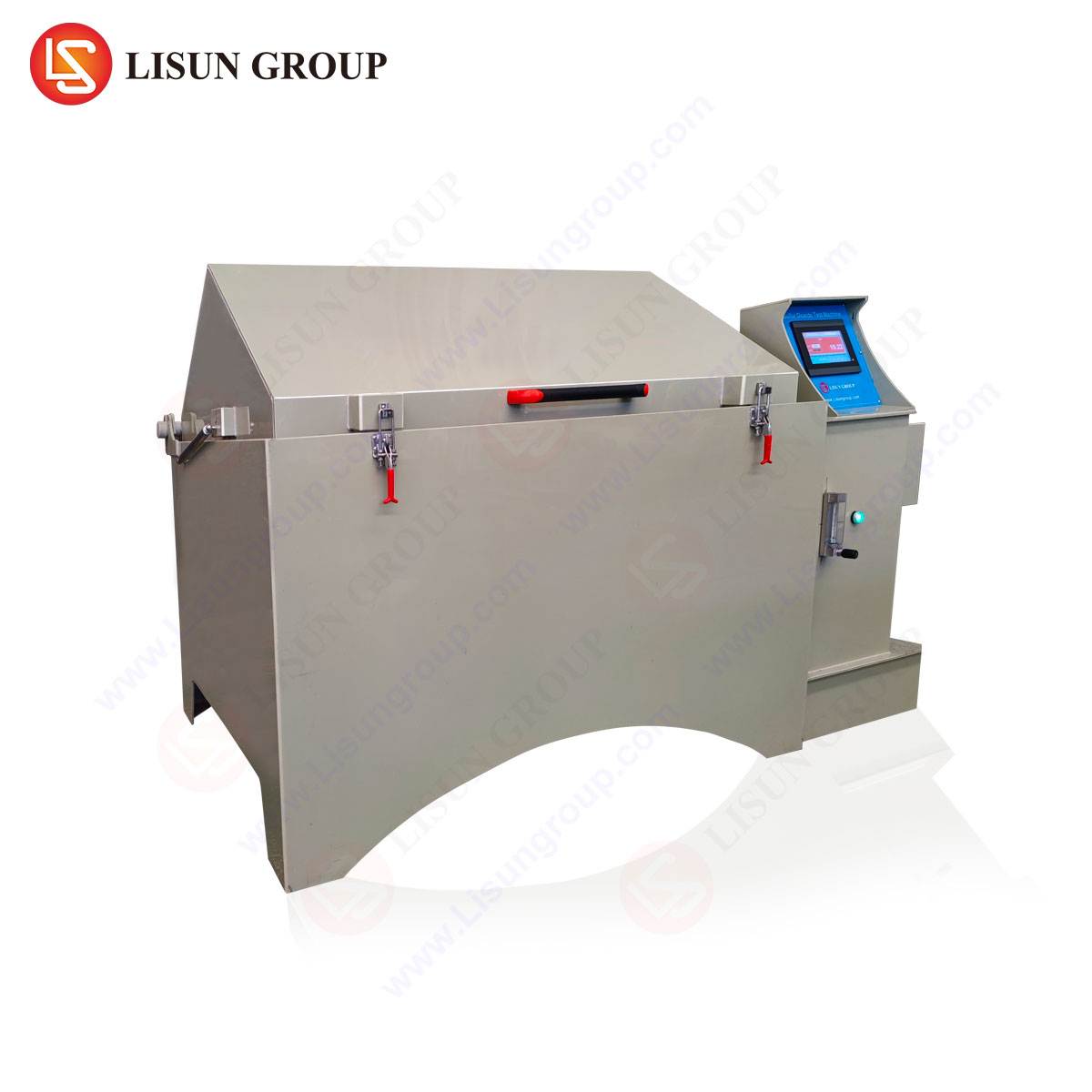
The fidelity of accelerated testing is wholly dependent on the precision and reliability of the environmental test chamber employed. Inconsistent gas concentration, fluctuating humidity, or temperature gradients can yield non-representative results, leading to either an overestimation of product robustness or, more dangerously, a false sense of security. It is within this context that specialized equipment, such as the LISÚN SQ-010 Sulfur Dioxide (SO2) Corrosion Test Chamber, becomes an indispensable tool for research, development, and quality assurance laboratories.
The SQ-010 chamber is engineered to meet and exceed the stringent requirements of IEC 60068-2-42/43 and related standards. Its design incorporates a corrosion-resistant PTFE-lined test workspace to prevent chamber degradation and ensure test integrity. A microprocessor-based controller allows for precise programming and real-time monitoring of the critical test parameters: SO2 concentration, temperature, and relative humidity.
Table 1: Key Specifications of the LISUN SQ-010 SO2 Test Chamber
| Parámetro | Especificación |
| :— | :— |
| Rango de temperatura | RT+10°C to +50°C |
| Rango de humedad | 60% to 95% RH |
| SO2 Concentration | 0 to 100 ppm (continuously adjustable) |
| Volumen de la cámara | 300 Liters (standard) |
| Inner Material | PTFE (Teflon) coated |
| Gas Introduction | Precision mass flow controller |
| Normas de cumplimiento | IEC 60068-2-42, IEC 60068-2-43, ISO 3231, JIS H 8502 |
The testing principle relies on creating a homogeneous, controlled atmosphere. The chamber utilizes a forced air circulation system to ensure even distribution of temperature and humidity. SO2 gas is injected via a precision mass flow controller (MFC), which allows for accurate, repeatable dosing to achieve the desired ppm concentration. An integrated SO2 sensor provides closed-loop feedback to the MFC, maintaining concentration stability throughout the test duration. The chamber’s air-tight construction and efficient gas-scrubbing exhaust system ensure operator safety and environmental compliance.
Competitive Advantages in Industrial Application
The LISUN SQ-010 provides distinct advantages for manufacturers across the highlighted industries. Its primary benefit is exceptional parameter stability. Fluctuations in SO2 concentration are a common source of test variability in lesser chambers; the SQ-010’s closed-loop MFC system minimizes this, delivering consistent, standards-compliant conditions that yield reliable, actionable data. This translates directly into improved product reliability forecasts and reduced risk of field failures.
Secondly, the PTFE-lined interior is a critical feature. Many chambers use stainless steel or glass, which can themselves react with the corrosive atmosphere over time, leading to chamber contamination and altered test conditions. The inert PTFE surface prevents this, ensuring that the only corrosion occurring is on the test specimens, not the chamber walls, thereby extending the chamber’s service life and maintaining test purity.
Furthermore, its programmable cyclic testing capability allows engineers to model real-world conditions more accurately. By programming sequences of gas injection, humidity soak, and purge cycles, the SQ-010 can simulate the intermittent, high-concentration exposures typical of industrial or urban environments, providing a more severe and representative assessment than a simple constant-condition test.
Mitigation Strategies and Material Selection Considerations
Armed with data from rigorous accelerated testing, engineers can deploy effective mitigation strategies. Material selection is the first line of defense. For conductive surfaces, replacing silver with gold plating (even as a flash layer) or using palladium-nickel alloys can drastically reduce tarnishing. For structural components, specifying aluminum alloys with appropriate anodization or chromate conversion coatings, or selecting stainless steels with sufficient chromium and molybdenum content, enhances resistance.
Design modifications are equally crucial. Improving seal integrity in enclosures, connectors, and cable glands to prevent gas ingress is paramount. Conformal coatings on PCBs, such as acrylics, polyurethanes, or silicone-based films, provide a physical barrier against SO2-laden moisture. However, coating selection must be validated via testing, as some polymers are permeable to SO2 or may be degraded by it. Ventilation and filtration systems in larger enclosures for Industrial Control Systems o Equipos de telecomunicaciones can also be designed to actively scrub incoming air of corrosive gases.
Conclusión
The corrosive impact of sulfur dioxide on modern engineering materials is a complex, multifaceted challenge with direct consequences for product reliability, safety, and total cost of ownership across a vast spectrum of industries. Understanding the electrochemical pathways enables targeted material science and design countermeasures. However, the validation of these mitigations hinges on the ability to perform accurate, repeatable, and standards-compliant accelerated corrosion testing. Precision instrumentation, capable of maintaining strict control over the corrosive atmosphere, is therefore not merely a quality assurance tool but a fundamental component of the product development lifecycle. By integrating rigorous SO2 testing protocols early in the design phase, manufacturers can de-risk product introductions, ensure compliance with international reliability standards, and deliver durable products capable of withstanding the chemically aggressive environments in which they must operate.
Sección FAQ
Q1: What is the typical concentration of SO2 used in accelerated testing, and how does it relate to real-world conditions?
A: Standard tests, per IEC 60068-2-42, often use concentrations of 0.5, 1, 2, 5, 10, or 25 ppm. These levels are significantly higher than global background concentrations (typically < 0.1 ppm) but are designed to simulate the micro-environments within an enclosure, industrial setting, or polluted urban area, and to accelerate failure mechanisms to observable timescales. The selected concentration depends on the product's intended severity of use.
Q2: Why is relative humidity control so critical in an SO2 corrosion test?
A: SO2 requires moisture to hydrolyze into corrosive sulfurous and sulfuric acids. Without sufficient humidity (typically >75% RH), the corrosion rate is negligible. Precise humidity control ensures the formation of a continuous, thin electrolyte film on the specimen surface, which is essential for the electrochemical corrosion process to proceed in a consistent and reproducible manner.
Q3: Can the LISUN SQ-010 chamber test for the combined effects of multiple corrosive gases?
A: The standard SQ-010 is designed as a single-gas (SO2) test chamber. However, LISUN and other manufacturers offer mixed-gas corrosion chambers that can precisely control blends of gases such as SO2, H2S, NO2, and Cl2, which are used for more comprehensive testing standards like IEC 60068-2-60 (Method 4) or ASTM B845.
Q4: How often does the PTFE lining of the chamber need to be replaced, and what are the signs of degradation?
A: PTFE is highly inert and durable. With proper use and maintenance, the lining can last for many years. Signs that may indicate need for inspection include visible physical damage (cuts, tears), discoloration that cannot be cleaned, or a persistent inability to maintain stable SO2 concentrations, which could suggest micro-cracks or permeation. Regular visual inspections are recommended as part of a preventive maintenance schedule.
Q5: What type of post-test analysis is most important for electronic components after SO2 exposure?
A: Beyond visual inspection for corrosion products (e.g., black tarnish on silver, blue-green deposits on copper), the most critical measurement is the change in contact resistance for connectors, switches, and relays. A significant increase in resistance indicates functional degradation. Additional analyses can include SEM/EDS to identify specific corrosion products and cross-sectional analysis to examine the extent of subsurface corrosion or coating penetration.

 ES
ES  EN
EN  RU
RU  PT
PT  TR
TR  AR
AR  DE
DE  PL
PL  IT
IT  FR
FR  KO
KO  JA
JA  ID
ID