


Understanding UL 1581 Flame Testing: A Technical Examination of Wire and Cable Fire Safety Compliance
Introduction: The Imperative of Flame Performance Standardization
Within the vast ecosystem of electrical and electronic systems, from the intricate wiring harnesses in automotive electronics to the complex cable trays in industrial control environments, the flammability characteristics of insulating materials constitute a critical safety parameter. Uncontrolled flame propagation along a cable can transform a localized fault into a catastrophic system failure, facilitating the spread of fire, generating dense toxic smoke, and compromising critical evacuation and emergency response pathways. Consequently, the development and rigorous application of standardized flame test methodologies are paramount. Underwriters Laboratories Standard UL 1581, “Reference Standard for Electrical Wires, Cables, and Flexible Cords,” serves as a foundational document in this regard, establishing the definitive test procedures for evaluating the flame resistance of vertically oriented wire and cable specimens. This technical analysis delves into the specifics of the UL 1581 flame test, its operational principles, its significance across diverse industries, and the instrumental role of precision testing apparatus such as the LISÚN RSB-WC Probador de llama de cable in ensuring reliable compliance.
Deconstructing the UL 1581 Vertical-Wire Flame Test Methodology
UL 1581, specifically within its Section 1080 (VW-1 – Vertical Specimen Flame Test) and related vertical flame test protocols, outlines a meticulously controlled laboratory procedure designed to simulate a specific fire exposure condition. The test’s objective is not to assess a material’s non-combustibility but to evaluate its ability to resist flame propagation once an ignition source is applied and subsequently removed. The core apparatus consists of a vertical chamber or test cabinet, a standardized Bunsen burner with a specified methane or natural gas flame, a calibrated timing mechanism, and a surgical cotton indicator pad positioned below the test specimen.
The procedural sequence is exacting. A conditioned wire or cable specimen, typically 12 inches (305 mm) in length, is mounted vertically within the chamber using a suitable clamp. A pre-adjusted burner flame, with a defined blue inner cone height, is applied to the specimen at a 20-degree angle for a prescribed duration, commonly 15 seconds. Following this exposure, the flame is removed. The test observes and measures several key failure criteria: the duration of afterflame (continued burning of the specimen after flame removal), the extent of char length (the damaged portion of the insulation), and whether flaming droplets or particles ignite the cotton indicator. A specimen passes only if the afterflame time does not exceed 60 seconds after the third of five flame applications, the char length does not extend to a marked limit (often 4 inches from the top clamp), and no ignition of the indicator pad occurs. This repeated application simulates a potential recurring fault scenario.
Material Science and Performance Criteria Under Test Conditions
The behavior of a wire or cable under the UL 1581 test is a direct function of its material composition and construction. Thermoplastic materials, such as Polyvinyl Chloride (PVC) or Polyethylene (PE), may melt and drip, which can be a failure mode if the drips are flaming. Thermoset materials, including cross-linked polyethylene (XLPE) or certain elastomers, tend to char rather than melt. Flame-retardant additives—such as aluminum trihydrate (ATH), magnesium hydroxide, or various phosphorus and nitrogen-based compounds—are engineered into compound formulations to interrupt the combustion process. These additives may act through endothermic decomposition (cooling the material), dilution of flammable gases, or formation of a protective char layer that insulates the underlying material.
The test, therefore, provides a comparative metric for material performance. A VW-1 classification, often marked on wire jackets, indicates the sample has passed this stringent vertical flame test. It is crucial to distinguish this from other ratings like CL2 or CM, which relate to the cable’s overall fire and smoke performance in installed configurations per the National Electrical Code (NEC). UL 1581 is a component-level test, forming the basis for many of these broader classifications.
Instrumentation for Precision: The LISUN RSB-WC Wire Cable Flame Tester
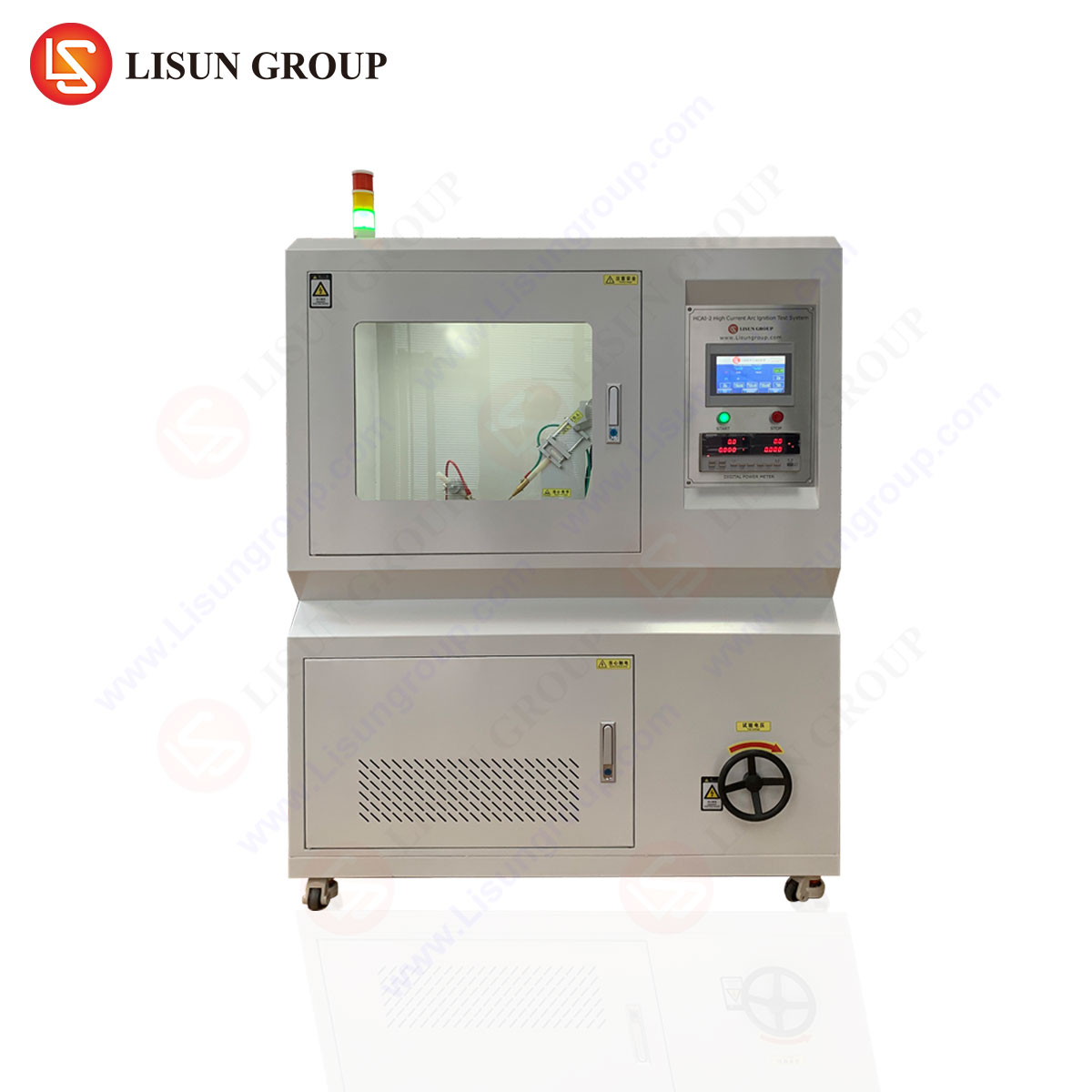
Accurate and repeatable compliance testing necessitates instrumentation that exceeds mere procedural adherence; it requires engineering precision, environmental control, and operational consistency. The LISUN RSB-WC Wire Cable Flame Tester is engineered specifically to meet and exceed the requirements for conducting UL 1581 Section 1080 (VW-1) and analogous vertical flame tests on wires, cables, and insulated conductors.
The tester’s construction is defined by several critical specifications that directly influence test integrity. The test chamber is fabricated from stainless steel and features a heat-resistant glass observation window, allowing for clear visualization while containing heat and any emissions. A precision methane flow control system, coupled with a calibrated pressure gauge and flow meter, ensures the Bunsen burner delivers a flame with consistent thermal output and dimensions as stipulated by the standard (e.g., a blue inner cone height of approximately 40mm). Automated timing controls govern the exact duration of flame application and monitor afterflame and afterglow periods with digital accuracy, eliminating human timing error. The specimen holder is designed for secure, vertical mounting, and the inclusion of a standardized cotton indicator pad holder completes the essential test geometry.
The testing principle embodied by the RSB-WC is one of controlled, reproducible application of a thermal insult. By automating critical variables—gas flow, flame positioning, timing—the instrument minimizes systemic variance, ensuring that results are a reflection of material performance rather than apparatus inconsistency. This is paramount for laboratories serving global supply chains, where test reports must withstand rigorous audit and comparative analysis.
Cross-Industry Applications and Compliance Imperatives
The implications of UL 1581 testing permeate virtually every sector reliant on electrical wiring. Compliance is not merely a regulatory hurdle but a fundamental design criterion integral to product safety and risk mitigation.
En Electrónica del automóvil y Componentes aeroespaciales y de aviación, where wiring is densely packed in confined spaces, flame propagation resistance is critical for containing faults and preserving system functionality. The Electrodomésticos y Electrónica de consumo industries require compliant internal wiring and power cords to prevent a short circuit from igniting surrounding casings or furnishings. Iluminación, particularly those generating significant heat, utilize VW-1 rated wiring to ensure safety in the event of insulation degradation.
Para Equipos de telecomunicaciones y Data Centers, cables bearing flame-test ratings are essential for installation in riser (CMR) or plenum (CMP) spaces, with UL 1581 serving as a baseline. Productos sanitarios leverage such tested wiring for patient-connected and internal components, where safety cannot be compromised. Industrial Control Systems y Componentes eléctricos like switches and sockets employ tested wire to ensure factory safety and prevent control system failures from escalating. Even Office Equipment y Material eléctrico y electrónico broadly rely on compliant cabling for both internal construction and external interconnections, forming a ubiquitous safety net.
Analytical Advantages of Automated Flame Test Instrumentation
Deploying a dedicated, automated tester like the LISUN RSB-WC confers distinct analytical and operational advantages over improvised or less sophisticated setups. First and foremost is Enhanced Repeatability and Reproducibility (R&R). The precision gas and timing controls ensure each test cycle is virtually identical, a necessity for generating data suitable for quality assurance and certification purposes.
Improved Operational Safety is another significant benefit. The enclosed stainless steel chamber contains flames, heat, and any potential molten debris, protecting the operator and laboratory environment. The clear viewing window allows for safe observation. Furthermore, Testing Efficiency and Data Integrity are elevated. Automated sequences reduce manual intervention, allowing technicians to manage multiple tests or instruments. Digital timers provide unambiguous, recordable data points for afterflame duration, reducing subjective judgment calls.
From a competitive standpoint, manufacturers and testing laboratories utilizing such calibrated instruments strengthen their credibility. They provide auditable evidence of compliance, reduce the risk of non-conformance due to testing variance, and accelerate product development cycles by yielding reliable material performance data early in the design phase.
Interpreting Results and Navigating Complementary Standards
A pass/fail result from a UL 1581 VW-1 test provides a clear binary outcome, but sophisticated material development and specification require deeper analysis. The recorded afterflame times and precise char length measurements offer comparative data for grading different material formulations or supplier batches. A material that consistently extinguishes in 5 seconds is demonstrably more flame-resistant than one that burns for 55 seconds, even though both may pass.
It is also critical to contextualize UL 1581 within the broader landscape of fire safety standards. While it is a core component test, end-use compliance often involves additional, more severe evaluations. For example, cables intended for installation in building plenums may need to pass the Steiner Tunnel test (UL 910 / NFPA 262) for flame spread and smoke density. The IEC 60332 series provides an international framework for flame testing under both vertical and horizontal configurations. The LISUN RSB-WC, while optimized for UL 1581, is often part of a broader suite of testing equipment that a laboratory will employ to provide a complete fire performance profile for a cable product across multiple standards and jurisdictions.
Conclusion: The Foundational Role of Standardized Flame Testing
The UL 1581 vertical flame test remains an indispensable tool in the engineering and safety validation of wire and cable products. Its standardized, severe yet defined challenge provides a consistent benchmark for evaluating the inherent flame-propagation resistance of insulating materials. As global supply chains and safety regulations become increasingly complex, the demand for precise, reliable, and auditable compliance data only intensifies. Instrumentation such as the LISUN RSB-WC Wire Cable Flame Tester transforms the written standard into empirical, high-fidelity data, enabling material scientists, product designers, and quality assurance professionals to make informed decisions that ultimately enhance the fire safety integrity of electrical systems across a vast spectrum of industries. The continued evolution of materials and the increasing integration of electronics into every facet of modern life ensure that the principles and practices encapsulated by UL 1581 testing will retain their critical relevance for the foreseeable future.
Sección FAQ
Q1: Can the LISUN RSB-WC tester be used for standards other than UL 1581 VW-1?
A1: While the RSB-WC is specifically engineered to meet the exacting requirements of UL 1581 Section 1080, its fundamental design for vertical flame testing on wires makes it applicable to other similar vertical flame test standards with comparable specimen mounting, flame application, and measurement criteria. However, users must always verify that the apparatus’s specifications (chamber dimensions, burner type, flame calibration, timing sequences) align precisely with the alternative standard in question, as even minor deviations can invalidate results.
Q2: How critical is the calibration of the gas flow system in the flame tester?
A2: It is paramount. The thermal insult applied to the test specimen is defined by the temperature and geometry of the burner flame, which is directly controlled by the type of gas (typically methane) and its volumetric flow rate. An uncalibrated or drifting flow system will produce a flame that is either too aggressive or too weak, leading to non-compliant test conditions and potentially invalidating results. Regular calibration of the gas control system, including the pressure regulator and flow meter, is a mandatory component of laboratory quality control for UL 1581 testing.
Q3: What are the primary causes of test failure when using a properly calibrated instrument like the RSB-WC?
A3: Assuming the apparatus is correctly calibrated and operated, test failures are attributable to the material performance of the specimen. Common causes include insufficient flame-retardant additives in the compound, the use of a base polymer with inherently poor flame resistance (e.g., standard polyethylene), material degradation due to aging or improper compounding, or a cable construction that allows the flame to propagate along gaps between the insulation and conductor. The test reliably identifies these material-level deficiencies.
Q4: For a manufacturer, is in-house UL 1581 testing with equipment like the RSB-WC a substitute for third-party certification?
A4: No, it is complementary but not substitutive. In-house testing with a compliant instrument is vital for Research & Development, quality control, and pre-screening samples before submitting them for formal certification. It allows for rapid iteration and failure analysis. However, official UL certification or listing requires testing and follow-up surveillance conducted by a Nationally Recognized Testing Laboratory (NRTL) like UL Solutions itself. The RSB-WC enables manufacturers to be confident and prepared before engaging in the formal certification process.
Q5: How does specimen preparation impact the test outcome?
A5: Specimen preparation is a critical and often overlooked variable. The standard specifies conditioning (typically 48 hours at 23°C and 50% relative humidity) to establish a consistent moisture content. Incorrect conditioning can alter burning characteristics. The specimen must also be cut cleanly, mounted perfectly vertical, and secured without excessive compression that could distort the material. The positioning of the burner relative to the specimen’s lower edge must be exact. Deviations in preparation can introduce significant scatter in results, even with a perfect testing apparatus.

 ES
ES  EN
EN  RU
RU  PT
PT  TR
TR  AR
AR  DE
DE  PL
PL  IT
IT  FR
FR  KO
KO  JA
JA  ID
ID