




A Technical Guide to the IEC TS 60695-2-20 Hot Wire Coil Test Apparatus: Principles, Implementation, and Industrial Application
Introduction to the Hot Wire Coil Ignition Test Methodology
The propensity of insulating materials and polymeric components to resist ignition from small, localized heat sources represents a critical safety parameter across numerous engineering disciplines. The IEC TS 60695-2-20 standard, entitled “Fire hazard testing – Part 2-20: Glowing/hot-wire based test methods – Hot-wire coil ignitability test method and apparatus,” provides a standardized, reproducible methodology for assessing this specific fire hazard. This technical article delineates the operational principles, apparatus specifications, and procedural execution mandated by this standard, with a focused examination on a compliant implementation: the 리순 RSY-LT 핫 와이어 점화 테스터. The objective is to furnish engineers, quality assurance professionals, and materials scientists with a comprehensive reference for implementing this essential safety evaluation.
Fundamental Principles of the Hot Wire Coil Ignition Mechanism
The test simulates a fault condition where an electrically heated element, such as a failing resistor or an overloaded wire coil, becomes incandescent and contacts adjacent combustible material. The apparatus employs a pre-formed coil of resistance wire, typically Nichrome (NiCr), which is heated to a prescribed temperature via a regulated electrical current. This glowing coil is then applied under a defined contact force to a standardized specimen. The test does not measure flame spread or heat release; its sole purpose is to determine ignitability under these specific thermal stress conditions. The primary metrics recorded are the time to ignition (if it occurs) and whether flaming combustion or glowing ignition persists for a specified duration after removal of the hot wire. The temperature of the coil, calibrated using a pyrometer against a pure silver foil strip as per the standard, is the fundamental controlled variable, typically tested at temperatures such as 550°C, 650°C, 750°C, 850°C, or 960°C.
Apparatus Specification and Critical Design Parameters
A fully compliant apparatus must integrate several subsystems with precise tolerances. The core is the hot wire coil assembly, comprising a specific grade and diameter of resistance wire (e.g., NiCr 80/20, 0.5 mm diameter) wound into a coil of defined number of turns, length, and pitch. This coil is mounted on a movable carriage that allows for controlled application and retraction. A calibrated weight system ensures a consistent contact force of 1.0 N ± 0.2 N is applied to the specimen surface. The electrical power supply must be capable of delivering a stable current sufficient to achieve and maintain the target coil temperature within ±10°C, with a response time that prevents overshoot during the initial heating phase.
The specimen holder must securely position test pieces of standard dimensions (e.g., 120 mm x 15 mm minimum, thickness up to 20 mm) in both horizontal and vertical orientations, as different application standards may require. A timing device with a resolution of at least 0.5 seconds is integrated to measure ignition time. Furthermore, the apparatus must be housed within a well-ventilated test chamber, often equipped with an extraction system, to remove combustion products without inducing drafts that could influence the test result. A viewing window of heat-resistant glass is essential for observation.
The LISUN RSY-LT Hot Wire Ignition Tester: A Conformant System Analysis
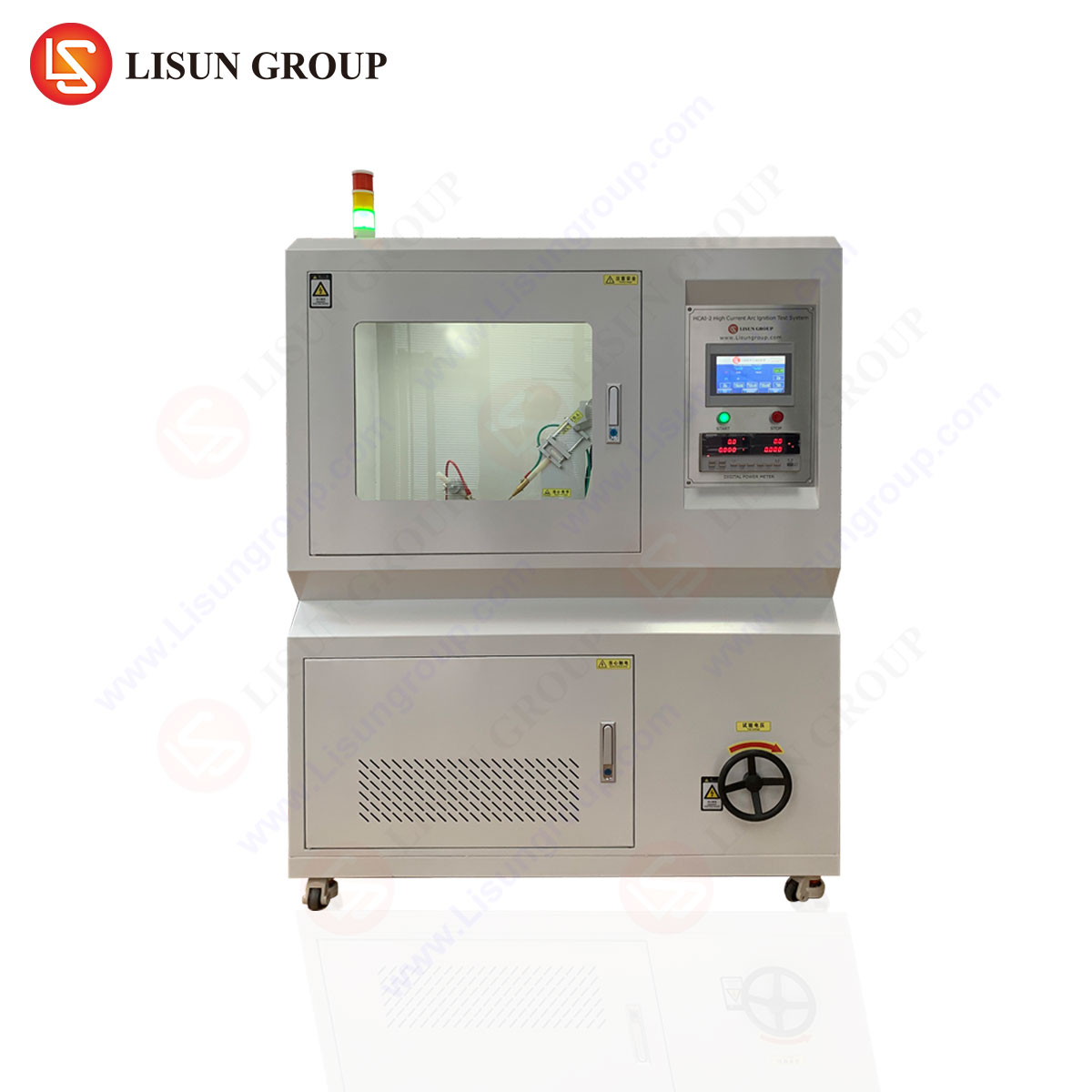
The LISUN RSY-LT Hot Wire Ignition Tester represents a engineered solution designed to meet and facilitate the requirements of IEC TS 60695-2-20. Its design philosophy emphasizes operational repeatability, user safety, and calibration integrity.
-
Testing Principles & Control System: The RSY-LT utilizes a closed-loop digital temperature control system. A calibrated K-type thermocouple positioned near the hot wire coil provides real-time feedback to a microprocessor-controlled power regulator. This allows for precise setpoint entry (e.g., 750°C) and stable maintenance of the coil temperature, a critical factor for inter-laboratory reproducibility. The application and retraction of the coil are mechanically actuated, ensuring consistent approach speed and contact angle.
-
Key Specifications:
- Temperature Range: 0–999°C, adjustable in 1°C increments.
- Temperature Stability: Better than ±5°C at the setpoint during dwell time.
- Coil Application Force: 1.0 N, applied via a calibrated dead-weight mechanism.
- Timer Range: 0–999.9 seconds, automatic triggering upon coil contact.
- Specimen Holder: Adjustable clamps for horizontal and vertical testing, accommodating various thicknesses.
- 안전 기능: Integrated fume extraction port, over-temperature protection, emergency stop, and interlocked safety door.
-
Competitive Advantages: The RSY-LT differentiates itself through its calibration-centric design. The process for temperature verification using silver foil is streamlined with dedicated fixtures. Its robust mechanical construction minimizes vibration, which can affect coil contact. The digital interface logs key parameters (set temperature, actual temperature, ignition time) for traceability and report generation, addressing essential requirements of quality management systems like ISO/IEC 17025.
Industrial Application Contexts and Material Evaluation
The hot wire coil test is specified in numerous end-product and component safety standards derived from IEC TS 60695-2-20. Its application is pervasive in industries where electrical faults are a foreseeable risk.
- Electrical and Electronic Equipment & Components: This is the primary domain. The test is used to evaluate the ignitability of insulating bobbins for relays and transformers, connector housings, switchgear casings, and PCB substrates. A switch housing in an industrial control system, for example, must not ignite when a failing terminal connection overheats.
- Household Appliances and Consumer Electronics: Materials used in motor end caps, wiring harness sleeving, internal supports for heating elements, and external casings near internal heat sources are routinely tested. A food processor’s motor housing material may be assessed to ensure a locked-rotor condition does not lead to external fire.
- Automotive Electronics: With increasing electrification, the test applies to battery module insulators, wiring duct materials, sensor housings, and connectors within the vehicle’s high-current or high-temperature zones.
- Lighting Fixtures: Components such as lamp holders, wireway materials inside luminaires, and insulating materials for LED drivers are evaluated for resistance to ignition from a faulty ballast or driver component.
- Telecommunications and Office Equipment: Jacketing materials for internal cables, plastic chassis parts surrounding power supplies, and connector materials in servers and routers are subject to this evaluation to mitigate fire risk from electrical overload.
- Aerospace and Medical Devices: While often subject to more stringent overall fire standards, specific internal components made from polymers may be screened using the hot-wire test as a quality control measure for material consistency.
Procedural Execution and Data Interpretation
The test procedure follows a strict sequence. After calibrating the coil temperature using a 2 mm x 2 mm x 0.06 mm silver foil strip—observing the melting point (960°C) as an endpoint—the specimen is conditioned and mounted. The pre-heated coil is applied to the specimen surface for a maximum of 120 seconds or until ignition occurs. Observations are meticulously recorded:
- Time to Ignition (tᵢ): The duration from initial contact to the first sustained flame (≥ 5 seconds).
- Ignition Occurrence: Whether the specimen ignites within the application period.
- Self-Extinguishing Behavior: If ignition occurs, whether flames or glowing extinguish within 30 seconds after coil retraction, and whether any dripping particles ignite a surgical cotton layer placed 200 mm below.
Results are often expressed as a GWI (Glow-Wire Ignitability) Index—the highest temperature at which the material does not ignite, or ignites but self-extinguishes within 30 seconds after removal of the coil, under three consecutive tests. This index provides a comparative material ranking.
Calibration and Maintenance Protocols for Apparatus Integrity
Long-term reliability of test data hinges on rigorous apparatus maintenance. Daily or pre-test verification of coil temperature using the silver foil method is paramount. The coil itself must be inspected for oxidation, pitting, or deformation and replaced periodically, as its geometry directly affects heat transfer. The application mechanism must be checked for smooth travel and consistent force application using a precision spring scale. The electrical calibration of the temperature measurement system should be traced to national standards at regular intervals. The LISUN RSY-LT facilitates these protocols with user-accessible calibration modes and durable coil construction that resists deformation.
Integration within a Broader Fire Safety Assessment Framework
It is crucial to recognize that the IEC TS 60695-2-20 test is a type test for material ignitability under one specific, albeit common, stress condition. It is not a comprehensive fire risk assessment. Its results are most valuable when used in conjunction with other tests, such as the Glow-Wire Flammability Index (GWFI) test (IEC 60695-2-12), the Glow-Wire Ignition Temperature (GWIT) test (IEC 60695-2-13), or larger-scale flame tests. For instance, a material may pass the hot-wire ignitability test at 750°C but may fail a vertical flame test due to different flame propagation characteristics. Therefore, the hot-wire coil test serves as an effective, economical screening tool for material selection and quality control, forming the first line of defense in a layered fire safety strategy.
결론
The IEC TS 60695-2-20 hot wire coil test apparatus provides an indispensable, standardized means of evaluating a material’s resistance to ignition from an overheated electrical source. Its correct implementation, as exemplified by engineered systems like the LISUN RSY-LT Hot Wire Ignition Tester, demands attention to precise calibration, controlled mechanics, and consistent procedural execution. The data generated informs critical material selection decisions across a vast spectrum of industries, contributing directly to the prevention of fire initiation in electrical and electronic products. As material technology evolves and safety regulations tighten, the role of this fundamental test method remains firmly established in the engineer’s toolkit for product safety assurance.
FAQ 섹션
Q1: How often should the hot wire coil be replaced, and what are the signs of degradation?
The coil should be replaced according to the apparatus manufacturer’s recommendation or when visual inspection reveals significant oxidation, pitting, or distortion of the coil windings. A degraded coil will not maintain a uniform temperature profile, leading to non-standard heat transfer and erratic test results. Frequent calibration failures using the silver foil method can also indicate coil deterioration.
Q2: Can the IEC TS 60695-2-20 test be used for finished products, or is it only for material samples?
The standard is primarily designed for standardized flat test specimens of material. However, many end-product standards (e.g., IEC 60335 for household appliances) reference the test method and may specify its application on specific, non-standard parts or sub-assemblies from a finished product. In such cases, a special fixture may be required to hold the component securely, but the fundamental test parameters (temperature, force, application time) remain unchanged.
Q3: What is the key difference between the GWI Index from this test and the GWIT from IEC 60695-2-13?
The GWI (Glow-Wire Ignitability) Index, determined per IEC TS 60695-2-20, is the highest temperature at which the material does not ignite, or ignites but self-extinguishes within 30 seconds after removal of the coil. The GWIT (Glow-Wire Ignition Temperature), per IEC 60695-2-13, is defined as the temperature 25°C above the maximum test temperature at which the material does not ignite during the application of the glow wire. GWIT is generally a more stringent requirement.
Q4: Why is the silver foil calibration method used instead of a direct thermocouple measurement on the coil?
The silver foil method provides a direct, physical calibration of the radiant and conductive heat output of the entire coil at its surface, which is what the specimen experiences. A thermocouple attached to the coil measures a single point and may not accurately represent the entire coil’s effective temperature due to thermal gradients and contact resistance. The melting of silver at its precise 960°C point provides a reproducible, fundamental calibration reference.
Q5: For a material that drips during testing, how is the result interpreted?
The standard requires a layer of surgical cotton to be placed 200 mm below the specimen. If the material drips and ignites the cotton, the test is considered a failure for that specimen, regardless of the ignition behavior of the main specimen. This assesses the potential for the ignition of secondary materials by burning droplets.

 KO
KO  EN
EN  ES
ES  RU
RU  PT
PT  TR
TR  AR
AR  DE
DE  PL
PL  IT
IT  FR
FR  JA
JA  ID
ID