




A Comprehensive Guide to Cable Flame Testing: Standards, Methodologies, and Instrumentation for FT1, VW-1, UL 2556, and UL 1581 Compliance
The proliferation of electrical and electronic systems across diverse sectors—from household appliances and automotive electronics to aerospace components and medical devices—has elevated the importance of cable and wire safety to a critical priority. Flame retardancy is a fundamental property, designed to inhibit the propagation of fire along a cable’s length, thereby containing potential hazards, preserving circuit integrity during a fire event, and facilitating safe egress. This technical article provides a detailed examination of key North American flame test standards—FT1, VW-1, UL 2556, and UL 1581—and outlines the precise methodologies required for validation. Furthermore, it explores the role of specialized instrumentation, such as LISUN’s RSB-WC Tester płomienia przewodów, in executing these rigorous assessments.
Fundamental Principles of Vertical-Wire Flame Testing
The core philosophy underlying standards like VW-1 and FT1 is the simulation of a localized flame impingement on a vertically oriented wire or cable in a controlled, yet severe, environment. The test specimen is mounted vertically within a standardized test chamber, exposing it to a calibrated flame from a specified laboratory burner for a defined period. The primary metrics for evaluation are the duration of afterflame (continued burning after the test flame is removed) and the extent of charred or damaged insulation. Crucially, the test assesses whether flaming droplets or particles are released, as these can propagate fire to underlying materials. The pass/fail criteria are stringent and absolute; any indication of sustained combustion beyond permitted limits, or excessive damage to a specimen holder, constitutes a failure. This vertical configuration represents a worst-case scenario, providing a conservative benchmark for flame resistance.
Deciphering the FT1 and VW-1 Test Classifications
Within the UL 1581 and UL 2556 frameworks, FT1 and VW-1 represent distinct, though often conflated, levels of flame resistance. Understanding their specific requirements is essential for proper product specification and testing.
The FT1 (Flame Test 1) classification, defined in UL 1581 Section 1080 (Vertical-Wire Flame Test), is a baseline requirement for many general-purpose wiring cables. The test procedure involves applying a 19mm (3/4″) blue flame from a Bunsen-type burner to a vertically suspended 18″ (457mm) specimen. The flame is applied for five 15-second intervals, with 15-second pauses between applications. To achieve an FT1 rating, the afterflame time following any flame application must not exceed 60 seconds, and the total afterflame time for all five applications must not exceed 300 seconds. Additionally, the specimen must not burn up to a marked top flag, and no flaming drips are permitted that ignite a dry surgical cotton layer placed 12″ below the test specimen.
The VW-1 (Vertical-Wire 1) test, also detailed in UL 1581, is more severe and is often a requirement for higher-risk applications or specific cable constructions like appliance wiring material or power-limited circuit cables. The key procedural differences lie in the flame application: a single, continuous 60-second flame application is used. The pass criteria are correspondingly stricter: afterflame must not exceed 60 seconds total, the specimen cannot burn up to the top holding clamp, and absolutely no flaming drips are allowed. In practice, a VW-1 rating is generally considered more demanding than an FT1 rating, and a cable meeting VW-1 requirements typically satisfies FT1, though the inverse is not true.
The Regulatory Frameworks: UL 2556 and UL 1581
These test classifications are embedded within larger, governing standards that provide the complete testing ecosystem. UL 1581, “Reference Standard for Electrical Wires, Cables, and Flexible Cords,” serves as the foundational document. It contains over 1,200 sections detailing test methods for virtually all electrical, mechanical, and flammability properties of wires and cables. Sections 1080 (Vertical-Wire Flame) and 1060 (FT4 Vertical-Tray) are particularly relevant for flame testing.
UL 2556, “Wire and Cable Test Methods,” is a more recent and comprehensive compilation that integrates and updates many test methods, including those from UL 1581. It is structured to align more closely with international standard formats. For vertical flame testing, UL 2556’s Section 8 (Flame Tests) is the authoritative source. Engineers and testing laboratories must refer to the specific edition of the standard invoked by the end-product safety standard (e.g., UL 62, UL 83, UL 758) to ensure the correct version of the test method is applied. The relationship is hierarchical: an end-product standard cites UL 1581 or UL 2556, which in turn specifies the exact FT1 or VW-1 protocol.
Instrumentation for Precision Compliance: The LISUN RSB-WC Wire Cable Flame Tester
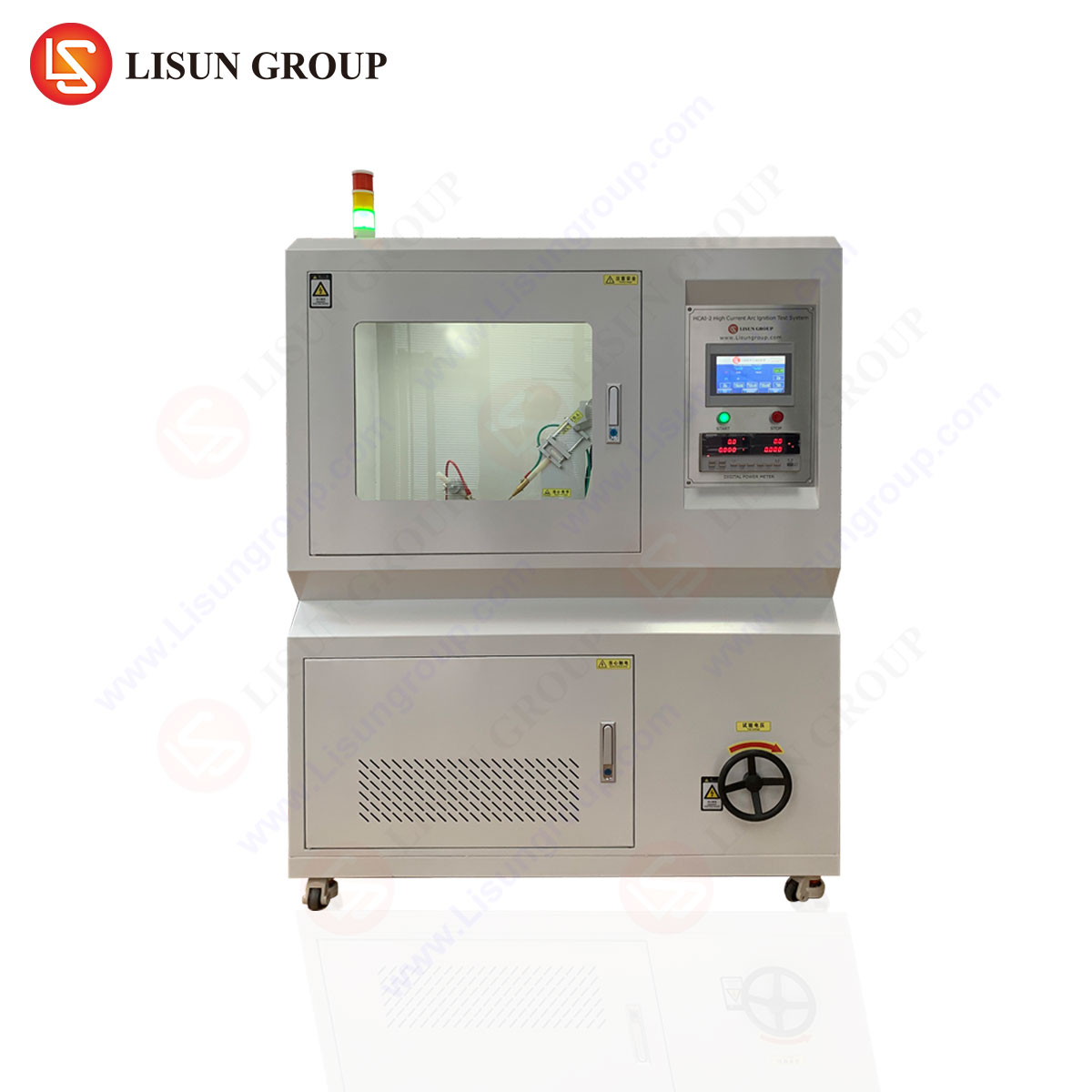
Accurate and repeatable flame testing demands instrumentation engineered to exacting specifications. The LISUN RSB-WC Wire Cable Flame Tester is a purpose-built apparatus designed to fulfill the stringent requirements of UL 1581 Section 1080, UL 2556 Section 8, and analogous international standards like IEC 60332-1. Its design philosophy centers on controlled reproducibility, a non-negotiable prerequisite for credible compliance data.
The testing chamber is constructed from stainless steel and features a heat-resistant glass observation window, allowing for clear monitoring of the test while maintaining environmental stability. A critical component is the standardized Bunsen burner, which must deliver a specified flame temperature and geometry. The RSB-WC integrates precise gas flow control (typically methane or propane) to maintain a consistent 20mm ± 2mm blue flame height. The specimen mounting assembly is engineered to hold wires or cables vertically with minimal influence, using clamps that meet the dimensional requirements of the standards.
Automation is a key differentiator. The RSB-WC can be programmed to automatically execute the complex timing sequences required for FT1 testing (five 15-second on/off cycles) or the single 60-second application for VW-1. This eliminates human timing error and ensures perfect adherence to the standard’s procedure. An integrated digital timer records afterflame and afterglow times to a resolution of 0.1 seconds. The apparatus also includes a standardized cotton indicator pad holder positioned 12″ below the specimen to detect flaming droplets, a fundamental aspect of the VW-1 failure criteria.
Industry Applications and Material Considerations
The application of these flame tests spans the entire spectrum of electrically powered and signal-transmitting devices. In urządzenia gospodarstwa domowego, internal wiring and power supply cords for items like refrigerators, ovens, and air conditioners often require a VW-1 rating to mitigate fire risk within enclosed spaces. Automotive electronics, particularly in passenger compartments and engine bays, utilize wires with proven flame retardancy (often tested to similar but distinct automotive standards, though UL principles apply) to enhance vehicle safety.
Lighting fixtures, especially those generating significant heat like high-intensity discharge or LED drivers, employ FT1 or VW-1 rated wiring to prevent a fault from cascading. Industrial control systems I sprzęt telekomunikacyjny in data centers use flame-retardant cables in trays and racks (governed by more severe tray tests like UL 1685/UL 2556 FT4) where the density of cables presents a significant fuel load. For medical devices, patient-connected equipment may utilize cables meeting these flammability requirements as part of a holistic risk management file. Even in office equipment I consumer electronics, internal wiring and external cords are routinely subjected to vertical flame tests to ensure safety during foreseeable misuse or internal fault conditions.
Material science is central to achieving compliance. Cable manufacturers compound insulation and jacketing materials (like PVC, PE, PP, or fluoropolymers) with flame-retardant additives such as aluminum trihydrate (ATH), magnesium hydroxide, or various halogenated or halogen-free synergists. The formulation must balance flame performance with other critical properties: mechanical flexibility, electrical insulation, environmental resistance, and cost. The vertical flame test is a direct, performance-based assessment of this formulation’s efficacy.
Methodological Execution and Critical Test Parameters
Conducting a compliant test extends beyond the apparatus. Specimen preparation is meticulous: samples must be conditioned at specified temperature and humidity (e.g., 23°C ± 2°C and 50% ± 5% RH for a minimum of 16 hours per UL 1581) to normalize moisture content. The specimen length, mounting height, and clamp tightness are precisely defined. The burner must be positioned at a 20-degree angle, with the inner blue cone’s tip touching the specimen at a prescribed point.
Calibration of the flame itself is a daily or per-test-series requirement. This involves using a calibrated thermocouple to verify a specific temperature rise (e.g., from 100°C to 700°C in 44 ± 2 seconds) in a copper block, as per the standard’s annex. This ensures the flame’s thermal output is consistent, regardless of minor variations in gas pressure or ambient conditions. The laboratory environment must be draft-protected, as even minor air currents can dramatically alter flame behavior and invalidate results.
A typical test sequence involves mounting the conditioned specimen, igniting and calibrating the burner, initiating the automated test cycle, and meticulously observing and recording: afterflame time after each flame application (for FT1) or after the single application (for VW-1); afterglow time; the highest extent of char damage; and whether any flaming droplets ignite the cotton indicator. Five identical specimens are typically tested, and all must pass for the product to receive the classification.
Comparative Analysis and the Role of Third-Party Certification
While FT1 and VW-1 are benchmarks, they represent only one axis of flame performance. For higher-risk installations like building risers or cable trays, more severe tests such as the UL 1685/UL 2556 FT4 (Vertical-Tray Flame) or the NFPA 262/UL 910 (Steiner Tunnel) test for plenum cables are mandated. The vertical wire test is thus a foundational, product-level screening.
Achieving a passing test result in a competent laboratory is the first step. For market access, however, third-party certification from an OSHA-recognized Nationally Recognized Testing Laboratory (NRTL) like UL, Intertek (ETL), or CSA is typically required. These agencies conduct periodic follow-up audits at manufacturing facilities, review test data from calibrated equipment like the RSB-WC, and authorize the use of their certification mark on compliant products. This independent verification provides specifiers, installers, and regulatory authorities with confidence in the product’s stated performance.
Sekcja FAQ
Q1: Can a cable that passes the VW-1 test automatically be considered FT1 compliant?
A1: In virtually all practical cases, yes. The VW-1 test’s single 60-second flame application is more severe than the FT1’s cyclical application. A material formulation robust enough to pass VW-1 will inherently meet the less-demanding FT1 criteria. However, the official classification must be granted by the certification agency based on testing to each specific standard.
Q2: How critical is flame calibration in the RSB-WC or similar testers, and how is it performed?
A2: Flame calibration is paramount. An uncalibrated flame can produce false passes or failures, rendering data useless. The procedure involves suspending a specified copper calorimeter above the burner. The time for the calorimeter’s temperature to rise from 100°C to 700°C is measured. The gas flow is adjusted until this time falls within the narrow window prescribed by the standard (e.g., 44 ± 2 seconds). This ensures repeatable thermal energy input across all tests.
Q3: What are the most common causes of failure in the VW-1 test?
A3: The two predominant failure modes are excessive afterflame time (beyond 60 seconds) and the production of flaming drips that ignite the cotton indicator. The former indicates the insulation material lacks sufficient flame retardancy to self-extinguish. The latter is often a function of the material’s behavior while burning; some formulations may melt and drip while still combusting, which is strictly prohibited for VW-1.
Q4: In what industries is the VW-1 rating specifically mandated over FT1?
A4: VW-1 is frequently specified in safety standards for appliance wiring material (UL 758 AWM), power-limited circuit cables (UL 13), and other applications where cables are used in confined spaces within equipment, such as in industrial control cabinets, certain sprzęt telekomunikacyjny enclosures, and internal wiring of urządzenia gospodarstwa domowego. The end-product safety standard ultimately dictates the required flame class.
Q5: Does the RSB-WC tester accommodate testing for other international vertical flame standards?
A5: Yes, a well-designed apparatus like the RSB-WC is typically configurable for multiple standards. While optimized for UL 2556/1581, it can often be used for IEC 60332-1-2, GB/T 18380.11, and other national standards that share the core vertical wire flame test principle, though specific details like specimen holder design, flame application time, and burner type may require accessory kits or configuration changes.

 PL
PL  EN
EN  ES
ES  RU
RU  PT
PT  TR
TR  AR
AR  DE
DE  IT
IT  FR
FR  KO
KO  JA
JA  ID
ID