




A Comprehensive Analysis of Factors Influencing Drop Tester Acquisition Cost
The procurement of laboratory testing equipment represents a significant capital investment for organizations across manufacturing, quality assurance, and research and development sectors. Among such apparatus, the drop tester, or drop impact tester, is a critical instrument for evaluating the robustness and packaging efficacy of products and components against free-fall impacts. The cost of these systems is not monolithic; it is a multivariate function dictated by a confluence of technical specifications, performance capabilities, compliance requirements, and ancillary support structures. This article provides a detailed, objective examination of the primary factors that determine the financial outlay for a drop tester, with particular reference to the operational paradigm established by systems such as the ЛИСУН DT-60KG Drop Test apparatus.
Fundamental Operational Principles and Performance Envelope Specifications
At its core, a drop tester simulates controlled vertical impacts by releasing a test specimen from predetermined heights onto a rigid, standardized impact surface. The cost is intrinsically linked to the fidelity and scope of this simulation. The performance envelope is defined by several interdependent parameters. Maximum load capacity is a primary cost driver. A system like the LISUN DT-60KG is engineered to accommodate test specimens weighing up to 60 kilograms. Achieving this capacity necessitates a structurally robust release mechanism, a rigid and vibration-damped frame constructed from high-grade steel or aluminum, and a sufficiently powerful and precise elevation system. Comparatively, testers designed for lightweight consumer electronics (e.g., smartphones, tablets) may have capacities under 10 kg, utilizing less material and simpler mechanics, thus commanding a lower price point.
The attainable drop height range and its resolution are equally consequential. Systems requiring testing per standards such as IEC 60068-2-31 or MIL-STD-810G, which may specify heights exceeding 1.5 meters, demand taller column structures and highly reliable release mechanisms to ensure consistent, non-pivotal drops. Precision in height setting, often via digital encoder feedback or laser measurement, adds to cost through enhanced sensor integration and control software. The DT-60KG, for instance, typically offers a programmable height range (e.g., 300-1500mm or broader) with fine resolution, catering to diverse standards across the electrical, automotive, and aerospace sectors.
The impact surface, or test bed, is another critical component. A basic flat, rigid steel plate is standard. However, cost escalates with requirements for interchangeable surfaces (e.g., concrete, steel grating), advanced damping to prevent secondary vibrations, or integrated force measurement via piezoelectric or strain-gauge transducers. The ability to quantify impact force or acceleration, rather than merely observing pass/fail outcomes, transforms the tester into an analytical instrument, significantly increasing its complexity and price.
Kinematic Control and Release Mechanism Fidelity
The manner in which a specimen is released is paramount to test validity. The cost spectrum here ranges from simple manual or solenoid-operated grippers to sophisticated, multi-axis, air-pressure-controlled release mechanisms. The primary objective is to ensure a clean, instantaneous release without imparting rotation, tilt, or horizontal velocity—artifacts that invalidate test results by not simulating a true free-fall.
Lower-cost systems may employ a basic electromechanical catch that pivots away, risking slight specimen disturbance. Higher-fidelity systems, essential for accredited laboratory testing, utilize mechanisms like the simultaneous retraction of opposing friction pads or grippers via precisely regulated air pressure. This ensures the specimen is in a true state of free-fall upon release. The design, machining tolerances, and control logic for such a mechanism contribute substantially to engineering and manufacturing costs. For a tester like the DT-60KG handling heavy, irregularly shaped loads such as automotive battery packs or industrial control cabinets, the release mechanism’s reliability and repeatability are non-negotiable and are reflected in the system’s valuation.
Automation, Programmability, and Data Acquisition Integration
The degree of automation is a profound differentiator. A manual tester, where an operator resets the height and specimen for each drop, is the most economical. Semi-automatic systems, which may include motorized height adjustment and a digital height readout, offer improved repeatability and operator efficiency. Fully automatic systems, representing the premium tier, integrate programmable logic controllers (PLCs) or PC-based control systems. These allow for the creation of complex test sequences: multiple drop heights, orientations (face, edge, corner), and counts without operator intervention.
The LISUN DT-60KG Drop Tester can be configured with such advanced automation. This includes programmable control via touchscreen HMI, storage of test protocols for different product lines (e.g., one profile for telecommunications routers, another for medical device enclosures), and automatic return of the drop arm to a home position. Integration with external data acquisition systems (DAQ) for capturing high-sample-rate acceleration or force data during impact further elevates cost. This capability is crucial for industries like aerospace and aviation components, where shock response spectra analysis is required, or for automotive electronics undergoing validation per ISO 16750-3.
Regulatory Compliance and Standards Certification
Conformance to international testing standards is not optional for manufacturers selling into global markets. The cost of a drop tester is heavily influenced by its design’s alignment with these standards. A system merely “used for” drop testing differs from one “certified for” or “designed in full compliance with” specific standards. The latter requires documented design verification, calibration procedures, and often third-party assessment.
Key standards influencing design include:
- IEC 60068-2-31: Basic environmental testing procedures for electrical and electronic products.
- ISTA Series: International Safe Transit Association procedures for packaged-products.
- MIL-STD-810G: Environmental engineering considerations for U.S. military equipment.
- ASTM D5276: Standard test method for drop testing of loaded containers.
A tester like the DT-60KG is explicitly engineered to meet the mechanical and procedural requirements of such standards. This involves precise control over drop height tolerance, impact surface flatness and mass, and environmental conditions (if a controlled chamber is integrated). The manufacturer’s investment in compliance engineering, auditing, and providing detailed certification documentation is factored into the product’s cost.
Construction Integrity, Materials, and Long-Term Durability
The duty cycle and operational lifespan of a drop tester are direct functions of its construction. Low-cost models may utilize lighter-gauge steel, standard commercial-grade bearings, and basic welding, suitable for intermittent use in a development lab. High-end systems, destined for quality assurance departments performing hundreds of tests weekly, are built with industrial robustness.
Factors include:
- Frame Design: A dual-column or four-column design (as often seen in heavy-capacity testers like the DT-60KG) provides superior stability and alignment under repeated high-energy impacts compared to single-column designs.
- Material Selection: Use of stress-relieved, plated, or stainless steels to resist deformation and corrosion.
- Подъемный механизм: High-precision ball screws or chains driven by industrial servo or gear motors offer smoother operation and longer service life than less expensive alternatives.
- Функции безопасности: Integrated safety interlocks, emergency stop circuits, and protective guarding are essential for operator safety and carry cost implications.
This construction quality ensures calibration stability over time, minimizes maintenance downtime, and protects the organization’s investment, justifying a higher initial capital outlay.
Calibration, Metrological Traceability, and Support Services
The value of a испытание на падение is null without confidence in its measurements. The cost of ownership encompasses the initial calibration and the ongoing metrological traceability to national or international standards (e.g., NIST). Systems with digital height measurement require regular calibration of their linear positioning feedback device. If integrated force or acceleration measurement is present, those sensors require separate, often more frequent, calibration.
Manufacturers may offer varying levels of service: basic warranty, extended service contracts, on-site training, and calibration support. A comprehensive support package, including detailed calibration certificates with uncertainty budgets and traceability chains, is a hallmark of a laboratory-grade instrument and adds to the total cost of acquisition. The availability of spare parts, technical documentation, and firmware updates over the product’s lifecycle are intangible yet valuable cost factors.
Industry-Specific Application Requirements and Customization
Off-the-shelf solutions cater to common needs, but specialized applications necessitate customization, which is a significant cost variable. The DT-60KG, while a defined product, often serves as a platform for customization.
Examples include:
- Environmental Integration: Combining the drop tester with a thermal chamber to perform impact tests at extreme temperatures, critical for automotive electronics (-40°C to +125°C) or aerospace components.
- Specialized Fixturing: Custom grips or platforms for testing non-standard items like coiled cable and wiring systems, long-form lighting fixtures, or delicate medical device assemblies.
- Multi-Axis Capability: Adaptation to perform sequential drops on different faces automatically, requiring a sophisticated specimen turnover mechanism.
- Enhanced Data Analysis Software: Proprietary software modules for generating compliance reports specific to medical device (FDA) or automotive (IATF 16949) audit trails.
Each modification requires additional engineering, fabrication, software development, and validation, directly increasing the system’s final price.
The LISUN DT-60KG Drop Test Apparatus: A Case Study in Balanced Specification
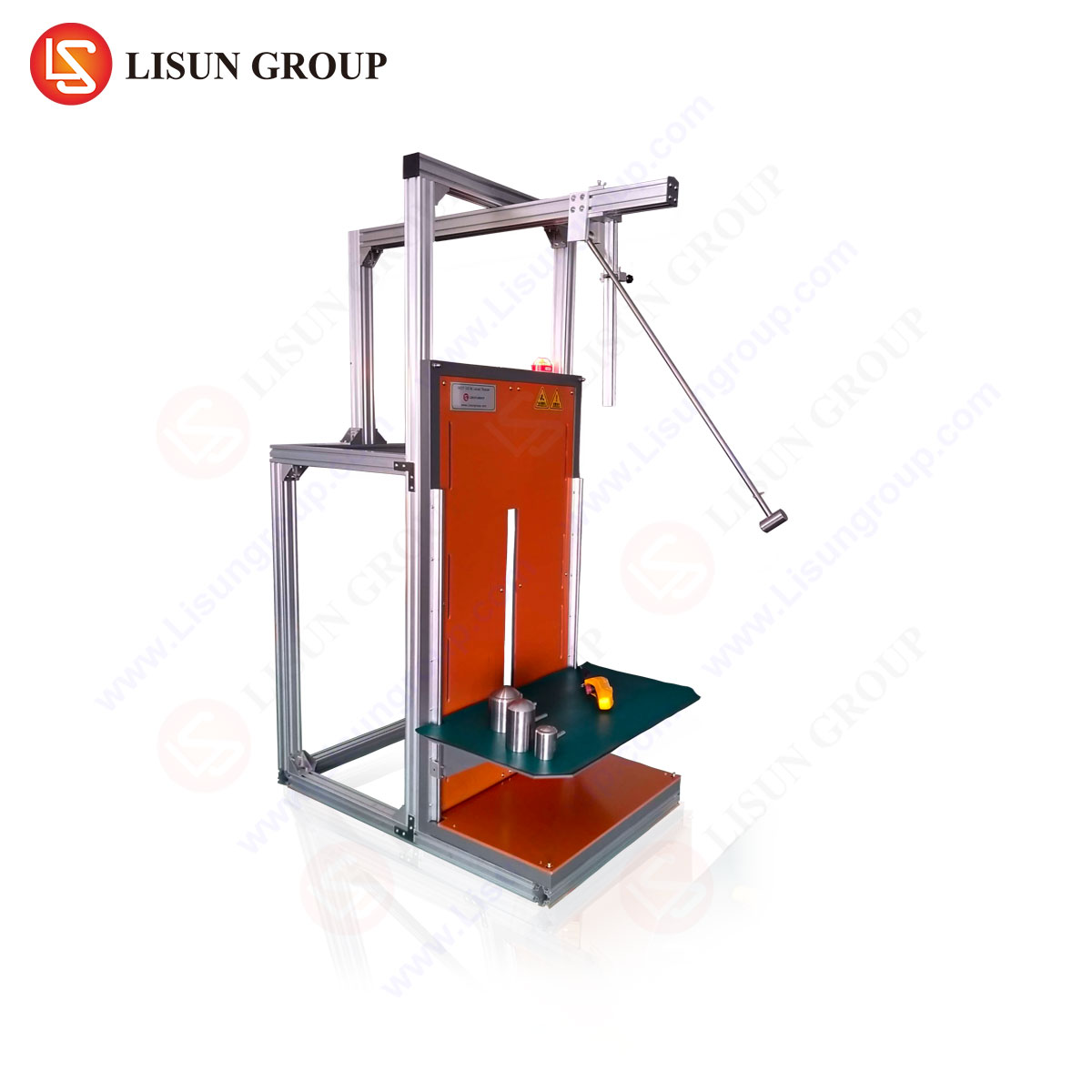
The LISUN DT-60KG Drop Tester exemplifies how the aforementioned factors coalesce into a targeted solution. Designed for a maximum load of 60 kg, it addresses the needs of industries handling substantial products such as uninterruptible power supplies (UPS), industrial computer systems, large household appliances, and assembled automotive sub-systems. Its dual-column steel frame provides the rigidity required for repeatable testing at its maximum capacity and height.
The system typically incorporates a pneumatic release mechanism to ensure a clean, non-pivotal drop, aligning with the fidelity requirements of formal standards compliance. Control is facilitated via a user-friendly PLC and touchscreen interface, allowing for the programming and storage of test parameters—a key feature for laboratories testing diverse product lines from office equipment to electrical components. Its design inherently accommodates integration with external data acquisition systems, providing a pathway for advanced shock analysis without mandating it in the base configuration, thus allowing cost scalability.
The competitive advantage of such a system lies in its optimized balance between high capacity/robustness and operational precision. It avoids the extreme cost of ultra-high-capacity (>100 kg) testers while surpassing the limitations of lightweight, low-cost units. For a manufacturer of telecommunications base station equipment or large-format medical diagnostic devices, the DT-60KG occupies a strategic midpoint, offering the necessary performance for rigorous compliance testing with a total cost of ownership that aligns with the value derived from reduced product failure rates and enhanced brand reputation for durability.
Заключение
The acquisition cost of a drop tester is a sophisticated synthesis of its physical capabilities, technological integration, compliance pedigree, and long-term operational value. Decision-makers must conduct a thorough needs analysis, weighing parameters such as required load capacity, test standard mandates, desired automation level, and necessary data outputs against capital budget constraints. A holistic view that considers not only the purchase price but also calibration, maintenance, and potential customization costs is essential. Instruments like the LISUN DT-60KG demonstrate that a well-specified system, engineered to meet the rigorous demands of industries from consumer electronics to aerospace, represents an investment in product quality, regulatory assurance, and ultimately, market success.
Часто задаваемые вопросы (FAQ)
Q1: Can the LISUN DT-60KG be used to test products that are not perfectly rectangular, such as cylindrical lighting fixtures or irregular industrial components?
A: Yes. The system is designed with a versatile test platform. For non-standard geometries, custom jigs or fixtures can be designed and fabricated to securely hold the specimen during elevation and release. The key requirement is that the fixture must interface correctly with the tester’s release mechanism and not interfere with the free-fall motion.
Q2: How often does a drop tester like the DT-60KG require calibration, and what does the process entail?
A: Calibration frequency is typically annual for accredited laboratory use, though internal quality procedures may dictate more frequent checks. The primary calibration involves verifying the height measurement system’s accuracy across its range using a traceable standard (e.g., a calibrated laser distance meter or gauge blocks). If the system includes an integrated force or acceleration measurement option, those sensors require separate calibration per relevant ISO 17025-accredited procedures.
Q3: What is the significance of the “non-pivotal” release requirement cited in many testing standards?
A: A non-pivotal, or clean, release is critical to ensure the test specimen impacts the surface in the intended orientation with minimal rotational energy. A release that imparts a slight spin or tilt can drastically alter the impact dynamics, leading to inconsistent and non-comparable results. This invalidates the test’s repeatability and reproducibility, which are cornerstones of standardized quality assessment.
Q4: For testing automotive electronics, is the basic drop test sufficient, or are combined environmental tests needed?
A: While basic drop testing per standards like IEC 60068-2-31 is common, automotive specifications, particularly ISO 16750-3 and various OEM standards, frequently require combined environmental stress. This often involves performing drop or shock tests at extreme temperature setpoints (e.g., cold start conditions at -30°C). This necessitates integrating the drop tester with a thermal chamber, a common customization for the automotive supply chain.
Q5: What safety features are typically incorporated into a heavy-capacity drop tester?
A: Essential safety features include physical guarding around the drop zone, electro-mechanical safety interlocks that prevent operation when doors are open, a prominently located emergency stop button, and a two-handed initiation sequence for the drop cycle. For heavy testers like the DT-60KG, structural safeguards to prevent unintended descent of the lift arm are also integral.

 RU
RU  EN
EN  ES
ES  PT
PT  TR
TR  AR
AR  DE
DE  PL
PL  IT
IT  FR
FR  KO
KO  JA
JA  ID
ID