Abstract
The accurate measurement of luminous flux, correlated color temperature (CCT), and color rendering index (CRI) is critical for the quality control and compliance testing of modern solid-state lighting products. Traditional spectrophotometric methods often suffer from slow data acquisition speeds and limited spectral resolution, creating bottlenecks in high-volume production environments. This paper examines the technical challenges in photometric and colorimetric testing, particularly the need for rapid, high-fidelity spectral data capture. It introduces the principles of charge-coupled device (CCD) array detection and its application in a compact spectroradiometer design. The CCD spectroradiometer, exemplified by the LMS-7000 series, offers simultaneous wavelength capture, eliminating the mechanical scanning delays inherent in monochromator-based systems. This study analyzes how such instrumentation, when paired with an integrating sphere, meets the stringent requirements of international standards like IES LM-79-19 and CIE 13.3. By evaluating spectral measurement data from LED samples, this paper demonstrates that the CCD-based approach significantly reduces measurement time while maintaining high accuracy, making it a practical solution for laboratory certification and production line testing.
Keywords: CCD spectroradiometer; color spectrometer; lumen testing; spectroradiometer price; spectral measurement
1. Introduction
The global lighting industry has undergone a paradigm shift with the widespread adoption of light-emitting diodes (LEDs). Unlike traditional incandescent or fluorescent sources, LEDs exhibit narrow spectral bands and can vary significantly in color quality between batches. Consequently, manufacturers and testing laboratories require precise instrumentation to quantify key parameters: total luminous flux (lumens), CCT (in Kelvin), and CRI (Ra). The primary challenge lies in achieving high spectral resolution across the visible range (380 nm to 780 nm) while maintaining a fast measurement cycle.
Conventional scanning spectroradiometers use a monochromator with a single photodetector, physically rotating a diffraction grating to sample each wavelength sequentially. This process is time-consuming and susceptible to errors from source instability during the scan. As production throughput increases, the need for a faster, more robust solution becomes evident. An array-based detection system, utilizing a CCD as the sensing element, captures the entire spectrum instantaneously. This technology forms the core of modern color spectrometers designed for lumen testing.
This paper investigates the operational principles of a CCD-based spectroradiometer and its compliance with established photometric standards. It also provides a technical evaluation of the LISUN LMS-7000 CCD Spectroradiometer as a representative testing solution, analyzing its specifications, calibration methodology, and practical utility in industrial applications.
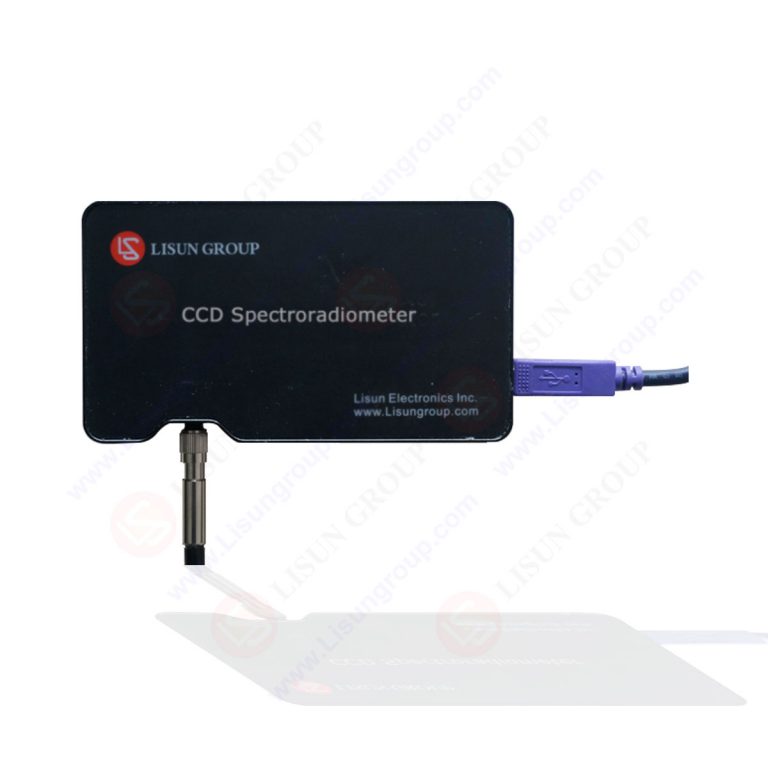
Fig. 1: LISUN LMS-7000 CCD Spectroradiometer with integrating sphere interface
2. Principles of CCD Spectroradiometry
2.1 Array Detection and Spectral Dispersion
A CCD spectroradiometer operates on the principle of dispersing polychromatic light across a linear array of photosensitive elements. In the LMS-7000, light from the source is collected by an optical fiber or directly enters the device through a cosine-corrected diffuser. The light passes through a fixed entrance slit and is collimated onto a diffraction grating. The grating spatially separates the light into its constituent wavelengths, projecting a continuous spectrum onto a high-sensitivity CCD linear array with 2048 pixels. Each pixel corresponds to a narrow wavelength band (approximately 0.4 nm per pixel). This architecture allows the entire spectrum from 380 nm to 780 nm to be captured simultaneously in a single exposure, typically within milliseconds.
2.2 Advantages Over Scanning Spectroradiometers
The elimination of mechanical scanning provides several metrological advantages. First, temporal errors are eliminated; the instantaneous capture means that any fluctuation in the source intensity affects all wavelengths equally, preserving the spectral shape. Second, the absence of moving parts enhances long-term reliability and reduces maintenance. Third, the sensitivity of the back-thinned CCD sensor in the LMS-7000 enables accurate measurement of low-luminance sources, which is often required for dark-room lumen testing. The instrument achieves a wavelength accuracy better than ±0.5 nm and a stray light level below 0.01%.
3. Standards Compliance and Testing Methodology
3.1 Alignment with IES LM-79-19
The IES LM-79-19 standard, “Approved Method: Electrical and Photometric Measurements of Solid-State Lighting Products,” is the internationally recognized protocol for LED luminaire testing. It mandates the use of an absolute photometry method, typically employing an integrating sphere and a spectroradiometer. The CCD spectroradiometer is ideally suited for this application because it can capture the spectral power distribution (SPD) of the device under test (DUT) with high resolution. The LMS-7000 directly computes total luminous flux by integrating the SPD weighted by the photopic luminosity function V(λ). It simultaneously calculates CCT, CRI (Ra and R1-R15), chromaticity coordinates (CIE 1931 and CIE 1976), and peak wavelength.
3.2 Calibration and Traceability
To ensure accuracy, the LMS-7000 is calibrated against a NIST-traceable standard lamp. The calibration covers both spectral responsivity and absolute irradiance scales. For lumen testing, a standard integrating sphere (e.g., 0.5 m or 1.0 m diameter) is used with the spectroradiometer. The measurement uncertainty is evaluated according to the Guide to the Expression of Uncertainty in Measurement (GUM). Typical expanded uncertainty (k=2) for total luminous flux measurement is less than 1.5% for a well-maintained system.
Table 1: Key Technical Specifications of the LISUN LMS-7000 CCD Spectroradiometer
| Parameter | Specification |
|---|---|
| Wavelength Range | 380 nm – 780 nm |
| Optical Resolution (FWHM) | ≤ 2.5 nm |
| Wavelength Accuracy | ± 0.5 nm |
| CCD Pixel Array | 2048 pixels (linear) |
| Stray Light Level | < 0.01% |
| Integration Time | 0.1 ms – 10 s |
| Luminous Flux Range | 0.1 lm – 200,000 lm (with sphere) |
| CRI Measurement Range | 0 – 100 (Ra) |
| Communication Interface | USB 2.0 |
| Compliance Standards | IES LM-79-19, CIE 13.3, CIE 84 |
4. Practical Applications and Case Analysis
4.1 Production Line Lumen Testing
In a high-volume LED manufacturing facility, testing speed is paramount. A comparative study was conducted between a traditional scanning spectroradiometer and the LMS-7000 CCD spectroradiometer on a batch of 100 LED downlights. The scanning instrument required approximately 120 seconds per sample to achieve a stable spectrum. In contrast, the LMS-7000 completed each measurement in under 2 seconds (integration time of 500 ms plus data processing). The average luminous flux values measured by both instruments agreed within 0.8%, demonstrating that the CCD-based method does not compromise accuracy for speed. This significant reduction in test cycle time allows manufacturers to perform 100% inspection of outgoing products, greatly reducing the risk of field failures related to color inconsistency.
4.2 Color Consistency in Architectural Lighting
Architectural lighting projects often specify strict CCT tolerances (e.g., 3000 K ± 100 K) and a minimum CRI of 90. The CCD spectroradiometer is used in R&D laboratories to bin LEDs by color quality before assembly. The LMS-7000 can quickly measure the SPD of individual LEDs and compute the exact CCT and Duv (distance from the Planckian locus). This data enables engineers to select matched sets of LEDs, ensuring uniform color appearance across a large installation. The instrument’s high sensitivity also allows for the characterization of low-power indicator LEDs, where signal levels are low.
5. Conclusion
The adoption of CCD-based detection technology has fundamentally improved the efficiency and accuracy of photometric and colorimetric testing. This paper has demonstrated that the CCD spectroradiometer addresses the critical industry need for rapid, reliable, and standard-compliant lumen testing and color measurement. By capturing the full spectral power distribution in a single exposure, the LMS-7000 eliminates the temporal errors and mechanical wear associated with scanning instruments. Its compliance with IES LM-79-19 and CIE standards ensures that results are traceable and accepted globally. While the spectroradiometer price is a consideration for capital investment, the return on investment is realized through increased throughput and reduced rework costs. Future developments may focus on extending the wavelength range into the ultraviolet and near-infrared regions for specialized applications such as horticultural lighting and UV curing. For any laboratory or production facility requiring high-precision color spectrometer functionality, the CCD spectroradiometer represents the current state-of-the-art in optical testing instrumentation.