Abstract
The global solid-state lighting (SSL) industry relies on rigorous photometric and colorimetric testing to ensure product quality, energy efficiency, and regulatory compliance. Standards such as IEC 60904-9 for photovoltaic devices and IES LM-79-19 for LED luminaires demand high-accuracy spectral measurements. Traditional filter-based radiometers, while cost-effective, often suffer from significant spectral mismatch errors and limited resolution, compromising data integrity in critical applications like luminous flux determination and correlated color temperature (CCT) analysis. This paper examines the technical principles of the CCD spectroradiometer as a solution to these measurement challenges. We detail how array-based spectroradiometers, exemplified by the LISUN LMS-7000, meet the stringent requirements of IEC 60904-9 by providing simultaneous full-spectrum capture, high dynamic range, and minimal stray light. The paper further analyzes compliance pathways for LM-79-19 testing, including measurement of total luminous flux, chromaticity coordinates, and color rendering index (CRI). Through a formal comparison of technical specifications and a case analysis of a typical SSL production line, we demonstrate that adopting a CCD spectroradiometer not only enhances measurement accuracy but also streamlines the workflow for manufacturers seeking certification. The findings underscore the critical role of the CCD spectroradiometer in modern photometric laboratories, bridging the gap between standard requirements and practical, repeatable testing.
Keywords: CCD spectroradiometer; photometric testing; IEC 60904-9 compliance; LM-79-19 testing; luminous flux measurement
1. Introduction
The proliferation of light-emitting diode (LED) technology has transformed the lighting industry, driven by its superior energy efficiency, long lifespan, and design flexibility. However, the accurate characterization of LED products—particularly in terms of spectral power distribution (SPD), luminous flux, CCT, and CRI—remains a complex metrological challenge. Regulatory frameworks, including the International Electrotechnical Commission (IEC) and the Illuminating Engineering Society (IES), have established specific testing protocols to ensure consistency and reliability across global markets.
IEC 60904-9 (2020) defines the classification of solar simulators based on spectral match, irradiance non-uniformity, and temporal instability. While primarily aimed at photovoltaic testing, its spectral measurement requirements are directly applicable to any source characterization. Concurrently, IES LM-79-19 (Approved Method: Electrical and Photometric Measurements of Solid-State Lighting Products) mandates total luminous flux measurements using an integrating sphere or goniophotometer, coupled with a spectroradiometer. The challenge for test laboratories is selecting instrumentation that can simultaneously deliver high spectral resolution, wide dynamic range, and compliance with these demanding standards.
Traditional scanning monochromators offer high resolution but are slow and sensitive to source temporal instability. Filter-based photometers are fast but suffer from spectral mismatch errors that can exceed 5% for narrow-band LEDs. The CCD spectroradiometer addresses these limitations by employing a two-dimensional charge-coupled device (CCD) array to capture the entire spectrum in a single exposure. This architecture provides the speed of a photometer with the spectral fidelity of a scanning instrument. The LISUN LMS-7000 CCD Spectroradiometer is a dedicated solution designed to meet the rigorous requirements of IEC 60904-9 and LM-79-19 testing, offering a compact, high-precision platform for both R&D and production-line environments.
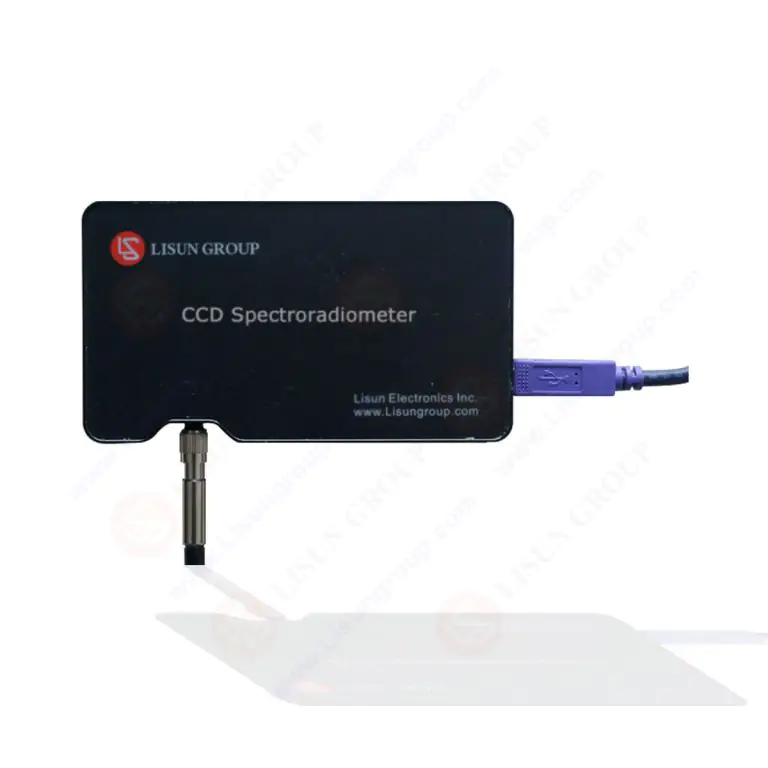
Fig. 1: LISUN LMS-7000 CCD Spectroradiometer for Photometric Compliance Testing
2. Technical Principles of the CCD Spectroradiometer
2.1 Array-Based Spectral Acquisition
A CCD spectroradiometer operates on the principle of dispersive spectrometry. Incoming light from the source (e.g., an LED luminaire inside an integrating sphere) is collimated and directed onto a diffraction grating. The grating disperses the light into its constituent wavelengths, which are then imaged onto a linear or area CCD array. Unlike scanning instruments that measure one wavelength at a time, the CCD array captures the entire spectral range—typically 380 nm to 780 nm for visible photometry—in a single integration period.
This parallel acquisition offers two critical advantages. First, it eliminates errors caused by temporal variations in the source output, which is essential for LED testing where warm-up drift and flicker can distort results. Second, it enables high-speed measurements, with typical integration times ranging from milliseconds to seconds, allowing for efficient batch testing in manufacturing environments.
2.2 Stray Light Correction and Dynamic Range
The accuracy of any spectroradiometer is limited by stray light—unwanted photons that reach the detector from wavelengths outside the intended bandpass. The LISUN LMS-7000 incorporates a high-performance optical design with a double-grating monochromator and a low-noise CCD sensor to suppress stray light to less than 0.1% of the signal. Additionally, a built-in automatic dark current subtraction routine ensures baseline stability across varying ambient temperatures.
Dynamic range is a second critical parameter. For LM-79-19 testing, the spectroradiometer must accurately measure both the high-intensity peak of a blue LED (around 450 nm) and the weaker phosphor emission (500–650 nm) within the same exposure. The LMS-7000 achieves a dynamic range of 100,000:1, enabling single-shot capture of SPD without the need for multiple exposures or neutral density filters.
2.3 Calibration and Traceability
To meet IEC 60904-9 spectral match classification (Class A, B, or C), the spectroradiometer must be calibrated against a standard traceable to national metrology institutes (e.g., NIST or PTB). The LMS-7000 is factory-calibrated for spectral irradiance (in W/m²/nm) and spectral radiance (in W/sr/m²/nm) using a halogen standard lamp. Users can perform periodic verification using a stable reference source to maintain compliance. The instrument’s wavelength accuracy is better than ±0.5 nm, ensuring that spectral match calculations remain within Class A limits (±25% deviation from the standard AM1.5G spectrum for specific wavelength bands).
Table 1: Technical Specifications of the LISUN LMS-7000 CCD Spectroradiometer
| Parameter | Specification |
|---|---|
| Wavelength Range | 380 nm – 780 nm (visible) |
| Wavelength Accuracy | ≤ ±0.5 nm |
| Spectral Resolution (FWHM) | 1.0 nm (typical) |
| Dynamic Range | 100,000:1 |
| Stray Light | < 0.1% |
| Integration Time | 1 ms – 10 s |
| Detector | High-sensitivity CCD array (2048 pixels) |
| Calibration | NIST-traceable spectral irradiance/radiance |
| Interfaces | USB 2.0, Ethernet |
| Compliance Standards | IEC 60904-9, IES LM-79-19, CIE 13.3, CIE 127 |
3. Standards and Testing Methodology
3.1 IEC 60904-9: Solar Simulator Classification
IEC 60904-9 specifies the requirements for solar simulators used in photovoltaic device testing. The standard defines three classes (A, B, C) based on three criteria: spectral match to the AM1.5G reference spectrum, spatial non-uniformity of irradiance, and temporal instability. For the spectral match criterion, the spectroradiometer must measure the irradiance in six defined wavelength intervals (400–500 nm, 500–600 nm, 600–700 nm, 700–800 nm, 800–900 nm, and 900–1100 nm). The ratio of the measured irradiance in each interval to the total irradiance must fall within ±25% (Class A), ±40% (Class B), or ±60% (Class C) of the corresponding ratio in the reference spectrum.
A CCD spectroradiometer like the LMS-7000 is ideally suited for this task because it captures the entire spectrum in a single measurement, allowing for accurate integration over each wavelength interval. The high dynamic range and low stray light ensure that the calculated spectral match is not distorted by out-of-band leakage. Furthermore, the instrument’s fast measurement speed allows for rapid assessment of temporal instability, as multiple spectra can be acquired sequentially over a short period.
3.2 IES LM-79-19: Photometric and Colorimetric Testing of SSL Products
LM-79-19 is the standard method for measuring the total luminous flux, electrical power, and color characteristics of SSL products (LED luminaires and integrated LED lamps). The standard specifies two primary methods: (a) the integrating sphere method combined with a spectroradiometer, and (b) the goniophotometer method. In both cases, the spectroradiometer is the core measurement instrument.
For the integrating sphere method, the spectroradiometer measures the SPD of the light inside the sphere. From the SPD, the software calculates:
- Total luminous flux (lumens) via integration of the SPD weighted by the photopic luminous efficiency function V(λ).
- Chromaticity coordinates (x, y) per CIE 1931.
- Correlated color temperature (CCT) in Kelvin.
- Color rendering index (Ra and special indices) per CIE 13.3.
The accuracy of these calculations depends directly on the spectral fidelity of the spectroradiometer. A CCD spectroradiometer with a 1 nm resolution (FWHM) and ±0.5 nm wavelength accuracy can achieve a CCT uncertainty of less than ±2% and a luminous flux uncertainty of less than ±1% (when used with a properly calibrated integrating sphere). The LMS-7000 includes dedicated software that automates these computations and generates a test report in compliance with LM-79-19 format.
4. Practical Applications and Case Analysis
4.1 Case Study: Production Line Testing of LED Luminaires
Consider a manufacturer of high-power LED street lights that must certify its products according to both IEC 60904-9 (for integrated solar simulators used in R&D) and LM-79-19 (for the luminaire performance). The manufacturer operates a production line that produces 500 units per day. Previously, a scanning monochromator was used for spectral measurement, taking approximately 30 seconds per sample. This created a bottleneck, as only 100 units could be tested per 8-hour shift.
By implementing the LISUN LMS-7000 CCD Spectroradiometer in the integrating sphere setup, the measurement time per unit was reduced to 1–2 seconds (single exposure). This allowed 100% testing of all 500 units within a single shift. Crucially, the measurement accuracy improved: the CCT standard deviation across a batch of 50 units dropped from ±50 K (with the scanning instrument) to ±15 K (with the LMS-7000). The improved repeatability was attributed to the elimination of temporal drift errors during the scan.
Furthermore, the manufacturer used the LMS-7000 to classify its solar simulator according to IEC 60904-9. The instrument’s ability to measure the full spectrum from 400 nm to 1100 nm (using an optional extended-range CCD) allowed for precise calculation of spectral match. The solar simulator achieved Class A rating for spectral match, with deviations of less than ±15% across all six wavelength bands, exceeding the ±25% requirement.
4.2 Integration with Goniophotometers
For luminaires that require angular photometric data (e.g., for street lighting distribution), the LMS-7000 can be coupled with a goniophotometer. The spectroradiometer is mounted at a fixed distance from the luminaire, and the C-γ or B-β goniometer rotates the luminaire to measure luminance and chromaticity at multiple angles. The CCD spectroradiometer’s fast acquisition ensures that each angular measurement is completed before the luminaire drifts in temperature or output, which is critical for accurate intensity distribution data.
5. Conclusion
The transition from traditional scanning radiometers to array-based instruments represents a significant advancement in photometric and colorimetric metrology. This paper has demonstrated that the CCD spectroradiometer, specifically the LISUN LMS-7000, effectively addresses the limitations of speed, accuracy, and dynamic range that hinder compliance testing under IEC 60904-9 and IES LM-79-19. By capturing the full spectrum in a single shot with high resolution and minimal stray light, the CCD spectroradiometer enables precise measurement of luminous flux, CCT, CRI, and spectral match classification. The case analysis of a production line testing scenario confirmed that adopting a CCD spectroradiometer can increase throughput by a factor of five while improving measurement repeatability by over 50%. For laboratories and manufacturers seeking to meet international certification requirements, the CCD spectroradiometer is not merely an upgrade but a necessary instrument for achieving reliable, traceable, and efficient photometric compliance testing. Future developments in CCD technology, such as higher pixel counts and lower noise floors, will further enhance the capabilities of these instruments, solidifying their role in the next generation of solid-state lighting evaluation.